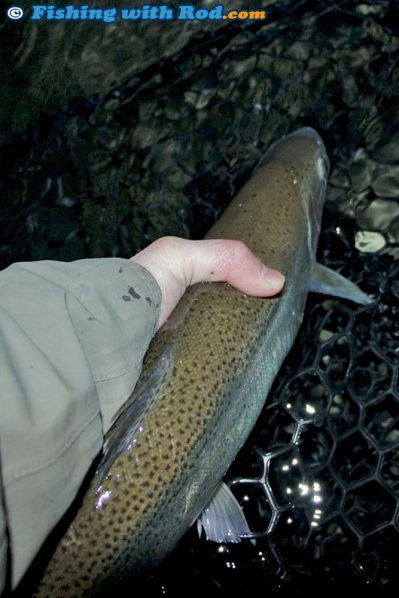
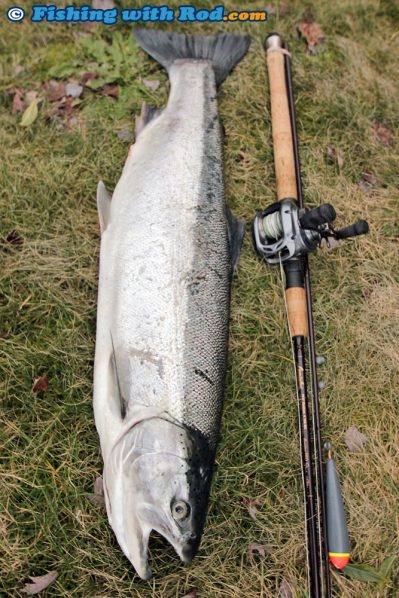
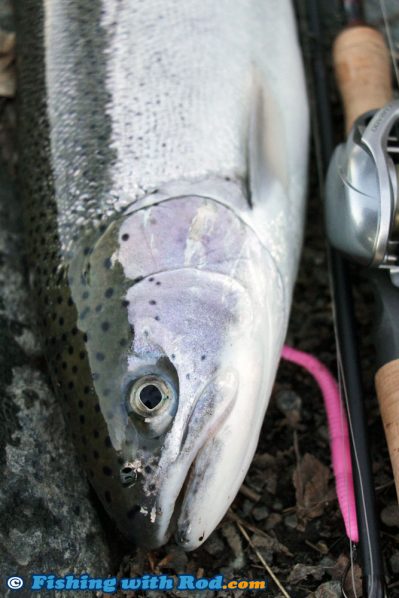
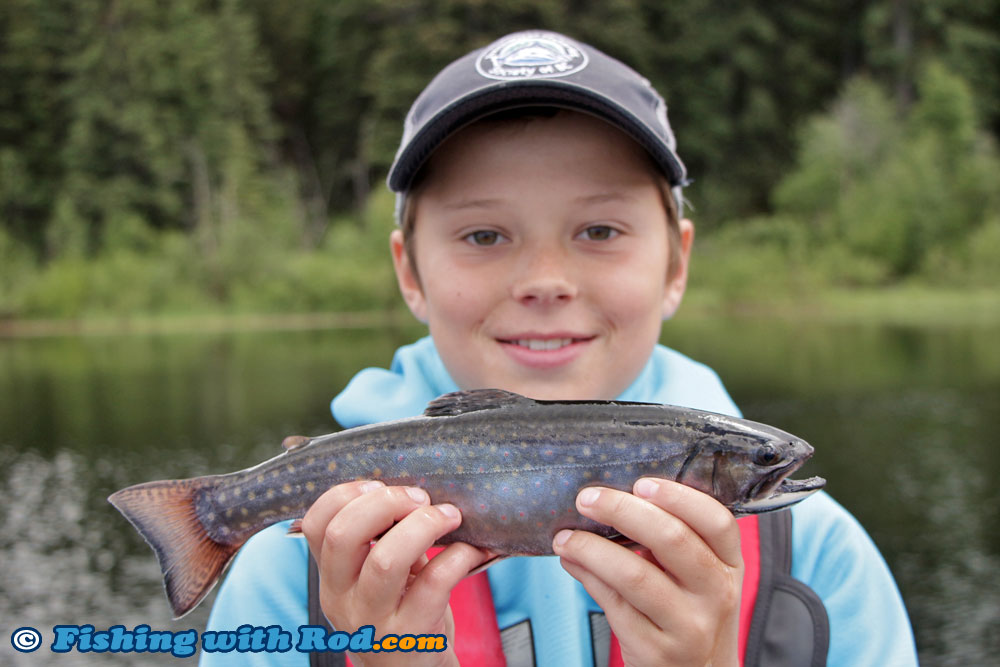
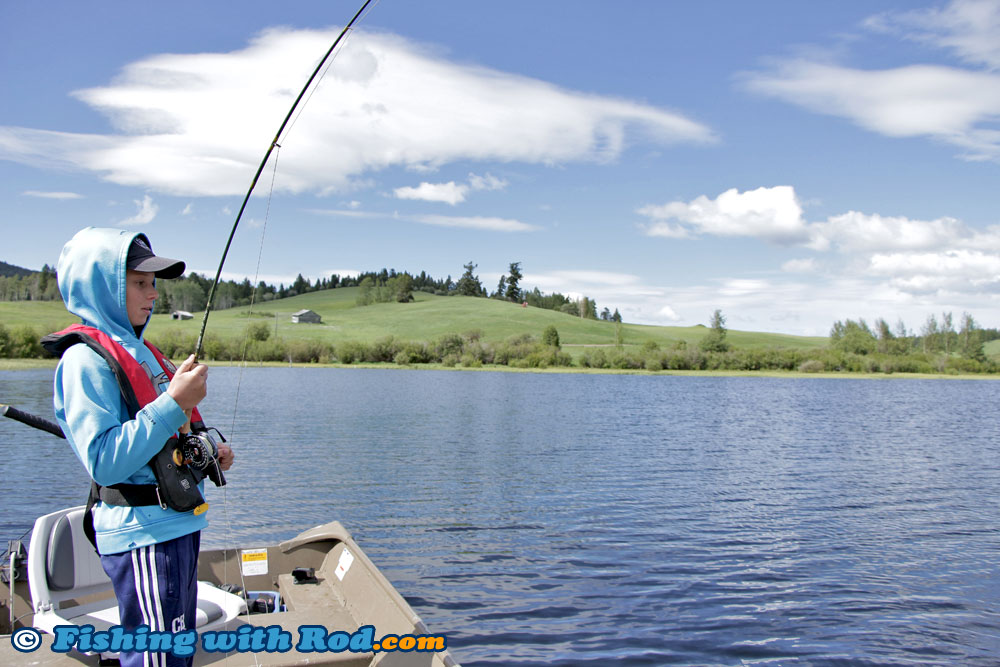
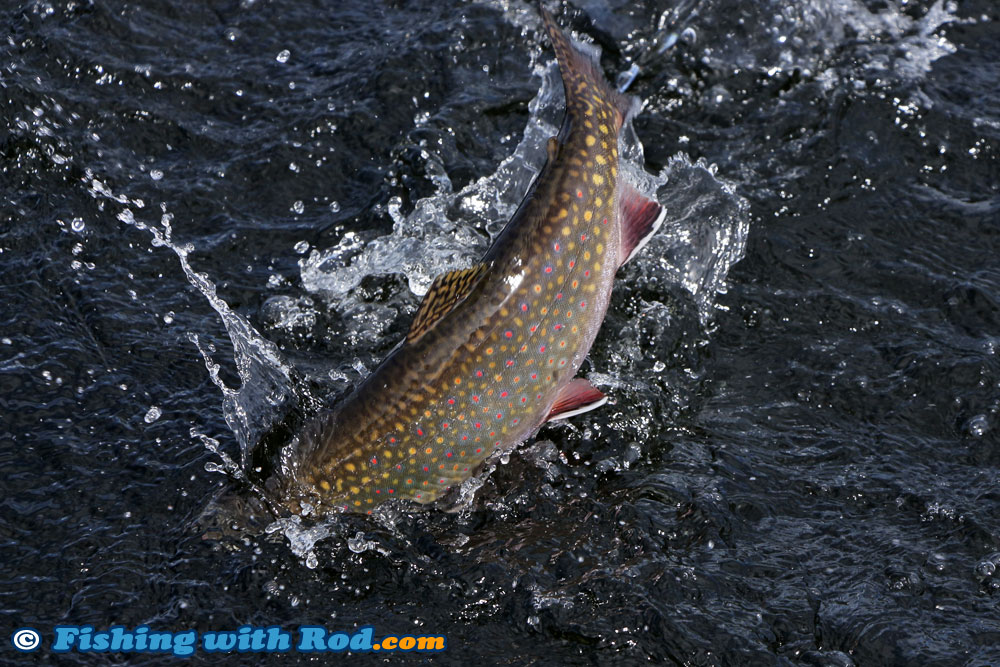
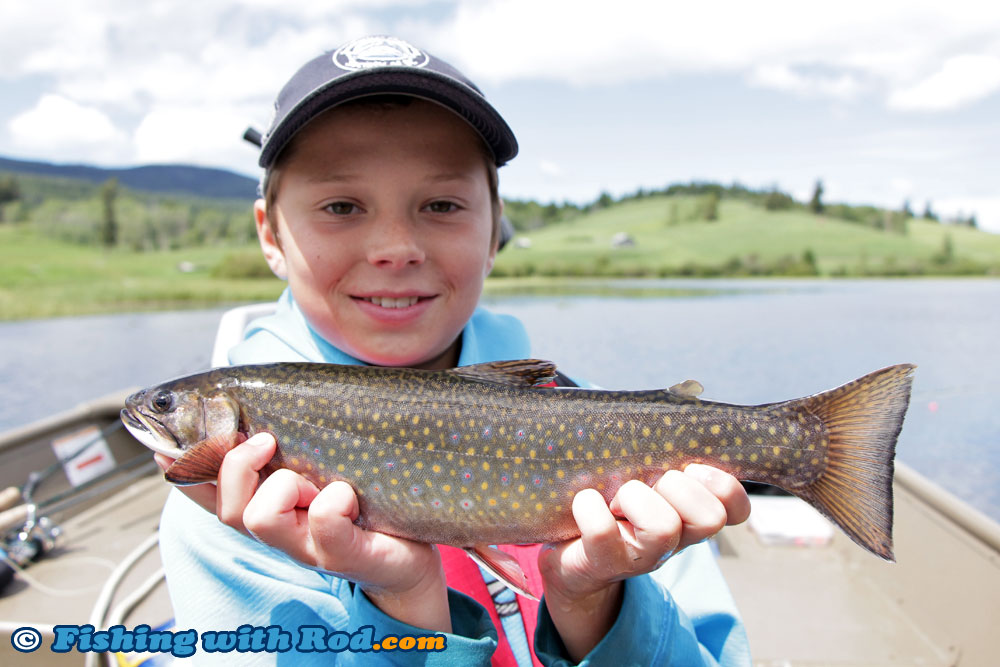
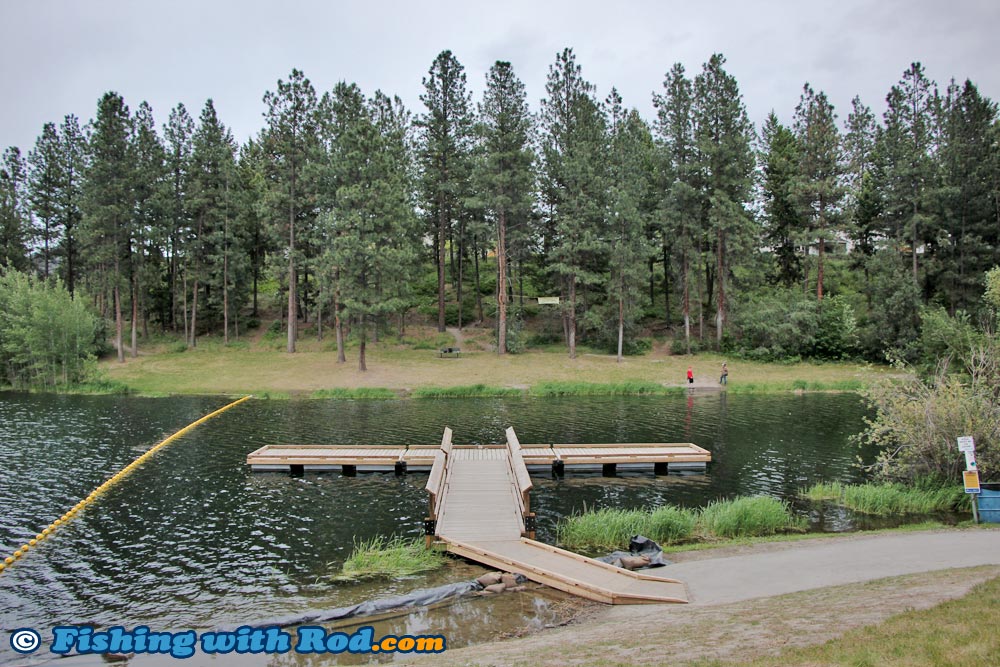
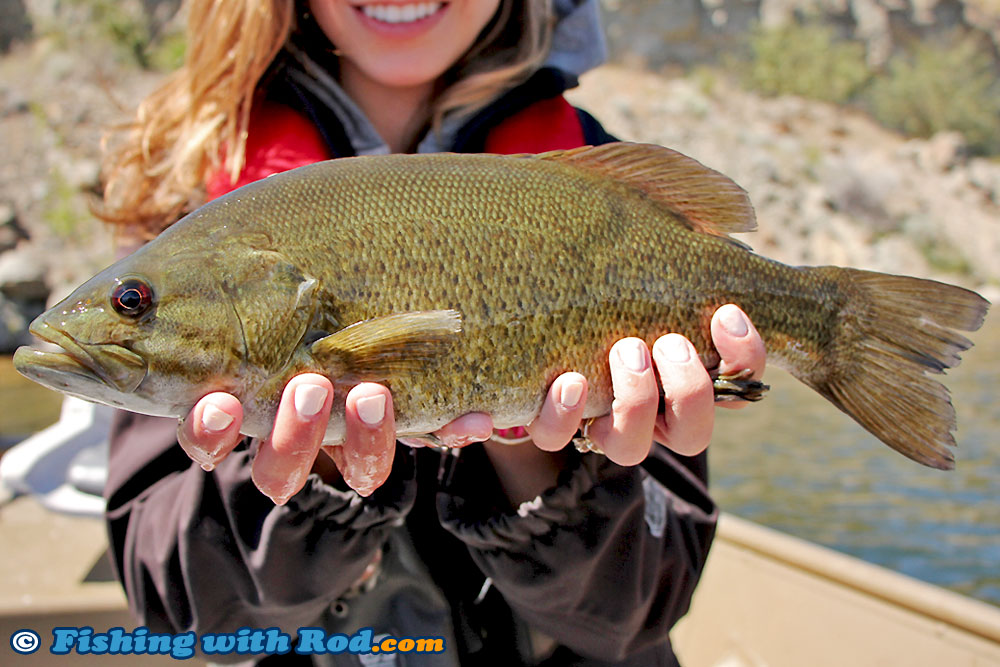
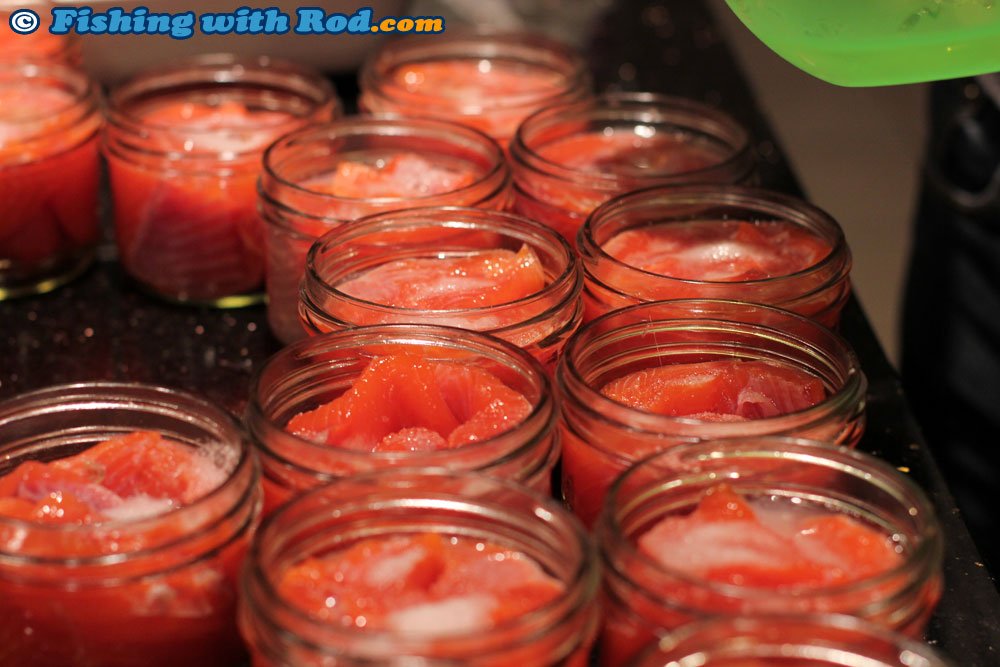
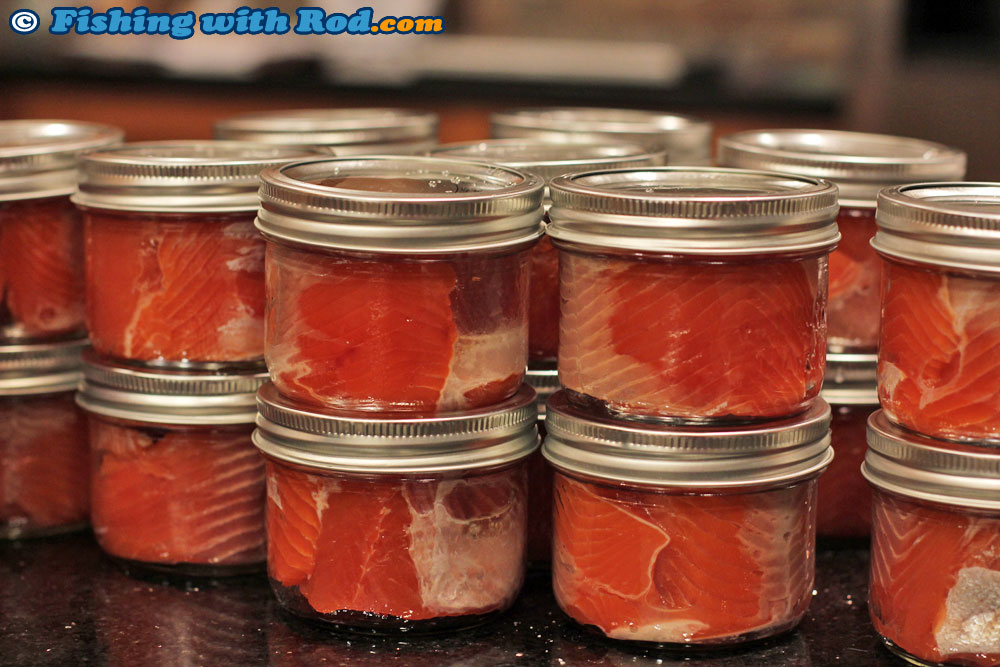
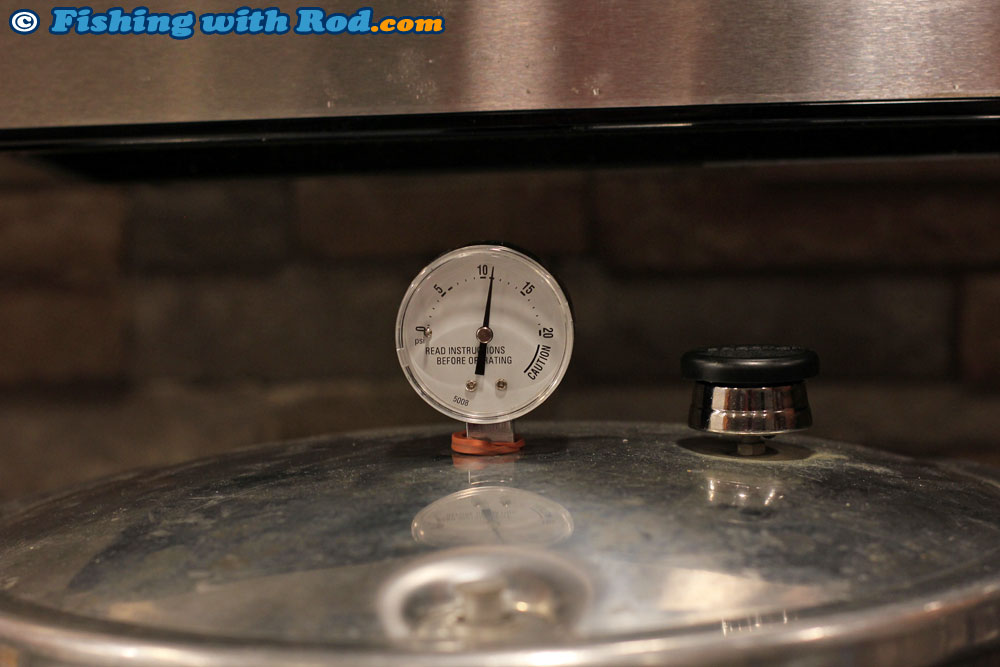
While the Fraser River is experiencing a record return of sockeye salmon, that does not mean you cannot fish for something else while the river is choked with them. Here is a video blog of our recent pole fishing outing around Steveston.
You are currently browsing the archive for the Fishing trip category.
I went fishing this evening, at Garry Point Park of course. A couple of days ago a pretty big pikeminnow greeted my 4wt, which was nice. I wanted to see if I could get another one on the tiny fly, but also had my sockeye gear with me (not betties but spinning rod, spoons etc) just in case because they have a tendency to hang in the shallows just after high tide to avoid the strong outgoing current.
The southeasterly wind was a bit strong so most of the spots were unfishable with the fly rod. I reached almost the end of the park and was greeted by Al. While chatting, he told me that there were people snagging on the other side, where I was just about to go. It’s a side canal where salmon have a tendency to stage back once the tide starts going out to avoid the strong current. I went over there after we chatted, sure enough, a few individuals were going at it and sockeye salmon were jumping once awhile in the bay.
Out came the cel phone to file a report at RAPP of course, then the camera followed.
Some were obviously aware of what they were doing. No need to keep turning around and look at me for approval.
Too bad, with a few fish holding that bay, there was a good chance that one of those would hit a fly or lure. I’m sure the same people, if not more people, will be back tomorrow if anyone else wants to go check it out. Just walk to the far end of Garry Point, can’t miss it.
Update: It appears that this video has stirred things up a bit, but the wrong person has been taking the heat. Somehow, people are assuming Marco at Nikka Fishing and Marine was behind this video. Not sure where that idea came from, but it is completely false. I encountered people who were trying to snag sockeye while fishing, was not pleased with it, took the video myself and decided to point out an existing problem in this area. I work hard to promote and improve recreational fishing in this community in many projects so I take personal offence when I see people choose to break the rules.
I do not know who the individuals are in the video so to think there is a personal agenda behind this video is absurd. I’m curious why some have chosen to make this a problem with Marco or the store. Just so it is clear, neither Marco or Nikka Fishing and Marine has anything to do with it. If you have a problem or concern with the video, you are welcome to email me at info@fishingwithrod.com to discuss this further.
We started our last fishing day a bit earlier, one hour earlier to be more precise. We arrived at the river bank at 10am and decided to try a spot where Carlo and Shane had some success on the first day while we were having our shore lunch. Today Nina wanted to fish, so we bought her a classified II licence. $20 per day it was, since she is not a permanent resident yet. It’s a lot more than what it costs for the rest of us, but still a bargain considering how good the fishing is and how much more expensive it is when fishing in Europe.
We first tried a run just upstream from the supposed hot spot. I rigged up a nymphing setup for her to begin with because it’s pretty easy to use. With a strike indicator, it is simply float fishing. She just had to flip and drift until the indicator dove. It only took a few drifts before the indicator took the first dive. The fish was briefly hooked. The second fish came soon after and she landed with ease. The third and fourth fish did not hesitate to bite either after the second was released, but they also quickly came off the hook.

Once she fished through the run thoroughly, we moved down to the run where we wanted to fish. White water rushed down to its head, crashing against the log jam on the high bank, forming a deep slot where it looked extremely fishy. Nina sent the nymph out, letting the white water carry it down into the deep. As it brushed against the edge of the log jam, the indicator was quickly pulled down. This repeated several times and each time a large cutthroat trout came to the river bank. After a few fish, we started seeing some rising to feed and noticed a big hatch happening around us.
I suggested that we put on a dry fly because it was likely to work. After retying, she casted the fly out and it took no time for a trout to slurp it down. Another one took it after we released the fish, followed by another one. By the end, we easily had a couple dozen takes on the surface. At one point, we couldn’t figure out why there were so many misses. After a closer inspection of the fly, I discovered the tip of the hook was gone.


While Nina was fighting one of the cutthroat trout, a large bull trout suddenly darted out from the log jam and chased the smaller prey like a crocodile. The sighting was pretty wild. Carlo and Shane arrived in early afternoon and I told them what happened so Carlo came down with his bull trout setup. After a couple of casts and fast stripping, he fooled the large bull trout easily.

We ended our outing at 3pm because this evening we decided to do something that was actually not fishing. Not sure why girls are so obsessed with horseback riding. We took an one-hour trail ride along the Elk River in Hosmer with Alpine Enthusiasts. It was nice to tour the watershed from a different point of view without a fishing rod. You can tell how confident I was by my facial expression.


This morning we started even later. Carlo and Shane decided that they would try out a different stream. We decided to stick to the same stream where we have been fishing in the last two days. There are so many options when staying in Fernie. So many tributaries of the Elk River to choose from, just the Elk River itself is already so long and it would take weeks to experience it all.
We decided to go back to the magic hole where dozens of cutthroat trout congregated and fed on the surface yesterday. We arrived and found the exact same scenario. Fish were still coming up to sip down insects. Nina set up the video camera, I stood on the high bank and prepare to make the first cast. Once the camera started working, I sent the dry fly out. At the end of the first drift, a chunky cutthroat slowly rose and sucked down the fly. I set the hook precisely, but after a few dives it came loose. I quickly flicked the fly back out. Halfway through the second drift, another good good sized cutthroat came up and grabbed the fly. Like the first fish, it too came loose after only a few seconds. Two casts, two fish, none to my hands, the morning excitement was already climaxing and we were only ten minutes into it.
The third fish took a bit longer to entice. After another ten casts or so, a smaller fish rose and took down the fly. This time it was not as lucky. It was hooked firmly and I brought it downstream for the release.
After all the drama, it suddenly died down. There was still a hatch happening but fish were not as eager to feed on the surface. We spent another 30 minutes without much success so it was time to move on and switch up the technique. I rigged up an indicator and a small nymph so we could walk and cast to see if any fish were hiding in deep slots. By early afternoon, the sun was beaming so fish were shier. We walked a stretch of river for two hours and I managed to connect with half a dozen more cutthroat trout and one brook trout. Some big ones were caught under log jams, which made the fight rather interesting. Most of these were lost after a few head shakes.
Mosquitoes are crazy this year and there is a drinking/tap water advisory in effect around here for anyone who is thinking about coming up to enjoy this type of fishing.

Casting upstream for a rise.

Lunch break.
One more day before heading back to the real world.
Day two!
This morning the knocks on the door started at 8:30am again. Carlo and Shane greeted my sleepy eyes. I told them to get a head start. Nina and I took our time and didn’t reach the river until 11am. What’s the hurry? There are lots of unfished spots anyway. We pulled up to where their truck was parked and radioed them to find out where they were. They told us that they went upstream, so we decided to go downstream.
The first couple of spots were a bit shallow but should still hold some fish. After gaining no attention with my dry fly, I decided to switch up to a nymph. It took two casts to trick a nice fish that was resting in 2ft of water. Afterward, we continued downstream and I could see a nice looking spot ahead of us. It looked nicer and nicer as we approached it. Finally when we arrived, I was beyond excited because there were fish splashing all over the run. We had hit the hot spot. The timing coincided with a good hatch so the surface feeding frenzy was extremely intense. Dozens of fish came up repeatedly to sip down whatever they could fit in the mouth. I quickly changed back to a dry fly, the one that worked yesterday.
After ten or so drifts without getting a strike while fish were still coming up around it, I realized that the fly was too big to match the hatch. The second fly was smaller but still not small enough, so it also had the same reception. The third fly was the smallest one in the box so it was my last hope. A fish sipped it after a couple of drifts but I was too slow on the strike. A few casts later, another fish also went for it but it was not as lucky. Finally we had a connection. I carefully played the chunky westslope cutthroat and brought it downstream so it would not spook the others. After releasing it, I quickly came back up for fish number two, which fell for the fly after ten or so more drifts. Fish number three sipped the fly while I was not paying attention. I only realized that I had a fish on when I saw the floating line was pulled straight below the surface. These and a few misses were only a small percentage of fish that were in the run.
Our time was cut short when a thunderstorm rolled in quickly, forcing us to scramble back to the car for refuge. The storm passed after fiften minutes and we had blue sky above us once again, a pretty typical weather pattern in the Rockies.
The rest of the afternoon we explored a few new areas with only some success. No fish photos today, all actions will be available in a subscribers’ video soon.


Day three’s weather forecast doesn’t seem so enticing, so we may just take it easy and try a few spots nearby in Fernie.
There isn’t a better time to get away from the Lower Mainland for a fisherman, one just has to take a look at our discussion forum leading up to the sockeye salmon opening in the Non-tidal Fraser to realize that. We are spending this week in Southeastern British Columbia, targeting westslope cutthroat trout, mountain whitefish and bull trout.
The drive yesterday seemed to take forever from Richmond to Fernie. With four “quick” stops, it lasted just under 12 hours. I’ve done the Richmond-Fernie drive four times now and this was the most tiring one so far. Our stay for the week is the Red Tree Lodge, which makes things really convenient because it has a big shared kitchen lounge where we can do all the cooking after a day of fishing.
This morning we woke up to blue sky and a great view of surrounding rocky peaks. Nina and I took our time after recovering from yesterday’s trek, we didn’t arrive at the river until 11am.
There were lots of photo opportunities.

Some goofball kept jumping out and ruining the photographs as if we were fishing the Fraser River.

Actually, we had to put up with Shane and Carlo since they are our guides once again.

The four of us alternated and worked each run as we moved downstream from our meeting spot. The fishing? It was fantastic as expected!


The number of fish that I connected was no where near how many Shane and Carlo brought in, but I was more than satisfied. Two of my westslope cutthroat trout were the most exciting. The first one grabbed my dry after the other two had worked through the run repeatedly with their nymphs. The second fish, also grabbed my dry after I spotted it sipping down a hatch at the corner of my eyes when I was chatting with Nina during a break. Both fish were pretty big. 16in? 18in? No idea, didn’t measure them. All I know is that they were really chubby.
Day one done, lets see what day two brings.
Last week, we spent several days fishing around Merritt for rainbow and brook trout. The Thompson-Nicola region offers what some may consider as world class lake fly fisheries for these species. The Freshwater Fisheries Society of BC releases fish when they are yearlings each year and due to the abundance of food source in these lakes, their weight usually reaches several pounds after a couple of years. Several strains of rainbow trout can be found in different lakes. The streamline body shape of Pennasks and Blackwaters allows them to perform multiple high jumps, while Fraser Valleys always use their broad body to perform furious deep dives.
Our visit was a bit late, these fisheries typically start in early May and taper off in mid June as the weather warms up. This spring’s unpredictable weather has kept fair weather fishermen such as myself at home while stillwater fanatics such as my friend Carlo were out getting their double digits as usual.
Our first two days were rather unsuccessful. The wind was howling, rain clouds were passing through at times and the cooler temperature was keeping anything from hatching. Adding my inexperience on top of these challenges, we brought no fish to the boat and had to settle with a couple of light bites. Being her first trip to the Interior Lakes, Nina remarked, “So far this does not impress me.”
On a more positive note, the wildlife along the lakeshore in this area is always very impressive. Being able to submerge in the sounds of many different song birds while we awaited for a tug on the line is a delightful contrast to the fast paced lifestyle in Vancouver.


Sensing that we were in trouble, I had to call for help. That evening I chatted with Nick Basok from Chilliwack Dart and Tackle to see if he had other suggestions. A former hatchery staff at the Freshwater Fisheries Society of BC and an experienced angler, Nick has decades of knowledge on salmonid fisheries across this province so his advices are very valuable. I was excited to find out that he was making a day trip to where we were. The next morning, we finally woke up to sunshine. We met up at the chosen lake at 8:30am, which was still somewhat early because hatches do not usually happen until later. This is what I like about lake fishing, early birds don’t necessarily get the fattest worms.

We arrived at the lake after a short drive through some rough trails, which always makes the trip more interesting. The lake setting was breathtaking. One could not ask for more than glassy lake water, green field and blue sky. During my last visit to this lake, I had to settle with one fish while watching Nick boating two dozen rainbows, so I was determined to do better this time.

Nick explained that the action does not really start until 11:00am, when sedges emerge on the surface. He gave me a few dry flies and told us to try one out once we see some feeding action on the surface.


We began fishing by using a leech pattern and blood worm under the indicators, but that was unsuccessful. After one hour of waiting, a few fish started rising around us. Nina decided to cast a spoon out with her spinning rod while I vowed to stick with fly fishing. It took no time before she felt a light tap, perhaps a small fish it was. On the following cast, she received another strike but it was no small fish. Once she set the hook, her arms were bent from one side of the body to the other as the fish bolted. The drag screamed while this fish displayed the typical strength that Pennask rainbow trout possess. It never jumped, but it circled under the boat, refusing to come up to the surface. Nina kept the rod high and away from the boat, doing her best to keep the fish away from the anchor ropes. Eventually the fish was tired and slipped into the landing net without much trouble. You can see the video of her first Interior rainbow trout on this page.

Nina did not end at her first. She proceeded to catch another and lost one more bigger fish that spat the hook while it jumped several times. All these hook-ups were making me anxious, I suggested that we should make a move to where more fish were seemingly feeding on the surface.
I found myself surrounded by feeding fish once we anchored at the new spot. At one point, I could clearly see a large rainbow trout slurping down a sedge in slow motion. I casted the dry fly that Nick had given me and slowly stripped the line to create the same skating motion on the surface.
It took about ten minutes before I finally tricked one. While being distracted by nearby rising fish and having my head turned away from my fly, I heard a splash behind me and my instinct made me instantly pulling up the rod at lightning speed. The kicks in the rod are very welcoming after so many fishless hours. My next challenge was to keep this fish away from two loons that were circling around the boat. At one point, the fish certainly took a fast dive. I was not sure if it had been captured by a loon or was simply using all its strength to swim away from it.
Eventually it managed to survive through all the chaos. I kept it in the net while it regained its strength in the water so it would not be chased down by loons when it swam away. After the first fish, two more fell for the same trick. The second, which was a much smaller fish, was not as lucky. One loon took advantage of its size and gulped it down after it was released.
Just when we thought the fishing was going to be fast and furious for the rest of the day, the feeding stopped. For the rest of the trip, we could not entice anymore fish despite of trying every technique. Nick also experienced the same. Beside catching the same amount during the short window of opportunities around Noon, he also came up empty handed. “Slow fishing.”, he said. If the expert was having difficulties, then I could not feel bad about the poor fishing.
Although this four-day trip only produced several fish, it was still a learn experience. one can only hope the frustration will be rewarded in future trips now that I have gained some more knowledge. It would have been nicer to fool a few fish with the chironomids that I had tied, but catching them on dries at a lake is an exciting first that I will not soon forget.
Our trip to Alta Lake in early May produced a few nice cutthroat trout but the fishing was not exactly fast and furious. We decided to pay it another visit last Tuesday, hoping the warmer weather would bring more fish to the surface. We were not disappointed at all. Both rainbow trout and cutthroat trout fed actively on the surface and there was not a shortage of hookups. This ten minute video blog shows how we did with a simple strike indicator and a sink tip setup.
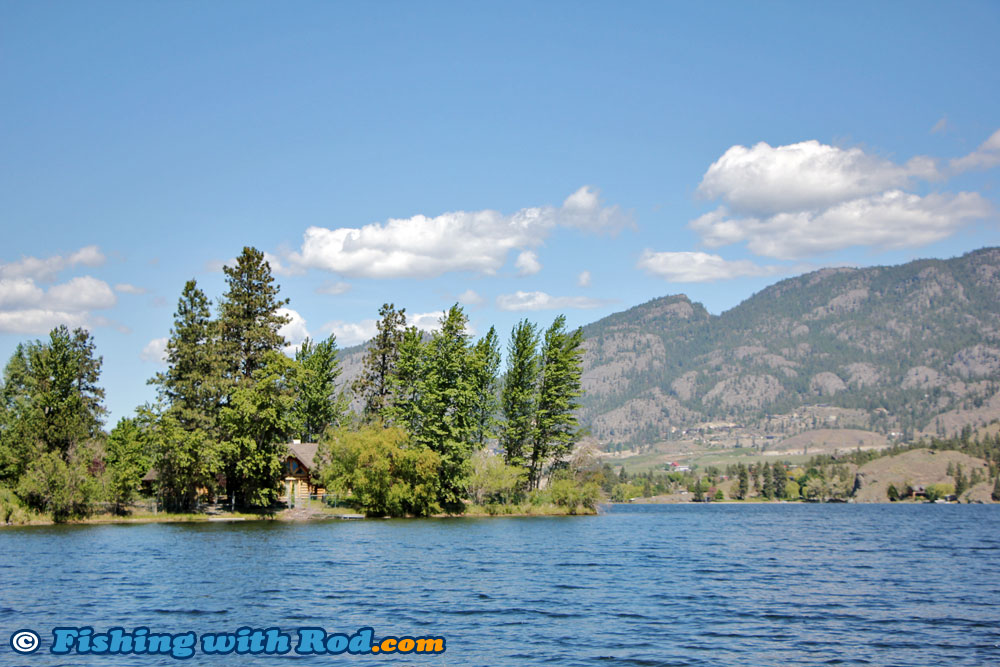
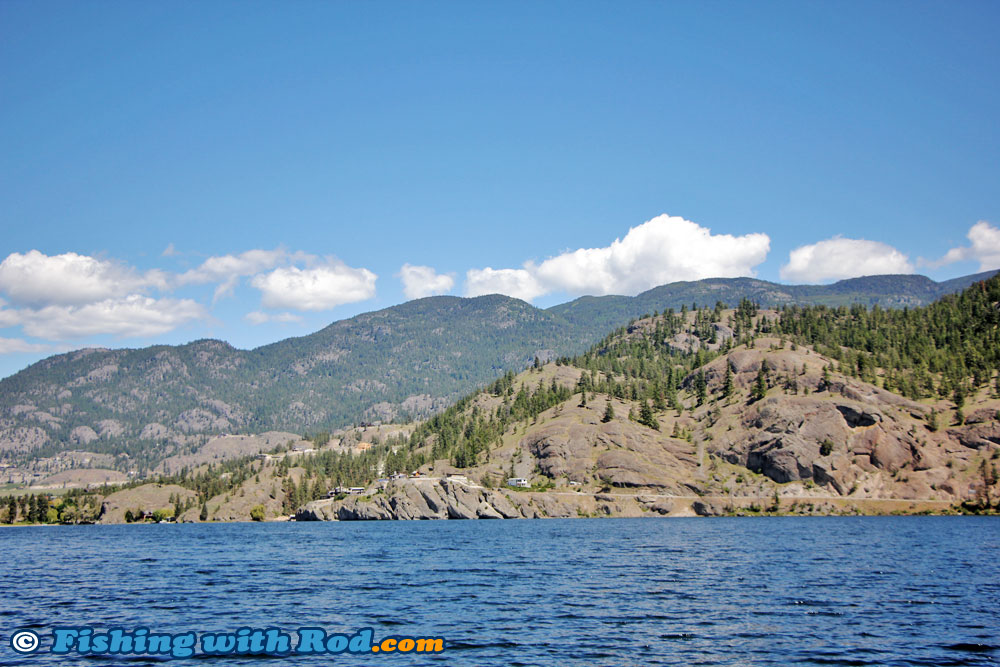
Nina and I made our annual trip to St Mary Lake on Salt Spring Island last weekend. We normally do a trip in late June, when smallmouth bass fishing have been excellent in the deeper water columns. Two years ago, we did a trip in the first week of May and the trout fishing was excellent while the bass fishing was slow. This year, we decided to give late May a try so we could possibly target both smallmouth bass and trout successfully.
This spring’s weather has not exactly been fantastic, so we were not too surprised to be greeted by mist and dark clouds when we sailed away on the ferry from Tsawwassen. We stayed at our usual cabana at Lakeside Gardens Resort, where we could park our boat just several feet from our doorstep. The cabana is equipped with stoves, a fridge and a double bed. It is almost like camping, but comfortable enough after a long day of fishing.

Rain clouds hovering above gulf islands.

Cooler weather also brought out other local residents.
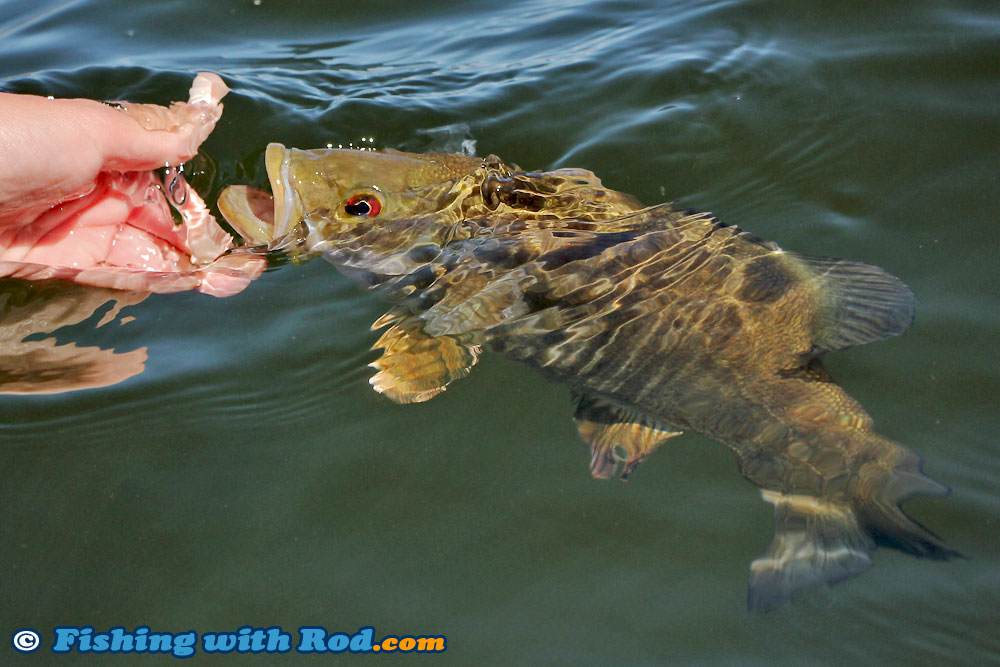
Although the rain dampened most of our four-day trip, the fishing made up for it. Soon after our arrival at the resort, I decided to throw a fly out from the floating dock because we have always caught some big bass from there. After four casts, a hefty fish grabbed the fly and gave me a good tussle. It spat the hook just prior to reaching my hands. A second fish, around the same size, also fell for the same leech pattern soon after. In spring months, large smallmouth bass take over the shallow portions of the lake to nest and spawn. They are territorial, predatory, so anything thrown at them usually works right away.

Not bad from the floating dock.
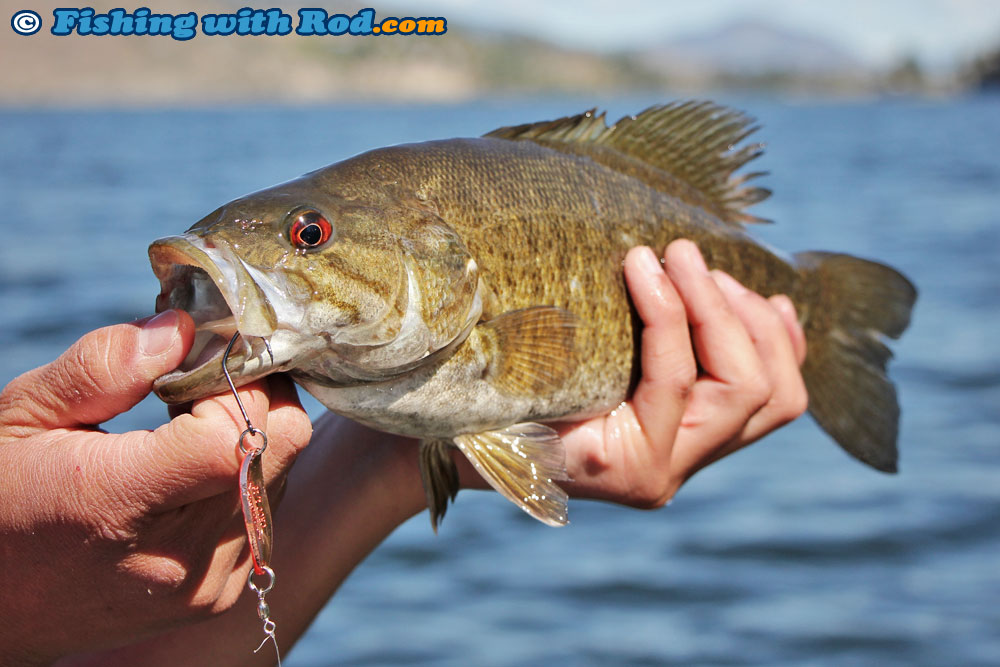
Beside flyfishing for them, the reliable spinner did not disappoint again. Large aggressive fish never hesitated as I sneaked up to the reed beds with the electric motor and threw the spinner over them. The bites were explosive, usually resulted in some surface thrashing before diving deeply. It is a rather exciting way to fish on the light spinning rod.

The magic spinner does it again!
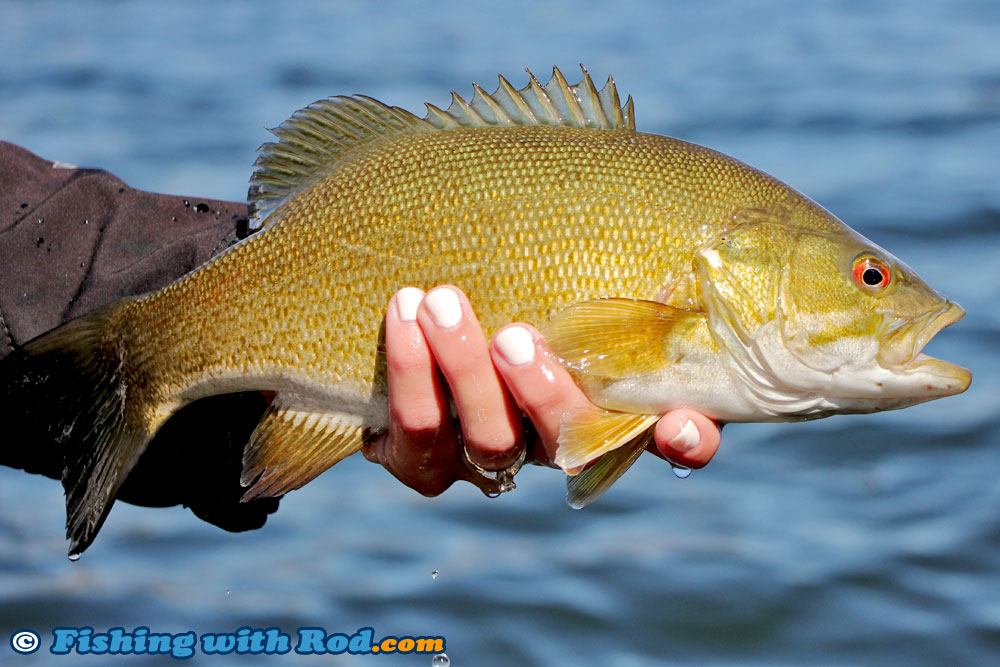
My largest bass of the trip came on Sunday after I spotted it thrashing something on the surface. The distance between us was large, but it was worth a shot. I threw the spinner as far as I could and it landed just short of where it was. There was still a chance. After two turns on the spinning reel, it pulled the whole rod violently and sent the drag screaming. The fight lasted several minutes in the rain before I could grip it firmly with both hands.

Say ah!
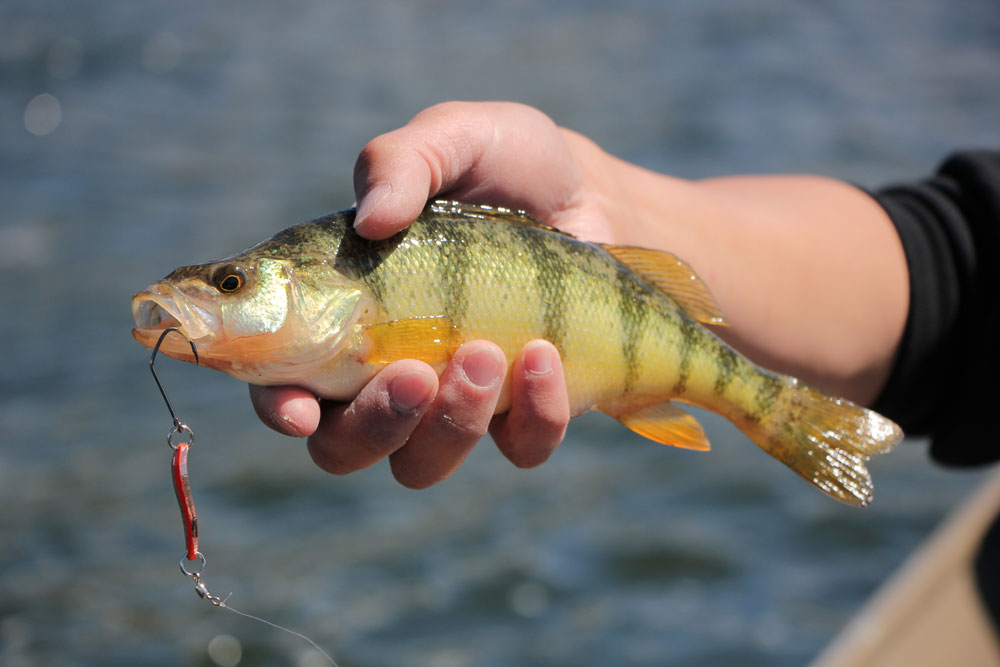
Another spiny-ray species that we regularly encountered was yellow perch. This invasive species in British Columbia is known to take over and ruin a lake fishery due to its aggressive feeding behaviour. At St Mary Lake, they don’t seem to be as widespread. These perch, only grow up to 10 inches long, were actually pretty entertaining to catch on the fly rod when nothing else was biting.

Yellow perch.
The rain intensified on Sunday evening and so did the fishing. Right in front of the resort, I spotted a patch of water where dozens of fish were feeding. For two hours until I could not see my hands, I casted and stripped the fly with the clear intermediate sink line, hooking one bass on almost every cast. This is what has kept us coming back each year.

One more for the camera.
Overall the fishing was a lot more challenging than previous years, mostly due to the cooler weather. Although we encountered less fish, there were bigger fish, which is always a good trade-off. Now that our first road trip of the year is finished, it is time to plan the second. In the next few months, we will be visiting many other remote fisheries across British Columbia as the weather improves.
Since Dave from Currie Artworks, who resides in Whistler, informed me that Alta Lake was ice-off in early April, I have been eager to visit it. Despite of the mild winter, spring’s weather turned sour. It has been either windy, rainy, or both. It kept this fair weather fisherman at home whining for weeks. At last, some consistently warm days have arrived. Nina agreed to drag the boat out to Alta Lake yesterday, probably just to rid the cabin fever and shut me up.
We started fishing at Alta Lake in 2006 and have been back a couple of times each year. It is definitely one of my favorite lakes to visit. Many friends have questioned why that is the case, because a trip to lakes in the Thompson/Okanagan region would yield some stronger, bigger rainbow trout. Alta Lake’s rainbow trout rarely grow larger than 14 inches long, while its cutthroat trout lack the fight that you would see in an interior rainbow trout. I do not really have a good reason for liking it. Perhaps Whistler’s scenary appeals to me, perhaps I simply enjoy looking at cutthroat trout that are completely covered in fine spots. For whatever reason, I’ve returned year after year regardless whether the fishing was good or bad.

We decided to arrive at the lake just past 1:00pm and fish until the sun set behind the mountains. It was a rather late start because in the past, I’ve found that it tends to get breezy in the afternoon before calming down in the evening. Too often we arrived in the morning, only to be pounded by white caps after a couple hours of calmness. Wind is one element that can suck all the energy out of a fisherman on the boat. On those days, we usually ended up leaving before the evening bite.
It was almost 2:00pm once our boat was set up. The sky was clear with a few small patches of clouds that did not seem threatening. As expected, it was a bit breezy, but it seemed to balance very well with warmth from the sun.
I decided to bring Nina to a spot where we have caught numerous trout during most outings. Still not too familiar with flyfishing, she chose to use a spinning setup for this trip. I outfitted her with a tiny spoon that we picked up in Denmark last winter. The entire setup was rated 4lb test, perfect for everything that swims in this lake. Meanwhile, I chose to use a 4wt setup with a clear intermediate sink line. The fly of choice was a brown wooly bugger, which has been successful for both rainbows and cutties in this lake.
It really did not take long before we found some action. After a bite slipped through me, Nina had the first hook-up. The subsurface fight indicated that it was a cutthroat trout. The yellow flashes soon confirmed our guess.

After releasing her first fish, it only took fifteen more minutes before the second fish attacked her lure just several feet from the boat. This fish dove deeply, the bend in the rod suggested that it was a good sized fish. Nina kept the tension on the line while the mysterious fish circled below the boat. When it surfaced, both of us were screaming with excitement. It was what we had come for, a solid, long, spotty cutthroat trout that I estimated to be around 18 to 20 inches long. The absence of scars and firey orange cutthroat mark made this a perfect specimen, not to mention it was Nina’s first large cutthroat.


Despite of her instant success, I failed to produce. I proceeded to miss a couple more bites and briefly hooked onto a small fish. It was time for a move.
We shifted two more times without anymore bites. Maybe it was a bad idea that we moved in the first place. Never move from a spot where the fish are biting, lesson learned. Nina managed to connect with one more cutthroat trout and a very small ambitious rainbow trout, but overall we were not feeling many bites. At 5:30pm, we decided to give the original spot another go.
It was indeed the hot spot! Once anchored, a fish grabbed my fly after a few casts. It also escaped before I could touch it. At this landing rate, my day was looking bleak. That frustration quickly evaporated when I hooked up again. I took my time to ensure that it stayed on the hook this time. At last, a sigh of relief was let out when the cutthroat trout was scooped up by the net. It was dwarfed by Nina’s early catch, but I’ll take it!

There seemed to be a school of them. After releasing the first fish, the second fish came within a few more casts, followed by the third fish. All of them were in the same weight class, suggesting that they were congregating and feeding at the same place.

In total, both Nina and I caught three cutthroat trout each, but her giant catch earlier in the trip stole the prize!
If you ever wish to try out a Lower Mainland lake where catch and release is mandatory, then Alta Lake can be a very good option. Give it a go, you just might be pleasantly surprised like us.
To be honest, fishing for bull trout in the Tidal Fraser River has been pretty tough for me so far this year. Unlike other years, after numerous blanked outings around my house, I gave up before freshet was even in full swing. Perhaps they were simply not excited about the usual lures and flies that I offer, or perhaps they were simply not at my usual haunts. It has been frustrating to say the least, but this is what targeting predatory species in the Tidal Fraser River is all about.
Seeing that we are finally getting some nice weather, we went down to one of the local beaches this afternoon so we could soak in the rays and make a few casts. Although the Fraser River is now pretty muddy due to freshet, you can still catch bull trout. The best method to do so is by bait when water condition is poor. It is not a technique that we use often, because using bait on a catch and release fishery seems to be a waste. Secondly, bull trout have a tendency to take the baited hook too deeply. We avoid this by not letting the fish biting on the bait for too long. Although completely legal, it is something that we choose to do once awhile so our impact on these fish is minimized.

The moderate westerly breeze from our back and the sun in front of us made it very comfortable. We had a great view of the river and our rods that sat firmly in the holders. Sea gulls hovered and rested on the pylons, celebrating after so many miserable spring days in April.

The bites came on pretty quickly, but it was the wrong species. The little twitches on the rod tip told me that sculpins were hungry. It did not take long before we brought one to the beach. These common sculpins can be a nuisance when bait fishing for bigger species, but we always release them with care because they are an important food source for bigger fish and birds.

The tide turned at 1:30pm. From past experiences, I have found that the bites come on soon after flood tides. Today was no different. While reeling in one rod, I spotted a couple of big tugs on the other rod. I called out for Nina to grab the rod. She pulled and the bend in the rod suggested a bigger fish on the line. The line suddenly became slack as she retrieved, but the fish was not lost. It was simply swimming toward us. One minute later, it emerged from the silty water and we were delighted to see a bull trout on the line.

Once it was released, it did not take long to hook the second, third and fourth fish. There was definitely a school of hungry bull trout in front of us. The largest fish of the day did not even want to wait for the bait to settle on the bottom before grabbing it. It was a solid fish, which probably has been feeding on plenty of salmon fry that are travelling down the Fraser River.


We decided to end the trip after two hours while the fishing was still pretty good. In total, we brought in five bull trout and lost a couple more, definitely not a bad way to start our weekend. Tomorrow we will be attending the 20th Great Salmon Send Off at Stoney Creek. We will be doing flytying workshops, arts and crafts for kids, as well as handing out reading material on both fresh and saltwater fisheries in the Lower Mainland. Be sure to come by for a chat!
Today we visited Buntzen Lake to finish up a filming project that will be published on the website soon. Buntzen Lake was stocked with 750 rainbow trout just over one week ago, so fishing should not be too bad. We were not there to catch fish, but having that expectation was motivating.
Surrounded by a fairly dense forest, Buntzen Lake is a lovely destination for Lower Mainland residents who sometimes only have one day to spare for fishing, hiking, horseback riding, picnicing.


Once we arrived at our chosen spot, I spotted a rise not too far from shore. I quickly tied on a small lure and casted toward it. It fell for it after two casts. I scooped up the fish for a photo after fighting it for a few seconds.


After finishing most of our filming, a couple more fish rose in front of us again. I proceeded to cast the lure out and as if it was planned, another fish grabbed it immediately. After releasing it, I made another cast and hooked another fish, which spat the hook after a few seconds. I made my third cast, another fish attacked the lure as it sank down. It made one giant leap and sent the lure flying back toward us.
Bonuses between filming sessions, it made the day at the office much easier!
Yesterday we made our way up to Squamish and took a look at a couple of lakes in the area. We had expected pretty good fishing at Browning Lake, which was stocked with 1,300 rainbow trout by the Freshwater Fisheries Society of BC last week, but it turned out to be rather challenging. We also took a look at Alice Lake where I had success in the past, but they were still too shy. Despite of a lack of catches, the nature surroundings at both lakes made up for the trip. This video is intended for those who are interested in getting into freshwater fishing in British Columbia but still not sure how to do so. Locally stocked lakes are the best places to start!
So what’s with the weather? We celebrated an early arrival of spring back in February and suddenly it is back to December again. Lakes around the Lower Mainland have been stocked since last week (see stocking database) so this morning when we saw sunshine, we decided to drop whatever work we had and headed to Como Lake for some easy fishing.
Easy fishing it was not to be, because as soon as we left Richmond, we found clouds all around us. We forgot that the sun shines in Richmond, it is most likely raining in the rest of BC. We arrived, sat down on the floating dock, and flurries greeted us! The light westerly breeze did not help either.

Once most of the clouds moved on, it was slightly more pleasant to fish. I managed to catch and release one, while Nina missed several good tugs. So much for foolish urban stocked rainbow trout, but that is good because the fishing wouldn’t be as exciting if it is not challenging.


Environment Canada has forecasted a few days of sunshine, so lets see how accurate that is. If the sun indeed shows itself, be sure to take advantage of all the catchable rainbow trout stockings that are happening in the Lower Mainland and Fraser Valley this month.
This video blog was supposed to be published a couple of weeks ago but we ran into some technical problems recently. The computer that has been working so hard to render all the video that you watch finally gave up. The silver lining of this is now we have a better machine that can do the tasks much faster and produce better quality flicks.
Anyway, this video blog features the second trip that we did to Kawkawa Lake. Unlike the second trip, we had a relatively sunny day so most of the fish were feeding on the bottom. We managed to tag a few but missed much more due to the soft bites.
A 12 minute video tutorial on this particular fishery is now available for subscribers.
There is always a good reason to be excited in the Lower Mainland at the beginning of March. Birds sing, flowers bloom and fish bite! With unseasonably warm weather, we loaded up the boat this week for a trip to Kawkawa Lake in Hope. Although the fish that we are after barely reach 12 inches in length, this is one annual trip that I always look forward to. Catching countless fish among friends after spending many months away from the boat is surely a great way to celebrate the arrival of spring.
After a rather sleepless night, we left Vancouver with the loaded car at 8:00am. With clear sky above us, we were confident that it was going to be a fun day of fishing while basking under the sunshine. Could we be more wrong than that! Misty weather greeted us when we passed through Chilliwack. By the time we arrived in Hope, rain was coming down in buckets! We made it this far, it only made sense for these fair weather fishermen to brave it and catch some fish.The first two hours were rather uneventful. Beside catching the odd landlocked coho salmon, the bite was not on at all. As time passed, the boat slowly turned into a bathtub. Nina had enough and decided that it was time for her to head back into the car.

The look after being pounded by rain in a bathtub for a few hours.
After dropping her off at the boat launch, I proceeded to head back out and join Nick, Marco and few optimistic others. Funny enough, the fishing turned from night to day as soon as I anchored. Perhaps it was my tiny sensitive float, perhaps it was my well rested arms, I was hooking fish one after another. Within minutes, I had kept my daily quota of kokanee as well as releasing a couple of coho salmon and cutthroat trout.Nick explained that these kokanee, which are mostly three year old, typically measure 10 inches in length around this time of the year. Because the lake lacked ice this year, the feeding period is lengthened, therefore the fish that we encountered were at least 1 inch longer than average.

Landlocked coho salmon.

Spotty cutthroat trout.

Head shot.
I phoned Nina to report my instant success and lure her out of the car. It was time to cruise back to the launch and pick her up. We returned to the spot in no time and luckily the surface feeding frenzy did not fade away. In fact, it was becoming more intense. For the next several hours, we hooked, lost, kept, released many fish until the groomy weather was once again too much to put up with. We packed up at 4:00pm, only to see sunshine approaching in the horizon as we drove out of Hope!A 8 minute video diary of this particular trip is now available for subscribers.
Like just about everyone else on this planet, we have been caught up with the Olympics hype by either gluing ourselves to the television set or walking around Downtown Vancouver. Today we decided to take a break from it by doing some fishing in the valley with Nick Basok from Chilliwack Dart and Tackle. While finishing some filming last week with Nick, he mentioned that cutthroat trout fishing has been good lately and generously offered to take us out as usual. I accepted the invitation with no hesitation since these opportunities do not come often.
Coastal cutthroat trout is one of several popular target species throughout the winter months in the Lower Mainland. While it is quite accessible, it is one fishery that we have not really explored that much.
We were pretty excited about the forecasted 15C sunny weather. Fishing and basking under the warm sun in mid February, what more could one ask for? To our surprise, the northeasterly outflow was strong enough to shake the car around when we arrived in Chilliwack. Nick assured us that it would not be an issue when we met up, or would it?

Snow capped Mount Cheam looked stunning under the sun.
Our chosen spot was somewhere between Hope and Chilliwack along the Fraser River, which is where most anglers target these so-called ghosts. The wind was not easing up, but thankfully we had our waders and wading jackets to stay shielded. Nick steered the boat into a semi-sheltered spot where our lines could actually stay straight.

The anticipation.
Today’s tactics were to use a variety of techniques. We started out flyfishing with small nymph patterns. Soon after starting, I realized that my float line setup was not getting my fly to the depth at where the fish were supposed to be. Meanwhile, Nick was not having trouble catching fish as usual. After missing a tug on his first cast, it took another ten minutes before his first hook-up. It was a small but fresh looking feeding cutthroat trout. The bites were not frequent, but consistent. In the first hour, Nick managed to connect with half a dozen fish while I managed one with my spinning setup after abandoning the fly.


Small but pretty.
We took a brief break by a tiny creek at around 1:00pm. Nick explained that the cutthroat trout fishing is typically slow in the morning and has a tendency to improve in the afternoon, perhaps due to the difference in temperature. That was encouraging.
During our break, we spotted a couple of rises so it only made sense to move into where those fish emerged. The change in location was a good one, because we found a hungry load of fish. I decided to take a break from fishing after the dismal performance in the morning and let Nina do a few casts while I manned the camera. Almost immediately, both Nick and Nina could not keep fish off their lines. Nick continued catching them on the fly while Nina was feeling tugs on her 1/8oz spoon on every single cast. In just a short while, there were many double headers. Although the catches were dominated by overwintering feeders between 10 and 14 inches long, a few larger prespawning fish in the 16 and 18 inch range were encountered too.


A spotty spawner.
Seeing all the action, I could not resist to make a few casts again. Nick handed me his fly rod so I could make a few casts while he switched to a bait rod. It took awhile to get used to the new setup, but I was finally feeling the rod dance again.

Fish on at last!
Among the few dozen cutthroat trout that we managed to connect, there were also several rainbow trout and mountain whitefish. The diversity in species and size range is definitely what attracts anglers into this fishery. There’s always something new to see and learn.

A scaly species in the salmonid family.
The wind died down as we entered the shadow of the nearby mountains. It was time to call it a day because our hands were cold and wet from handling so many fish for once. We arrived home just in time to see the end of hockey game between Canada and Switzerland. It could not have been much better than that!
We have been back from Denmark for almost a month now. Although we are really glad to be enjoying the mild weather, we still have not touched a fish yet this year. A couple of days ago, seeing that we were going to have a break from the rain, we decided to spend a day searching for some winter bull trout.
Unlike interior bull trout, these coastal populations are amphidromous, meaning that they spend their life travelling between the ocean and rivers. In the winter months, these fish tend to congregate in rivers where most of them will end up spawning.
It was just another typical day of winter trout and char fishing. There was a lot of walking with little success. Watch the video to see if our persistence was paid off at the end!
Taking advantage of the much milder weather that we have in Southern BC than Denmark, we decided to give steelheading on the Chilliwack River a go last week. As usual, we fished with our good friends Chris and Lew who are seasoned anglers. With over 30 years of steelhead angling under their belts, it is worth listening to whatever advices that they offer. The fishing was unfortunately slower than what we had anticipated so Chris and I had a conversation on what to look for when fishing for steelhead on the Chilliwack River, as well as how the fishing has been this season and what the steelhead broodstock capture program is all about.
It has been over one week since we returned from Denmark to Canada. Although rainy at times, the mild weather is definitely a very welcoming  change after weeks of snow and ice on the other side of the Atlantic. It has also been over a month since I connected with my last fish. To fix the cabin fever, I am eager to get out to find a tug or two. Today I briefly visited one of my regular spots, Garry Point Park, hoping to entice a bull trout or cutthroat trout. No such luck unfortunately, even though the water clarity was more than satisfactory. January is always a tough month to find a fish down in the Tidal Fraser, due to the lack of food and colder environment. It was still a rewarding morning, as I saw a large beaver swimming against the outgoing tide and a statue-like heron hunting for fish. News from Chris on the Chilliwack River is suggesting improvement in the steelhead fishing, so we may need to venture into the valley to find a tug and cure the fishing bug.


After last week’s brief success, I returned to the old spot for the second time and hoped for some bigger catches. To my surprise, I was lucky enough to see some activities as soon as I arrived at first light. The video tells the entire story. Enjoy!

Beside one coho salmon trip and a couple of brief outings to my usual spots in Steveston, fishing in this past November for me was a bust. For this fair weather fisherman, gale force wind and bucket loads of rain made it rather unappealing to be outside. Whiners definitely don’t catch many fish!
I was somewhat relieved to get away from all the storms last week, not to a tropical paradise, but back to Denmark where I spend each Christmas. Even though the weather is not exactly better on the other side of the planet, it is refreshing and motivating to have a change of scenery and target species.
Winter along the Danish coast means sea trout fishing, which I have tried for several seasons now. I have not had much solid result until last season, after studying maps and trying out dozens of spots. Figuring out where these fish might be is only half the challenge, getting them to commit to your presentation is the other half. Being a naive freshwater fisherman, I remember showing up with some light spinning lures during my first outing to the coast. They never worked. Half of the time they probably did not even reach the fish because they were too light, the action of the lures also did not match up with their feed. After many trials and errors, I am now equipped with the right tackle and some confidence when I am out targeting Danish sea trout.
Yesterday I returned to a spot where I visited exactly one year ago. During that outing, I was teased by dozens of trout that chased but never commited to my lures. In the end, I had to settle with one small fish that was foolish enough to grab my fly. Ever since that trip, I have been waiting for a replay of the same scenario so I could perhaps attack it differently. For that to happen, the wind has to come from the east, otherwise it would be difficult to fish with both wind and waves pounding the shoreline. yesterday’s condition could not be any better. Although the temperature never reached above zero Celcius, the light easterly wind and clear blue sky gave me a very optimistic outlook of the trip.

The Japanese-made European fish mobil.
Just as the sun was trying to peek out in the far horizon at 9:00am, I made my way to the same rocks where I encountered these fish right away. It is every fisherman’s nature to fish the same spot where we previously had success and seek for similar outcomes. I guess this rewarding feeling is somewhat similar to what gamblers long for.
With the sea being so calm and flat, I could spot every underwater structure around me. Sea trout are not necessarily very far out from the beach. At times they dart between structures, hunting for crustaceans, sand eels and other baitfish. In the winter, some might even rest themselves in the algae bed so they can enjoy the warmth from the sun. I casted and constantly looked for shadows and ripples, hoping to spot a feeder or two. For the first two hours, there was not a single sign of life. If this was my first sea trout outing many years ago, I would have been quite disappointed. Since then, I have learned to accept this as a norm and understood that the fishing can also improve rather fast unexpectedly.

Casting into the calm sea.
At 11:30am, after the sun had brought some welcoming warmth, the morning finally was a bit more exciting. On one retrieve, I spotted a swirl at where my lure had just passed through. I wondered whether it was a fish or just some algae protruding due to some small waves. Just as I was thinking that, a fish hammered the long lure just before it reached the thick algae bed in the shallow water. The modified 4wt spinning rod performed its magic as the silver sea trout splashed on the surface. I kept the rod high as it began peeling some line off the little spinning reel, because too often my fish have been lost when they swam into the thick algae bed. The struggle was short lived, because its size was nothing to brag about. Nevertheless, a small catch is still better than a fishless day.

A little silvery catch.
After setting it free, I was delighted and relieved to have something to write about so quickly. During my past stays in Denmark, it always took several trips before I could find some success. I made some more casts to the spot, hoping that I had encountered a school of feeders. Another thirty minutes went by and I concluded that it was not a school.
I returned to the same area with a fly rod after a well deserved lunch break. Perhaps a small fly would outperform the big lures being retrieved at a faster speed. I worked it across the waist-deep water systematically, hoping that there would be some fish hiding in the shallow algae beds. After an hour, there was finally a tug. The first was undetected as I tried not to lose my footing while stepping off a rock. A few strips later, it tugged on the fly the second time but I still was not prepared to set the hook. I immediately shot the line out again, tempting aggressive sea trout that have nothing on their mind except feeding is not difficult. As soon as I started stripping in the fly, the same fish or its companion took another swipe at it again. Unbelievably, I managed to miss it too. It ended as quickly as it began. The next dozen casts could not do the trick. This is pretty much what coastal sea trout fishing is all about, they come and go within a blink of an eye.

The rest of the afternoon was just as unproductive. With the sun disappearing at 3:30pm, I packed it up before the fingers froze. One catch in early December is definitely a good warm-up of this year’s winter sea trout fishery for me, I look forward to see similar or better results before I return to Canada in mid January.

Bull trout such as this maybe small, they are still very enjoyable to catch on light gear.
For over a week now, I have been haunted by a seasonal cold that just does not want to unleech itself. This kept me indoor and away from the tributaries where coho salmon fishing has been at its peak. The constant rain has not helped either. To kill the fishing bug, I decided that the best thing to do was to drop by the local beaches in the Fraser River estuaries for an hour or two each day. The main target species is not salmon, but trout and char, on light tackle. After half a dozen outings with both fly and spinning gear, I seem to have noticed an interesting trend.
In the past, my success has always occurred just after the tide peaks. Last week’s high tides occurred around early afternoon, but somehow, rain or shine, I was unable to locate some fish, yet the same spots where I had just fished would produce in the last hour of the day. Bull trout could be seen following my spinner or fly closely behind and either attack or turn away when they ran out of water to swim in.
Normally fishing in the Fraser River estuaries is more tidal dependent than light dependent because the poor water clarity already provides enough cover for fish during the day. Perhaps when lighting becomes low, these bull trout are more willing to hunt in the shallow water.
This weekend, I decided to put that theory to the test. Yesterday I began fishing at 1:00pm but did not manage to hook a fish until 5:00pm. The bites were furious. Another fish was fooled once the first was released. This was followed by three more chances, including the sighting of a rather large fish following behind my spinner.Â

Taking in the November sun while waiting for the bites to come on.

A collection of small spoons, spinners and crankbaits is your ticket to plenty of bull trout action.
I returned today to the same spot with great anticipation that I would connect with just as many fish. I began at 2:00pm, three hours before sundown. The first two hours were again fishless. With one hour of sunlight to go, I reached yesterday’s hot spot and casted the 1/8oz green spinner that has always done well for me. It took only two turns on the reel handle before I felt a solid tug, but the slow reaction never resulted in a hook-up. I was quite confident that it may come back as it only felt the hook briefly. A few casts later, I felt a light tug as the lure approached me. I continued retrieving and felt a stronger tug. Once again, the slow reaction never resulted in a hook-up. At this point, a big cargo ship cruised by so I decided to take a break while the big waves pounded the shoreline.
Once the water calmed down again, I sent the spinner out again and was prepared for another take. As if it was rehearsed, another fish (or the same fish) went for the spinner again when it rached the shallow water. This time I was quick on the hook-set and the rod shake confirmed the hook-up, but it was short lived. This fish spit the hook and sent the spinner flying back toward me after staying on for a few seconds.
Deflated, I decided to walk to another spot then come back just before dusk so these fish could settle down a bit. I returned 30 minutes later and an unsuspecting bull trout immediately attacked the lure. This fish took a few strong runs but was unable to escape. It measured just under 17 inches long, the best one so far this season.

Excited, but I was also aware that my time was running out because the sun had already set. I made a few more casts into the same spot without much result. I decided to work the beach systematically by moving several feet after each cast. When I was about 50 feet away from the spot where I hooked the first fish, another fish attacked the lure in the shallow. The strength of this fish suggested that it was a larger specimen. It also put the small spinning reel to work for a couple of minutes before I was able to guide it into the net. This fish measured just under 19 inches long!

With two fish brought to the net within ten minutes, I was already quite satisfied. I dried myself up and kept working along the beach, hoping that there were more than two fish in the area. Five more minutes went by and to my surprise, another fish decided to grab the lure in the shallow water. This fish was a juvenile compared to the other two, only around 14 inches in length.

While the fall salmon season is gradually tapering off, fishing for trout and char in the Fraser River and tributaries will only improve. Fishing in Southwestern BC indeed takes place year-round. The bull trout fishery in the Fraser estuaries is close enough to the city that one could easily take advantage of it by doing these short outings. For more information, please read this article.
The Tidal Fraser River finally opened for coho salmon fishing on Saturday October 10th (see notice). This is a fishery that I anticipate each year, because it is so close to home and the fishing can be spectacular. Beside coho salmon, it is not unusual to encounter other species too, such as chinook salmon, chum salmon, cutthroat trout, bull trout, northern pikeminnow and event a stugeon or two. Not knowing what I may connect on the next cast makes fishing the Tidal Fraser River in October and November very appealing.
While bait such as roe can be used, my preferred method is to cast and retrieve spoons and spinners. Not that I think it involves more skills to catch them on hardwares than bait, I simply find it hard to sit and stare at a rod tip for a long period of time. I also find that bites are not as easily missed when retrieving a lure.
My choice of lure is a 1/8oz spinner with a size 3 green blade. This lure has been especially good to me when fishing for bull trout, cutthroat trout and jack coho salmon. I arrived at 11:00am on opening day, two hours before the tide peaked. In the first two hours or so, I managed to miss two bites while nearby roe anglers had a few bites and managed to land one jack coho. Once the tide peaked and started dropping, I missed another bite, followed by a 35cm bull trout that did not get away fast enough at around 2:00pm. At 3:15pm, the tide had dropped two feet and I had another quick tug. I hooked, watched the rod bent and for the first five seconds the fish fought sluggishly. I assumed that it was just another bull trout and retrieved slowly as the fish was being towed in. Suddenly, it leaped straight out of the water and I could see the 6lb or so silvery body was in fact a coho salmon. The fun soon began as the fish bolted and took several powerful runs like all ocean fresh coho would do. It must have taken about six runs before I guided it into the net. Not a bad opening day indeed! It has been two years since I landed an adult coho salmon in the Tidal Fraser River. Last year, a dozen or so outings only yielded a hatchery jack coho that I managed to drop in the water after bonking it.

This coho was a wild fish. Just about all the scales are intact, the body was very deep as it should be since it just entered the river. A quick photo and we sent it back to the river so it is now on its way into one of the valley tributaries. Hopefully this is a sign of many more good days to come in October.
I returned on day two to hit the same tide, hoping for coho number two. There were more anglers, either spincasting or plunking with roe. This is fine, as the Tidal Fraser fishery always has a relaxing, friendly atmosphere. More anglers also keep each other motivated if there are sightings of fish. Day two was unproductive for me beside a tiny trout that greedily grabbed my 1/4oz spoon. Others were more successful, the odd jack coho and bull trout were landed. The highlight of the day was the large silver coho in the 10 to 12lb range that one angler was lucky enough to connect with.

Day three’s weather was much more tolerable. It was not as windy and the overcast sky was ideal for coho salmon fishing. I arrived around Noon to find Mike and Andrew already patiently watching their bar rods. They reported many fish rising when they arrived at 10:30am but it had been quiet since.
Even though the update was not that exciting, I was quite confident that we would find some fish. Unlike streams, fish are constantly on the move in the Tidal Fraser River so the fishing result can change by the minute.
Sure enough, I immediately felt some taps after sending out my little green spinner. Not long after, I connected with a jumpy 12″ cutthroat trout that swam into my net very willingly. I was quite excited, because for awhile now I have been attempting to collect DNA samples from Tidal Fraser cutthroat trout that the hatchery wants. A quick snip, a measurement and a photo, it was time to send it back to the river.

Silver cutthroat trout can be common in the Tidal Fraser in October.
As soon as I released my fish, Andrew felt some strong bites on his bar rod. He forcefully set the hook and the bend suggested a rather large fish was at the end of his line. The pulls seemed very unsalmon-like as it stayed in the deep for a long time. We put the net down and began speculating. Perhaps it is a sturgeon? The fight went on for ten more minutes before the fish emerged from the cloudy water. It was indeed a white sturgeon! It took awhile to bring in the four foot long fish on 15lb test tackle, but Andrew did it perfectly. Without gloves, Mike grabbed onto its tail, hoping that the sharp scutes would not cut his hands.

A surprising catch!
It’s unusual to catch a white sturgeon when fishing for salmon with roe, but it’s not impossible. The area is usually too shallow for sturgeon to swim in, unless you cast further out like what Andrew did.
Once everything settled down again, I returned to my spinner casting. Once again, it did not take long before I connected with another fish. This time, the catch was a bull trout. As I was collecting a sample from it in the net, an angler had come down and made a cast nearby. He immediately connected with another cutthroat trout! There were definitely some feeding fish around.


While these fish in the 12 - 16″ range are no trophy coho, I rather catch some of them than catching nothing, especially on light tackle.

The rest of the afternoon was just as exciting. Andrew managed to land another white sturgeon. Carlo joined us and managed to be teased by several coho salmon that decided to only stay on his line for no longer than two seconds. I added one more to the species catch list, a beefy northern pikeminnow that has not felt the arrival of winter yet. A few chum salmon could be seen rolling as the tide peaked. This is a very good sign, because there have been some worries that the Fraser River chum salmon return seems either low or late.
The Tidal Fraser River never disappoints. This Thanksgiving Weekend has resulted in three days of memorable fall salmon fishing.
The Chilliwack River, or more commonly known as the Vedder among anglers, is by far the busiest river fishery in British Columbia. One should not be too surprised, since it is less than 100km from two million Lower Mainland residents. Beginners, who could not care less about what they catch, love it because it usually yields many salmon every trip. Seasoned Vedder anglers enjoy testing their skills with coho and steelhead. We rush to the river before dawn because we love that first light bite, but also have the anxiety of having the trip ruined by others. It is a love and hate relationship that most of us cannot seem to get away from until we finally become too tired of it.
For the most part, my trips to the Vedder have always been very enjoyable. This is due to the fact that IÂ am fortunate enough to have the opportunities to fish with experienced local anglers. Quality also supercedes quantity for my outings so I have a tendency to seek for fishing spots that are void of anglers even if less fish are to be had. If help is requested, I enjoy sharing the tips that have been passed to me. These objectives usually ensure that my trips would end well, but I have always been prepared for the chance of encountering a bad scenario. Today’s trip may just be that day, at least part of it anyway.
After the first scouting trip last week, the coho salmon fishing seems to have picked up. Chris phoned yesterday morning and his first words were, “Why aren’t you fishing? They are rolling everywhere!”
This was not the first time those words were spoken over the phone, but it always got me hyped up on coho fever. I decided that it was time for another visit this morning to see if I could bag a coho salmon or two.
Having his day off, Shane also decided to tag along. Shane spends most of his time targeting trout and char on the fly (see egging for trout in a salmon stream). Occasionally, he visits the Vedder during the fall salmon season but has always been unsuccessful on catching a hatchery marked coho salmon. His failure to connect with one has made him a skeptic on short floating, so it was time to put an end to his skunk streak.
The sleep on the night before was short and restless as usual. The thought of seeing the floatès disappearance and silver flashes always keep the heart pumping hard. The three of us met up at 6:30am at the hot spot. Constant splashes could be heard in the darkness, which only intensified the anticipation. We made our way down the ripraps when it was bright enough to see. The spot that Chris had picked out is a deep sandy tailout that hardly has any current. It is a classic coho spot, but I could also see hundreds of pink salmon holding in the same area. Never have I seen that many pink salmon in the Chilliwack River, which is fantastic as their carcasses will become abundant nutrient for rearing juvenile salmon and steelhead.

The pink army
Once the floats were visible in the water, we began sending our bait into the run. The bites were immediate. Shane Connected with a fish that leaped several times before it tangled the line up on a log. I was quite certain that it was a coho salmon (aren’t the ones we lose always are?). I soon found a bite too, but it was a feisty pink salmon that did not want to be unhooked by Chris. Judging by how productive it was after five minutes of fishing, we were confident that it would be action-packed for the rest of the morning. Could we be more wrong.
Entertainment started when Chris made his first cast. After greasing his reel the night before, he forgot to tighten the screw so one cast sent the drum of the reel into the water! It sank and lodged itself to some rocks in four feet deep of water. Chris attempted to net it without much success, so the alternative option was to take all the line off until the knot and drag it up.
While this was happening, we noticed the flyfisherman on the other side of the river had connected with a fish. He fought the fish to shore and proceeded to drag it up on dry bank. It is a practice that is acceptable if one intends to keep a legally caught fish, but not exactly the best for the fish if it is to be released.
While watching what had taken place and assuming that he was about to keep his first catch, I made a remark to Shane, “That must be a coho salmon! Good for him!”
“Are you sure?”, Shane replied.
“Ya! Otherwise he wouldn’t be doing that.”, I replied with condifence. After all, flyfishermen are generally more experienced.
As soon as my words were spoken, the angler, if we can actually call him that, kicked the fish in the air as if he was auditioning for “Bend it like Beckham”.
Stunned by seeing what had just taken place, I said, “I guess not…”
Shane shook his head and we were back to watching our floats.
It did not take long before this person foul hooked another fish and once again he dragged the fish up to the dry sand bar and gave the fish an even harder boot as if his day had been ruined by them.
After seeing enough, Chris advised the person loudly across the river, “Hey! Please don’t kick the fish back in the water like that!”
He immediately responded, “I don’t care! They are just pinks, a nuisance. You want to save all the mosquitos too?”
Despite of the rude reply, Chris continued, “You should be treating fish with respect.”
The language only degraded from that point, “I don’t give a ****!”
Seeing that we were dealing with someone who clearly was not going to listen, Chris simply replied, “Ok, but if you get caught by DFO doing that, it is a $250 fine.”
“I don’t give a ****!”
Funny enough, somehow he actually gave a **** after Chris took out his phone and called DFO, which unfortunately was not available. The person restrained himself from kicking more fish back in the water, but still dragged them up to dry land each time before leaving 30 minutes later.
The displayed arrogance boggled my mind. Why one chooses to be so rude is difficult to understand when the whole purpose of being out on the river this early in the morning was to relax, enjoy and appreciate. To treat pink salmon with such disrespect simply because there are millions of them returning is the same attitude that has resulted in the loss of many fisheries.
Not to have the day ruined by one individual, we kept fishing hard but only to be rewarded with some pink salmon. The coho bites that were expected did not really take place at first light.

Shane attempts to gain control of another pink prior to its release.
After retrieving his reel, Chris’ morning did not seem to improve. The bites that he had missed sent the entire rig back into the trees behind him sometimes, while other times it simply tangled up the entire rod.

The tangler!
When we thought things were almost organized, the next episode occurred. Without being noticed, an angler had moved to the spot where the previous flyfisherman was across from us. He watched us for a few minutes and decided to suggest that we were standing in where coho would swim past and that he wanted us to get out of the water!
We had difficulty to decide whether we should find his direct request offensive or funny. Even if he was right, which he was not, how an angler who arrives late could actually ask other anglers who have been at a spot to move is simply rude. Nevertheless, we decided that it was worth to have a chuckle over it and continued fishing.
After a couple of hours of entertainment, we finally settled down and fished in peace. At 9:00am, the sun just emerged from the hill top and the bite was finally on! The surface glare made float watching almost impossible and every bite resulted in the float shooting back into our face. The drift in the slow flow meant precise hookset was needed if we wanted to connect with a fish.
After failing many times, Shane rod finally displayed the welcoming bend that we had been waiting for. The rapid kicks indicated that it was most likely a coho salmon. Shane kept the rod high, to avoid the overhanging log that he hung up on earlier. The fish splashed on the surface several times, luckily leaped over the log toward him. It was indeed a coho salmon, a bright one too! I rushed to shore, placed my rod down and looked for a safe place to land the fish. It was not going to be easy along the steep shoreline, a bump and splash could make the fish spit out the hook instantly. Shane guided the fish to the nearby rocks and I made an attempt to grab its tail gently once it reached the shallow end. The first grab was a success! My other hand quickly tucked under the fish’s belly, which allowed me to firmly lift it up. The absence of the adipose fin put a smile on both our faces. Shane’s first ever hatchery coho salmon was finally landed.

For someone who had just landed his first ever hatchery coho, he sure did not show much excitement.

A fresh fall coho salmon, with most of its scales intact.
The bites went on for another 15 or so minutes before it completely died off. During that time, we managed to miss every single bite. Disgusted by the effort and slightly stressed by the number of fishermen that had arrived, we decided that it was time to make a move.
Shane and I decided to visit a spot in the mid section of the river that we are quite familiar with. Even though the sun was shining above us, the bite could always be on if the runs were undisturbed. In the meantime, Chris had left to his dentist appointment and we agreed to meet up for lunch a couple of hours later, unless the fishing was hot for us of course.
We were delighted to find the runs that we wanted to fish void of anglers. The water appeared to be much lower than last week, with ideal clarity that may keep the fish unaware of our presence. I chose to work the head of the run while Shane drifted through the tailout. Within a few casts, Shane was once again into another fish! The deep headshakes suggested that it was a jack chinook salmon, which are abundant in September and October.

Surface splasher.
It was quite coloured up, like the ones I had caught last week. When salmon are coloured up, especially fall chinook salmon, the best thing to do is to release them back to their spawning ground.

Back it goes!
In the meantime, I was also able to entice a few fish to bite further upstream but I failed to transform each hit into a fight. The quick takes suggested that they might be coho salmon, or at least I could always hope. While this was happening, Shane called me down once again. He had connected with another jack chinook salmon after losing two more fish!

Last fish for the day.

Spotty back.
After two jack chinook salmon, we managed to find a few more bites but failed to connect all but one fish that I had on for a minute. The fish, after burying my float completely, took a long solid run downstream. At first I had assumed that it was a chinook salmon, based on how it was fighting, but my mind changed when it showed its silver, purple tinted body in the air. I managed to guide it back upstream, but the unbearable hook pop happened once its head appeared on the surface. Once again, I had to return home with an empty cooler.
Despite of an eventful start that we could do without this morning, it was yet another enjoyable Vedder outing that I can both love and hate. While it was exciting to see Shane retaining his first hatchery coho salmon, it was disappointing to miss so many opportunities when fish should easily be hooked. The earlier episodes also suggest that the quality of the Vedder recreational fishery still has room for improvement. It certainly would be nice to see more fish in the river, but it would be even nicer to see more educated, respectful anglers.
This September has seen one of the bigger pink salmon return to the Fraser River and I was glad that my friend Iwan, my wife Nina and my dad were able to experience it. All three are from parts of the world (Iwan from UK, Nina from Denmark and Dad from Taiwan) where they simply cannot see biomass anywhere as large as this! It is another reason that Lower Mainlanders should feel lucky and appreciate this so called “low grade” salmon species.

Dad with a Tidal Fraser River pink salmon.
While I was glad to show this fishery to all three in September and watch everyone around me catching numerous fish, I probably had the most frustrating pink salmon season. Both Nina and I managed to land five fish each, but the similarity ends there. In total, she was able to hook into 17 fish while I only connected with 10 fish. After releasing my last fish on September 8th, I said the famous last words, “There will be more to come.” In the past three weeks, I have tried my best daily, only to end up watching Nina hooking multiple fish. I was quite hopeful until one week ago, when fish stopped showing up during the incoming tide. That is just the way it goes I guess, time to accept defeat and focus on coho, bull trout and cutthroat trout!
Yesterday I wandered around Garry Point Park to see if I could entice a bull trout on the fly. This is typically the time of the year when they emerge. Signs of fall surrounded me. The cool moist air sent shivers down the spine at times. The first flock of snow geese flew over me, heading into ladner. It seemed like just yesterday when I took photos of last year’s snow geese when they fed on the field by my house.
The fishing was rather slow, I guess these bull trout are not in yet. Near the end of my outing, I fished an area where there is a little bay behind me. In the bay, I noticed a great blue heron patiently hunting. There seems to be one hunting in that bay everytime I am fishing, perhaps it is the same one. Although fully aware of my presence, it did not seem worried at all so both fishers went on their business. At the end of a strip, I was ready to cast my fly out so I flicked the rod back. By doing so, a little trout just happened to grab onto the fly and was sent out of the water to the bay behind me. It landed not far from the rocks, but soon disappeared as it fell off the hook. I was hopeful that it would survive and swim away from the traumatic episode. A few casts later, I watched the heron stealthly shifted its position and pierced its beak into the water with precision. The same poor trout was lifted out of the water and swallowed by the feathery hunter. It took a few gulps before it was fully swallowed. Looking content, the heron stood in the bay and digest quietly while I continued my search for the first bull trout. It was a rather unusual, yet comical experience. Two hunters, one lost while the other gained, and a poor prey was caught in between the battle.

I took this photo last November at the same spot as where this heron caught the fish.
This morning, I woke up in darkness so I could be on the Chilliwack River before dawn. The start of October also indicates the approach of the peak of coho salmon season in the Chilliwack River. I enjoy lure fishing, flyfishing very much, but float fishing for coho salmon at dawn probably excite me more than any other fisheries. It is so addicting that the burial of the float emerges in my dreams like a blinking orange light in the dark.
I arrived at 6:30am with plenty of time to spare before my first cast. A short walk through the bush lead me to a stretch of river where no other anglers could be found. Despite of what many choose to believe, solitude is not impossible on the Chilliwack River if one invests the time and energy on exploring.
The water looked fantastic. It was clear but recent rain had stirred up some colour, making it ideal for fishing. I casted my float into a slot where I believed coho salmon maybe sitting. The float dove below the surface a few drifts later and I was connected with the first fish. The deep headshake suggested a jack chinook salmon. A few tugs later, its head surfaced and it was indeed a jack chinook salmon already in its spawning phase. I unhooked what looked like a giant olive and quickly released it without touching it too much. This ensured that it remained injury-free but also kept my hands free from the strong scent that fall chinook salmon tend to emit.

Ready to spawn.
The first coho salmon attempt on the Chilliwack River did not yield any result beside a couple of jack chinook salmon that were hungry for roe. Nevertheless, it was very enjoyable to be fishing on one of my favorite rivers in the Lower Mainland again, especially when I had the opportunity to watch thousands of pink salmon spawning and an osprey patrolling the valley.
Fall has arrived, it is the best fishing time on the Southern coast. Let the fun begins!
Having not fished at all in 2009 due to a lack of motivation to fish spring stillwaters followed by a ruptured achilles tendon, I was just itching to hit some moving water. Usually by this time, multiple trips to the T and Skagit have been done and a longer road trip to the Kootenays has been accomplished.
Two weekends ago I had decided that my leg had healed enough to at least try a walk and wade, preferably on a smaller piece of water. As I enjoy exploring new areas and waters almost as much as fishing, I decided to hit an indirect Fraser River’s tributary that I had visited in the past on a non-fishing trip. I knew then I could hit a more familiar piece of water on the way back. As I would be going solo because my usual flyfishing partner was was up north popping his Skeena cherry, I treated the trip as more of a scouting mission for the following weekend. As part of my scouting, I scoured through the regulations to see if the creek I was intending on hitting was indeed open. After not seeing any mention of the creek and double checking with Rodney, I knew that I was ready.
The drive up was uneventful but the obligatory stops at Timmy Ho’s, McD’s and a quick pee & smoke break at a bridge over a river, I finally reached my destination in just under four hours.
The piece of water where I was to hit first was not very big at all, but I was aware of that. I tentatively began wading the river, more focused on my leg than fishing, but that quickly changed as I totally forgot about my leg. The creek was not very wide or deep but there were very little obvious structures and riffles. Targeting the slower seams and slicks, I finally got into a bully of about 16 inches and then a nice rainbow before I reached what was to be the only pool on the creek. The pool had definite potential as it was nice and deep with the water funneling off a shelf at the head due to a nice logjam and slowly broadening out with a nice tailout. Also, there was a whack of sockeye just milling about and you could see the grey shadows of some nice bulls hanging around.

The creek

The reason to target this creek
Here are some of the results of the initial scouting trip.


Scarface
After landing two rainbows, thirteen bulls and losing a bunch more, I headed off to tributary number two but after such a successful scouting trip on my initial trip of the year, I found that I was not very motivated and more than a bit tired. I did fish for a bit but found that the fishing was slow and was not able to land any fish.
Last weekend, I headed up again but this time with Carlo. As usual, when fishing with Carlo, you start your drive up when it is dark and your drive back when it is dark. Â
After we reached our destination, I was disappointed to see that the water had risen and had a very slight bit of colour to it. I also could tell that Carlo seemed a bit skeptical when we did not get into any fish after the first twenty minutes or so. The slower seams and slicks that were so evident a week ago were all gone due to the higher water. It seemed that the fish had either moved to different holding areas or had dropped back down, but I was not too worried as I knew we were approaching the only pool on the creek. In the meantime Carlo managed to land a smaller bull trout.

Carlo playing his first fish
After reaching the pool, things thankfully picked up and we both landed a couple of fish and lost a few more.


After exhausting the pool, we quickly moved our way to the mouth of the creek and were immediately into some nice fish!


Checking the time, we realized that we needed to head to tributary number two if we wanted to have time to fish it. 30 minutes later, we were at tributary number two and although the fishing was not as fast and furious, we were able to each land some decent fish.

Tributary number two

Untangling the leader from a branch while fighting a fish…

and still landing it!

Rainbow
Fall is upon us and the fishing will only get better.
After our successful first day of this year’s pink salmon season, today’s fishing was rather mellow. The news spreads fast when the fish are biting, the river bank was lined with eager anglers throughout most of the afternoon in South Arm of Fraser River. A couple of schools rushed through our spot when the tide peaked and turned. Some managed to hook a fish or two while others came up empty handed. Among our group, Vince, Marco and I all hooked and lost a fish, while Nina somehow connected with four fish and landed one of them in a short period of time.


We called it a day at 8:00pm and came home to cook up the fish that we brought home yesterday. I had filleted, skined and deboned them earlier today. Instead of grilling them like we usually do, we decided to follow a recipe that Nina had published on the website many years ago. I chopped each fillet into small pieces and grinded them with onion, flour, egg, milk and seasonings into a paste. The end result was a plate of delicious fish cakes, served with baked potato, vegetables and fresh cherry tomatoes from the garden. Late summer is always a treat for the taste buds.

The anticipation of pink salmon turns into anxiety as we approach September during every odd year. Each day when no fish are caught, I become more excited and worried at the same time. As other years, we started searching for pink salmon in the Tidal Fraser River around August 20th because small schools often sneak into the river during incoming tides. In previous years, I was always able to connect with a few fish and successfully land them before the massive run arrived. This has not been the case in 2009. Beside one fish that I briefly hooked and lost one week ago, each outing has resulted in no sightings of pink salmon. Where and when are they passing by my favorite spots, these have been the questions that I asked myself each day. Despite of how lowly some anglers talk about pink salmon, I find this chase is just as exciting as other salmonid fisheries.
Yesterday we saw the first signs of much large number of fish arriving in the river during the incoming tide. My UK friend Iwan and I managed to hook three fish each, but none ended up in the landing net. Iwan visits Vancouver with his wife Kira every year to see her family. During his visits, I always try to find an unique fishery in BC for him to experience. We’ve tried fall coho and chum salmon fishing, spring bull trout fishing and sturgeon fishing. This year he really wanted to experience the pink fever that I have described with such enthusiasm, so the mission has been to put a few humpies on his line.
After losing every single fish yesterday, we lost sleep last night because it was likely that today would be even better. We arrived at the same location at 2:30pm, when incoming tide was just starting. It seems like fish have been making their way upstream when the water is low. As soon as we arrived, Mark informed us that fish were rolling everywhere. It only took a few seconds for us to look up and spot some risers. Excited, we scrambled to get our lure in the water.
Fish continued to surface around us but there were no hook-ups. I could feel the occasional tugs but they were too light and fast for me to react. I guess this is what happens after the two year break. Nina hooked into a fish soon after we started fishing but it quickly shook itself off the hook. After an hour of trying, a fish or two were hooked around us before the school disappeared. Some say pink salmon are the easiest salmon to catch, this does not seem to be the case all the time.
Disappointed, we took breaks, chatted and made casts casually while waiting for more fish to arrive. The social aspect of Tidal Fraser River fisheries is why I find them so appealing.
At 5:00pm, Mark and Nina noticed many fish jumping downstream from us in the horizon. The tide was almost peaking, so if they were going to come, it had to be now! It only took a few minutes after the sighting for these fish to surface in front of us. They rolled and jumped in the middle of the channel first before slowly approaching our casting range.
The atmosphere suddenly tensed up. Everyone was eager to hook a fish. Mark was the first person to raise his rod when a pink salmon slammed his lure just several feet in front of him. It was not very big, but it pushed his rod to the limit. I reached down with a landing net after a few minutes and scooped up Mark’s first pink salmon of the year.

The first of the year is always very satisfying!
It only took minutes before others were finding humpies dancing on their lines as the school of fish grew in front of us. Despite of everyone’s success, Iwan, Nina and I could not seem to hook a fish! I could feel numerous bites, but they were always too light and swift. Fish started to circle in front of us instead of migrating upstream. It looked like they were actually feeding because tiny baitfish were frantically jumping out of the water! We had fish porpoising right in front of us, as if they were mocking our inability to trick them.
Finally, I had to change the game plan. I decided that the 1/0 hook was simply too big for these fish because all the ones landed looked to be in the 3 to 4lb range. I switched my hook to a size 2 and immediately I hooked up after detecting the same light tug! I landed the fish in no time and quickly put a size 2 hook on Nina’s spoon as well. She made a cast while I turned around to organize my box. “Fish on!”, she exclaimed before I had a chance to put the 1/0 hook away! It leaped a couple of times before spitting the hook out. Disappointment there was not, because we were finally hooking fish at least.

The right hook size resulted in a bent rod.
A few minutes later, Mark’s reel screamed as Nina hooked into another fish at the same time. The little 6lb setup that Nina was employing was taking a heavy beating by the fish as it peeled line off the spool like a freight train. “I cannot gain any line! It just kept going and going!”, Nina became worried. The fish showed itself on the surface soon after she made that remark and I chuckled because it was no more than 5lb. After the long sprint, the fish surrendered as Nina gained her line back. I extended my arm out with the landing net while Nina guided the exhausted fish into it. It was her first Fraser River pink salmon, ever!

Relieved with a fine catch after hours of trying.
Now that Mark, Nina and I had landed a fish, Iwan was still blanked beside a fish that was lost earlier. Looking deflated, he must have been wondering what was going on like what I was experiencing earlier. The rolls and splashes tapered off in front of us after an hour, it looked like Iwan’s time and luck was running out.
Nina and I gave our spot to him because fish seemed to be surfacing closer to shore at our spot. It took another 30 minutes before another school of fish began approaching our spot again. Finally, just as Iwan was ready to lift his lure out of the water just several feet from the rod tip, a pink salmon made a shallow attack and surprised him. I quickly grabbed the camera to document his first while Mark stood by with his net. After so many losses, Iwan played the fish with confidence while it made short darts and high leaps in the shallow water. Even though it was hooked not far from shore, it was not ready to surrender yet. We held our breath and watched Iwan and Mark putting on a brief dramatic performance.

A miss by the netter!
Success!
A first for Iwan at last after 15 hours of trying! His grin from ear to ear shows how rewarding it is when persistence is paid off.

Another happy Tidal Fraser angler.
September 2nd marks the beginning of 2009’s Tidal Fraser pink salmon fever. Fishing in the next several weeks will only get better. This is one salmon fishery that anglers of all ages and skill levels can truly enjoy, so make sure you take advantage of it while it lasts! If you need more information, please read this article.
I always get rather restless in late August of odd years, because the arrival of pink salmon in the Fraser River is just around the corner. It’s always a fun competition among a few of us, to see who could catch the first pink salmon on the Fraser River each season.
Since the beginning of this week, I have been heading out during the incoming tide to see if I could intercept one. The main school usually does not arrive until the first week of September, but scattered small pods tend to sneak into the river with the tide starting in mid August. Yesterday I had a brief encounter, detecting a light bite after seeing two rising just downstream from me. The fish never connected, but it still caused fair amount of excitement.
Today Mark, Vince and I returned to see if we would find more fish surfacing. We only spotted two risers throughout the entire session. Vince managed to hook a big one, but just the wrong species. This northern pikeminnow put up a good fight and made us believing that it was a pink salmon until it surfaced.

With the tidal difference becoming larger as we approach the weekend, the likelihood of seeing a big school of pink salmon during the incoming tide is very big. They are almost here!
The sunshine is back! For awhile it almost felt like fall had arrived, which wouldn’t exactly be a bad thing because it’d mean coho salmon are not far behind. We could use a few more weeks of nice weather, after months of extreme weather patterns.
Now that we are entering the third week of August, it is time to start anticipating for the arrival of Fraser River pink salmon. After lunch, I popped by one of my usual haunting spots to see if there were signs of humpies during the incoming tide. The water seemed to be clearer than a couple of days ago, perhaps the sunlight was just playing a trick on the eyes.
No signs of humpies could be seen, so I decided to walk around with my light spinning rod and make a few casts. I was surprised when a silvery fish chased the spinner to shore on the first cast but failed to commit. The following cast, another bump, most likely by the same fish. On the third cast, I reacted precisely as it bumped the lure lightly again. Who would think that it could find the lure three times in a row in a big body of murky water? The fish, no more than 12 inches long, leaped straight out of the water, suggesting that it was not a pikeminnow. It splashed a few times before I brought it to my feet. It was a cutthroat trout at its prime state. Catching cutthroat trout is not unusual in the Tidal Fraser River in late summer. I recall it was also around this time last year when I encountered one of these beautiful specimen. This fish flipped itself off the hook before I had a chance to grab my camera.
After spinning for a couple more hours with no success, I decided to head home for a brief break before heading to another spot for the evening session. I also picked some blackberries by the river too, convenience is definitely an advantage of living in Richmond.

Once the cats were fed and snacks were eaten, I headed back out to catch the outgoing tide. It can often be good to focus on the shallow bays where current is absent during this tide. This evening was not so productive as hoped. With a couple more bites, I managed to bring in a small pikeminnow. The big ones seem to be somewhere this year. I was hoping for them to arrive sooner, since pink salmon are expected to arrive anytime now.

I have been dropping by the Tidal Fraser River once every few days to check the water visibility, only to be disappointed each time by the silty white colour. It seems that the Fraser River is clearing up more slowly this year. This afternoon I decided to take another look at Garry Point Park and was delighted to see the water clearer than last week.
Quite excited, I grabbed my light spinning rod and headed to the spots where I have been catching them year after year. With the trusty green spinner, I should be able to entice a northern pikeminnow or two.
Northern pikeminnow is a native fish species in British Columbia. They have no commercial importance and recreational anglers tend to regard them as pests, therefore they are abundant in the Fraser River watershed. Although most of the fish are small, ranging between 4 and 12 inches long, a small percentage of the population exceed this size class. Unlike salmon, northern pikeminnow is a slow growing fish that can live for decades.
After trying several spots, I finally hooked the first fish of the season. This fish ran into the spinner so hard that the line became completely slack instead of the usual tug. I set the hook while reeling in as much slack as possible, almost feel like if I was bass fishing. It is always a nice feeling to hold the first fish of the season.
The second fish came not long after. This smaller fish attacked the lure three times before I realized that my lure was not hitting the bottom. It displayed a few splashy jumps before surrendering.


If water clarity improves as expected, spincasting with lures can be done from now until next spring. From northern pikeminnow, to pink and coho salmon, to bull trout and cutthroat trout, this readily available fishery is still unnoticed by most anglers around Vancouver. For more information, please read this article.
Although river fishing for fall salmon is still a few weeks away, August can still be an exciting period for Vancouver anglers. Chinook, coho and pink salmon congregate in bays and estuaries as they emerge from the Pacific Ocean. While waiting for rivers to rise so they can enter them, they binge on bait fish and crustaceans, fueling up to ensure that they can endure the rest of their journey to the spawning ground.
Around Vancouver, Howe Sound, Burrard Inlet, Indian Arm are these salmon’s prime feeding ground. Known as Area 28 under Fisheries and Oceans Canada’s management, it offers plenty of salmon fishing opportunities from both boats and shore.
After receiving recent news of good fishing around this area, Mark and I decided to pay Ambleside Beach a visit yesterday morning. Fishing at first light has been good to me in the past. Perhaps it was the anticipation or miscalculation of the time of first light, I arrived in the parking lot at 4:30am! I ended up sitting in the parking lot for 30 more minutes before Mark and other anglers arrived. Some early birds can be really stupid I guess.
Well, the fishing was not what we had hoped for. Beside seeing a couple of pink salmon swimming by, we came home for breakfast empty handed. Well, that is not entirely true. We witnessed one jack coho being caught, a rather large flounder being caught and of course Mark’s prized starfish catch.

This unlucky flounder was probably half eaten by a seal.

Not what we had expected to catch.
Last Tuesday, the phone would not stop ringing. Most of my work is corresponded via email so this usually means one thing, that Chris is out fishing and giving me hourly updates. Sure enough, he was out on his first barfishing trip of the year. At 5:30pm, just as I was getting ready for supper, it rang again. “Got it!”, he said. A 28lb chinook salmon started what appears to be a very productive season.
Each summer, hundreds of thousands of chinook salmon make their way into the Fraser River. It is their main passage to their natal streams, which are tributaries of the Fraser that are found across this province. The timing of each stream’s run corresponds to the distance that they have to travel. The more inland the natal stream is, the earlier they enter the Fraser River. In July and August, chinook salmon from the Shuswap watershed begin to enter the Lower Fraser. This run is typically strong in numbers and this year is no exception. Their return date often coincides with the clearing of the Fraser River, which means barfishing for them can be rather good.
Thanks to the Fraser Valley Salmon Society, recreational anglers have been able to enjoy fishing for Fraser River chinook salmon. Barfishing has been the primary fishing method, which involves anchoring a spin n glow in their travelling channel in hope of a bite. It is a waiting and social game, which makes it the ideal fishery for families.
With one fish tagged on his licence this early in the season, Chris decided to do a two-day trip by spending the night ”at the bar” on Thursday night.
“You should come out on Friday, I can drive the boat down and pick you up at 6:00am.”, he said.
With fair amount of work still needed to be done and the early starting hour, I hesitated to say yes to the invite. It’d mean that I had to rise at 4:00am, which is always a challenge for me. While deciding, Nick confirmed that he would be there on Friday too and that had me setting work aside for the day. With two experienced Fraser Valley anglers on site, I can always expect the fishing to be worth mentioning afterward. We also wanted to have a video series on barfishing made available for anglers, so the day was not all pleasure, but some hard work too.
After picking me up in his Leaf Craft at 6:30am, we proceeded to the bar. Excitement came rather quickly, when Chris spotted a black bear with his sharp eyes. The skinny bear, taking advantage of the cool morning, fed on black berries along the river shoreline. The possibility of a bear sighting is always quite big when fishing in BC’s wilderness.

Looking for breakfast.
We approached our bar shortly after. As our boat motored in closer, Chris said, “It looks like Don has a fish on!”
Sure enough, Nick was standing by with his net while Don carefully guided the fish into the shallow water. With one precise scoop, the first chinook salmon of the day was on the beach. It was a rather good sign to see a catch this early in the day. Don’s fish topped the scale at just over 20lb, a typical size for these interior summer chinooks. Nick said that they had seen fish surfacing further downstream just before the rod danced in the holder. That was not really a surprise, considering test fishery result at Albion has indicated more returning fish in recent days.
We unloaded the boat and settled in. While getting his rods ready, Chris had discovered a rather long leader on his fishing rod that had been resting in the holder while he went to pick me up. Nick and his gang had a good chuckle when Chris finally clued in on what was happening. Five bar rods sat in their holders once everything was organized, we sat back and awaited for the next bite.

A waiting game.
The second bite came soon after, it was on the same rod that Don had just landed a fish on. Nick scrambled and ran for the rod as it danced in the holder. Fish on! It came in quickly as Nick put the pressure on. A small chinook salmon, which looked to be around 10lb, was in Dean’s hands in no time. Nick decided to let this fish go, because of its size and some scars that it was carrying.
It was time to cast it out after this brief interruption and back on the chairs we went.

Casting 18oz of weight requires plenty of strength and a stiff rod.
Another hour went by while we chatted and snacked. Suddenly, the bell ring could clearly be heard, it was the same rod again! It was Dean’s turn to play a fish. Soon after he grabbed the rod, the fish performed a couple of leaps. With full control, Dean prevented the fish from going downstream. The fight lasted for five minutes before Dean was able to mark his licence with a ocean-bright 14lb chinook salmon.

Straight from the ocean.

Summer chinook salmon.
Meanwhile, Chris and I looked at each other because we could not figure out why our rods had not been dancing. Shortly after the third catch, Nick’s rod produced another welcoming sight. The fish had taken off like a freight train as soon as Nick took the fishing rod out of the holder. With two more rods and a few boats anchored downstream from him. He had no choice but to hop into the boat and give chase. Dean followed in as his netter, while I sat at the front to document the entire event on my video camera. The chase resembled what you would see in the open ocean. This stubborn fish seemed to be making its way back into the Pacific Ocean. We drifted by two boats as Nick began picking up the slack line. When we finally caught up to the fish, it dove deeply and kept Nick on the edge. Nick continued onto on the pressure. The rod tip dipped the water a few times. This looked more like halibut fishing than river salmon fishing. After a few minutes of tugging, The leader emerged from the murky water, soon followed by the fish’s head. Dean shoved the net opening straight down while Nick guided its head into it. It was a happy ending for the anglers after an intense battle.

A well deserved catch after a long chase.

Bleed the fish thoroughly after killing it.
Nick’s fish weighed in at 17lb, but it fought like a tyee. Now that the successful trio had their catches, it was time for Chris and I to get one. We decided that it was time for Nick and Chris to do some demonstration on barfishing setups and a talk that would help other anglers to also enjoy this technique. I made both to sit in front of the rods. Nick remarked that the rods always go off whenever we do this type of camera work.
Sure enough, a rod in the background began kicking while Nick was explaining the terminal gear. I sprinted toward the rod as the camera kept rolling. Don had set the hook before passing the rod to me. Chris picked up the tripod and followed the action. It was a classic intense moment. The fish exposed its dorsal fin soon after I was given the rod. A small ten pounder I thought, judging by the size of the dorsal fin. Was I ever wrong! Just when I thought that I was going to retrieve it with ease, the reel screamed repeatedly. I held the rod high and palmed onto the mooching reel so there would be tension. For a few minutes, it took more line out but remained directly in front of us. The fish finally seemed more tired after holding in the main channel. I proceeded to pump and reel. It re-emerged in the shallow soon after. Don awaited for his chance to scoop it up. When the fish made another appearance in front of him, he swiftly went for the scoop but the net only touched the tail briefly. With one foreign touch, the fish was startled and began taking even more line out and travelling downstream this time. Excitement had now turned to chaos. Nick verbally guided me through the fight, suggesting that I needed to move further downstream to give chase. I began walking, under one rod, around one boat, before catching up to it again. The fish was tired once again after that robust attempt to escape. I guided it into the shallow and Don was ready with the net. He went for another scoop, but this time only the tail half of the fish made it into the opening! It was a bigger than I had expected after all. Seeing another failed landing, Nick said that I should be downstream from the fish so I could guide it into Don with the aid of the river current. We took his advice and the third attempt was a success! Don netted it precisely and I could feel all pressure lifted off my shoulders. It turned out to be just under 20lb, slightly bigger than what I had initially thought.

It looked just a bit bigger than 10lb.
We returned to filming after the brief interruption. The school seemed to have gone by, because the rods stopped dancing. Nick, Don and Dean left the rods in the water for 45 more minutes to give Chris a bigger chance of catching one before calling it a day. Not long after their departure, Chris’ rod began kicking in the holder. “Chris! Chris! Fish!”, I yelled, but there was no response! He had fallen asleep in his chair. I ran toward the rod, hoping to set the hook for him. The attempt was useless, because it appeared that the fish was long gone before I had reached the rod.
The rest of the afternoon involved plenty of sun baking while we waited. It seemed that fish only liked what Nick was offering, because four of the landed fish were from the same rod. Perhaps it was simply casted out to the travelling lane for these fish. It is always a mystery why some rods are luckier than others.
We ended our outing at 3:30pm so I could bring the fine catch back home earlier to avoid spoiling it. The day had been hot, but with the fish kept in a ice-packed cooler, it ensured that it would stay fresh. The price value of these chinook salmon is several hundred dollars, so it would be a shame if the catch is not taken care of properly.
Tanned, mosquito-bitten, sore are all I could feel this morning, but it was all worth it after experiencing one hot day on the bar. Barfishing is a waiting game that can be unrewarding often, but this would only make a day such as yesterday even more unforgettable. Fantastic companions, unpredictable excitement and awesome catches, this is what fishing is all about.
The Fraser River chinook salmon fishing season lasts until early fall. I am hoping to have these barfishing instructional videos as well as some fishing footages available for you in the near future.
The temperature hit the 30C mark yesterday. A short walk to the bank had me drowning in sweat. I did not want to waste such a beautiful Friday evening, so I asked Carlo if he wanted to pay the North Arm of Fraser River a visit. Was the seasoned flyfisher willing to lose his dignity by digging into a worm container? Sure he said! We met up on the rocks at 8:00pm, just as the sun started tucking itself behind the trees. The air was much cooler, but it was still comfortable enough to be in a pair of shorts and T shirt.

What kind of fly is that Carlo?

My bucket became a good substitute for a holder of my rod.
Before Carlo arrived, I had already landed a couple of fish, including a northern pikeminnow that was slightly bigger than average. The fishing is always unpredictable as long as a baited hook is left in the water. While most of the catches would be small sculpin, peamouth chub, the odd monstrous predatory fish may come along and stir up the party occasionally.


The nibbles came in waves. Normally they bite continuously, but it may have taken them longer to find our bait this time because of the lack of current, which would carry the bait’s scent around.
The minnows were not co-operating as well this evening, but the sculpins were having a feast. We reeled in plenty of coastrange sculpins, which do not grow much bigger than a few inches in length.
In between the little guys, I felt some big tugs. There were indeed something bigger milling about one point, I felt a gradual pull down of the rod tip. That is usually a good indication of a bigger fish, which sucks the bait into its mouth instead of nibbling at it. I pulled the rod back hard and it was bent to its maximum, but whatever was at the other end did not make a move. A snag perhaps? Not quite, the fish swam away from shore fast a second later, peeling line off the reel. It took me by surprise as I screamed. Carlo looked on and wandered what was happening. The entire event was over in a couple of seconds. The fish escaped with ease, most likely due to the small hook that I was using. It was either a really large northern pikeminnow or a bull trout.


Just before it became too dark to fish, an animal creeped out of the marsh.
“Muskrat!”, I said.
Carlo replied, “That’s no muskrat. It’s huge! That’s a beaver! Unless it’s a muskrat on steroid!”
It wasn’t a full grown beaver, that’s probably why I thought it was not one. It circled around us as if we were intruders. I guess we were. The tiny angry beaver eventually slapped its tail around, hoping to scare us away. We left soon after, but mostly because the mosquitoes were coming out in full force.
Bait fishing on the Tidal Fraser, a great way to cool down after a hot summer day.
I stopped by the No. 3 Road Pier this evening to put up a couple of posters for Saturday’s Fish for the Future. While there, Marco stopped by to do a bit of sturgeon fishing so I stuck around and watched for awhile.
The No. 3 Road Pier offers a variety of fishing in the summer, from baiting for peamouth chub to jigging for pink salmon. Pier fishing does not offer solitude, but the social aspect can be very appealing. A chair, some snacks and the right companions can turn a fishless outing on the pier rather enjoyable.
White sturgeon can be commonly caught in the Fraser River year-round. It is a catch and release fishery, which anglers can enjoy from both shore and boats.

Heavy gear is required when fishing for white sturgeon.

Baiting up!

Big bait catches big fish!

A large bar weight and eulachon are tickets to big white sturgeon.
A dozen or so anglers patiently waited on the pier. They chatted to kill some time while keeping an eye on the rods. The wait was not too long. A solid bite on one angler’s rod turned the atmosphere on the pier instantly. The crowd gathered to watch as his reel screamed after a hookset.


Oohs and Ahs came out from the crowd while waiting for the fish to surface.

Its head emerged after a couple of minutes.

To land a big fish, the angler had to guide it into the shallow water.

An evening success!

Gentle release to be fought on another day.
With less than a week of stay left in Denmark, I wanted one more chance to tackle the lake that we have boated in the last couple of weeks. During our first outing, we all hooked a fish each but I did not manage to land my fish. During our second outing, we hooked a fish each again but both were lost. It has been a frustrating ordeal, even though it should not be too surprising because we are after all wading into a new system. Without a depth sounder, an electric motor and proper anchoring system, it steepens the learning curve.
Perch is, after all, a carnivorous species that aggressively attacks whatever swims within its sight. They are also very abundant due to their ability to colonize and feed. There were really no reasons for us not being able to catch more, beside being at the wrong spots where the fish were not schooling.
There are still many unknowns, which I am eager to find out. Since the weather was still very warm and calm, we decided to give it a third attempt this evening. After an early dinner, we arrived at the dock at 6:30pm. Luckily there was a person who seemed to be a local old timer, so Nina’s brother Rune was able to gather some local knowledge. He pointed out a couple of specific spots where perch fishing is quite productive, which are opposite to the side of the lake where we have been focusing.
I decided to take a boat out on my own while Nina and Rune shared one, mostly because I decided to flyfish. Perhaps these fish would be more eager to bite if the presentation was slowed down a bit.
Our first stop had fair amount of surface activity, which was a good sign. Rune reported a bite immediately, Nina soon hooked the first fish of the evening. It was a perch that made a brief appearance on the surface before falling off the hook.
We moved to the second location not long after as some swimmers had taken over the area. Once anchored, I observed the surface and watched more small fish rising for a feed. A closer examination of the turbid water revealed that there were in fact thousands of these fish, swimming in schools just below the surface. With so much food in the water, I was no longer wondering why we were not getting as many bites as we should.
My first hook-up brought a perch similar to Nina’s in size to the boat, but it also fell off the hook rather quickly once leaving the water. The following cast also resulted in another hook-up, but it was a perch at its infancy, almost as small as the spinner that it tried to ingest.

Could it get smaller?
After a bit of action on the spinning rod, I switched to the fly rod. A minnow pattern was my choice, since these perch most likely feed on small baitfish. While stripping in my fly, I accidentally foul-hooked one of the small baitfish. The size 2 hook penetrated its abdomen, instantly killing it. It would not go to waste of course, because I handed to Rune so he could use it as bait under a float.

Yes, it could get smaller!
Until this evening I had no idea what were swimming around on the surface. These tiny baitfish are called bleak (Alburnus alburnus), a rather typical freshwater species that make up the base of the food web in European lakes.
I decided that it was time for another move. During our past two outings, we would anchor at one spot for a rather long time without detecting a bite. Perhaps being constantly on the move after thoroughly fished different areas would eventually lead me to multiple hook-ups.
The tactic definitely worked! Each spot where I anchored would produce several bites before fading away, which signalled me to move to the next spot. The fishing especially improved after 9:30pm, when the sun began to set. The northern shoreline was completely shaded, which seemed to make these fish feed without hesitation. At one point, I watched one fish chasing the spinner to the surface, pausing slightly as I re-submerged my lure after taking it out and attacking it again. The fly rod was also rewarded with a couple of aggressive fish.


As I made my way back to the dock at around 10:30pm, I watched large perch hunting on the surface with their dorsal fin and humped shoulder sticking out at times. The evening ended with thousands of bleaks dancing on the surface in front of the dock, where I was able to hook several fish in a row and watched more feeding frenzy on the surface. In total, I was able to connect with just over a dozen fish and land seven of them.


This evening outing was a satisfying finish of our exploration of a new lake. Although we did not find any exceptionally large fish, these smaller hunters were just as exciting to catch when the bites were consistent. Perhaps our return in the future will lead us to some trophy perch or pike.

Spiny perch can be hard to grip onto!
The weather continues to be fantastic in Denmark. In fact, it is almost too fantastic. Daytime temperature has been hovering in the high twenties. Combining that with high humidity and only two hours of true darkness each day, it only makes sense to spend as much time in the outdoors as possible.
Because it is so hot, there really isn’t much fishing available during the day except coarse fishing. Even though it is not a fishery that many get excited about, I guess some coarse fishing is better than no fishing at all. We decided to visit a little swamp where we caught multiple species a few years ago. These included roach, bream, tench, crucian carp, perch and a large common carp that took me for a wild ride for close to ten minutes.
Battling the golden beast in 2006
Our first stop was the tacklestore so we could pick up a container of maggots. These wiggly creatures are actually one of the best bait for coarse fish. Other common bait being used include corn and bread dough.
This game is more than just throwing out a baited hook and waiting for a bite. Little details such as float size and shape, the number of split shots used can vary the catch result greatly. Unlike fishing for salmonids, minnows feed by grazing along the lake bottom so the float depth should always be the same as the water depth. We like to adjust the depth so that the deepest split shot lays on the bottom. This prevents the float from being carried around by the wind and ensures that the bait isn’t suspending too much.

The pond shore is heavily covered by vegetations, so our only spot to fish from is the little dock.

Corn and thin floats are just two of many important components in coarse fishing.

A well balanced float can detect more bites.
The bites came almost immediately once we had our bait in the water. They usually begin with a few sporatic dips of the float, followed by a towing motion of the float. This usually indicates that the fish is swimming away with the baited hook in its mouth. With a strike, the fish would usually be on. It could be a tiny roach, a feisty tench or a powerful carp. The unknown is the excitement in a fishery that has many target species at one time.

Hooking up under the bright sun.

A roach, the most common minnow species in European lakes.
Beside connecting with a few roach, we managed to entice some bream as well. Calling these fish slimy is an understatement. There is not a shortage of their slime, which is thick, almost jelly-like. It creeps up the fishing line when a bream is hooked. With a touch, your hands would be haunted with a strong odour that can lead to nausea with a few sniffs. Nevertheless, they are fun to float fish for. We did not catch as many as we used to, but Nina managed to find a good sized fish by using a combination of maggots and corn on her hook.


Although undesirable, float fishing for coarse fish is actually an exciting pastime on a hot summer day. Its simplicity and high success rate make it an universal activity that anyone with a fishing bug would enjoy.
After our first boat trip at a lake just outside of Copenhagen, we had the urge to go back for another try. The first trip to any new fishery is often not productive, so it only makes sense to go back again and again until we achieve consistent result. Nina and I booked the boat again last Saturday. This time, we decided to try the evening hours.
The weather has really improved since a week ago in Denmark. Instead of the inconsistent pattern of rain, wind and sun, we are finally being spoiled by constant sunshine and temperature in the high twenties. Rain was not our worry on this day, instead we were seeking cool shades for refuge.
To make a long story short, the trip did not yield more fish than our previous. Nina connected with a solid fish briefly before losing it, while minutes later I managed to release a small perch on the surface without touching it.
Nevertheless, it was a calm, relaxing evening. The evening insect hatch was rather spectacular. The entire lake seemed to be covered with bugs. Small fish took advantage of this by constantly feeding on the surface. I should have brought along a fly rod and tossed a dry fly. Ducks and swans couldn’t seem to stay away from our boat, especially after Nina started feeding them. Once they associated our boat with food, they followed tightly behind us whenever we rowed to a new spot. Watch the video clip below to see our companions.
Most of the fishing that I have done in Denmark has been from shore. There is not a shortage of shore access. The entire coastline is opened to the public and can be fished year-round. Both public and pay-per-day access of lakes and streams are also quite abundant. Boat fishing is available, but most Danish anglers do not own a boat, or a car.
Private transportation is a luxury expense that most choose not to have in this country. Driver’s licence, vehicle and gasoline are incredibly pricey. It is the government’s way of encouraging citizens to utilize public transportation and the well-developed network of cycle lanes. It is a win-win situation. Getting around this city is convenient by train, metro, bus, bike and foot. In fact, travel time by these methods is often faster by car.
The disadvantage of this arrangement is that recreational options become limited. A car is needed to transport a boat. A house is needed to store a boat. Most people do not have this requirement, so alternatives are needed.
We decided to join a local fishing club, which is affiliated to several other clubs. For 400 Kroners (roughly around CAD$80) per year, one of the benefits that members have is the usage of club boats that are docks at many lakes in the outskirts of Copenhagen. No addtional fee is required, we simply have to book the boat on the internet and purchase a key that works for all of the boats.
We decided to give this a go by booking a boat at a lake that offers fishing for northern pike and perch today. Nina and I were joined by her brother Rune, who has decided to revive his childhood hobby after a long break.
Our mellow morning start brought us to the lakeside dock at 9:30am. The lake was flat calm, finally after two weeks of wind and rain. Our boat was a 12 footer, which could easily fit three or four people. Rowing such a large boat was not going to be pleasant, especially for someone whose only preference is an electric motor!

Club boats, ready to be used. Accessories are kept in the club shed.

A duck convention.

A typical Danish house by the lake. This property is actually on a tiny island in the middle of the lake.
Being new to the lake, we did not have any knowledge on where we should be fishing. This is especially difficult when one lacks a depth finder. I had looked at a few mapes of the lake prior to the trip, so I made a few suggestions on where we should fish.

Seeking for hot spots.
We anchored not too far from the shoreline where it is densely covered with reeds. An ideal pike habitat perhaps? Our choices of weapon include poppers, deep-diving wobblers, spinners, spoons and jigs. These ensure that all depths could be covered. After playing with large lures and not finding any responsive pikes, I switched to the light spinning rod with a 1/8oz green spinner that has brought me many fish in the past. After a few casts, I had a good tug and hooked onto a fish. The tug was very brief. The fish was on for a couple of seconds, swam away freely before I shouted “There’s a fish!”
The rest of the morning was rather uneventful beside a couple of ducks that followed us around. We rowed and anchored numerous times with no other bites, but managed to learn the depths in the meantime. Once the drop-offs were located, we could fish with slightly more confidence.
In the afternoon, we decided to work out way back through the deep sections to the original spot where I had lost a fish. Instead of covering waters that are only two or three metres deep for ambushing pikes, we began fishing in much deeper waters where fish maybe hiding from the sun. I rigged up a jighead with a rubber tail for Nina, so she could dangle the rod up and down without paying much attention. Perhaps this would grab the attention of some schooling perch.

Beside spinners, plastic baits are known to work very well for European perch. Jigging, drop shotting are North American techniques that have been successfully adopted by trophy perch anglers in Western Europe. This was in fact our first attempt of using them when targeting perch.
After being blanked for several hours, it was understandable that Nina was becoming bored, but she continued lifting the rod up and down. I watched her rod intently while retrieving my spinner. Suddenly there was a noticeable bend on her rod when she lifted it.
“That’s a fish.”
“No it’s not, just weed.”
“No really, that’s a fish.”, I said as the rod kicked a couple of times.
The more Nina retrieved, the more delighted she became. It was indeed a fish, a rather nice perch. It surfaced quickly after some struggle. Nina reached out and firmly grabbed onto its mouth.

First fish of the day!

Getting a good grip.

An European perch - A humped green body, red fins and black stripes.
No long after she released her catch, a rainstorm creeped in without much warning. The forecast indicated sunny for the entire day, but I have learned that anything goes when it comes to the weather in Denmark. Nina had my Goretex jacket, but no waterproof pants. I had a pair of Goretex pants on, but the upper body was only covered by a fleece jacket. Both of us were becoming partially wet. Meanwhile, with only a pair of jeans on and a regular jacket, Rune was fully wet. Despite of this, we continued fishing. The first fish always brings the bug that does not wear off very fast.
We repositioned ourselves to my lucky spot. Both Rune and I continued tackling the area with our small spinners while Nina was confident that the jig is the ticket to more fish.
It only took a few minutes before Rune quietly announced that he had a fish on. It was a perch, but smaller than Nina’s catch.

Wet but satisfied.

Now that the siblings had caught their fish, my chance of connecting with one was becoming slim because the rain was not easing off. We fished for another ten minutes before both wanted to call it a day. I reluctantly agreed. After two weeks of fishing without a single catch, it was becoming rather frustrating.
Although the fishing result was not spectacular, the boat trip presented many new potentials for future outings. The same boating options are available at several other lakes, which I look forward to explore in the future. The lack of boat ownership requires planning of an outing much ahead of time, but it eliminates the challenges of storage, maintenance and other hassles.
The weather has been awful in Denmark. We had two days of monsoon, which flooded some roadways. The sun finally made an appearance today, but the wind did not want to die down. After dinner, I pondered on what I should do this evening because there were still three hours of daylight left. I decided to drop by the local harbour to make a few casts and chat with some friends.
I arrived at 9:00pm and found Stig quickly walking toward me and pointing at something by his rod. With that much enthusiasm, surely it could only mean that he had caught a fish. I uncovered the plastic bag and found a rather bulky perch sitting in it.
Spiny fins, green body with dark stripes, European perch practically look identical to North America’s yellow perch. The most distinct difference is perhaps their sizes. Yellow perch rarely reach 1lb and European perch can grow much bigger than 1lb. While the average weight of landlocked perch found in small swamps around this country does not usually exceed 2lb, there is a rather unique population of larger perch known as brackish perch in this region. These migratory perch, which can grow up to 6lb, reside in rivers during the winter months and travel across the estuaries and bays in the summer.
Stig’s perch was perhaps slightly less than 2lb. He caught it by dangling a small jig on his fly rod, a method that he has successfully used on many species in this harbour. I first met Stig several years ago while discovering this urban treasure. He is a regular at the south harbour of Copenhagen regardless if it rains or shines.
As the sun disappears in the horizon, we made our way to the hot spot for a few casts. Low lighting can often trigger predatory fish to bite. Smaller baitfish become less alert and swim freely in the open, which may lure larger fish out from the deep. We focused on casting around a bridge, because the structured water is prime habitat for perch. They have a tendency to suspend under structures and strike on preys when opportunities arise. Stig stood on the bridge and conveniently dropped his jig straight down for any unsuspecting fish. With a slight fear of height, I chose to fish from the shoreline and cast a spinner into the bridge.
Only a few minutes went by, the experienced local was rewareded again. I looked up and Stig’s fly rod was dancing beautifully while the fish dove deeply. Stig screamed out delightfully, probably because he was not expecting to catch another one. This fish attempted to free itself by heading under the bridge several times before Stig managed to bring it to the surface. He carefully walked along the edge of the bridge and gently guided it toward me. After a couple of nervous minutes, I reached down and gripped onto its mouth tightly before carrying it out of the water. Seeing that it was bigger than his first fish, Stig was now even more excited. This brackish perch would easily weigh over 2lb.
The evening session ended quietly. Perhaps there will be more jumbo perch like these ones in the upcoming weeks as the weather improves.


Most anglers travel aboard to experience good fishing. It is not a cheap process. The cost of transportation and accommodation usually limits the time one is able to spend on a trip. Adding the weather and other environmental factors, it further limits the chance of the trip of a lifetime.
While my visit in Denmark is primarily a personal one, I have used the opportunity to experience a variety of angling opportunities that are available in this country. The fishing is definitely not as good as what most regions of Canada offer in terms of quantity and size. In fact, many Danes have questioned why I come over to fish, when most of them fly to British Columbia to fish for several weeks each year.
Although it would be a lie if I suggest that size and number do not matter, my obsession in these explorations is mostly on new species that I may encounter. Being able to catch a new fish species is an exciting experience, whether they are big, small, or considered ugly or pretty. The large diversity of fish species makes this possible. Since my arrival in early May, I have encountered seven species, including a new one for the book - A tiny Atlantic cod that was by-caught while targeting garfish.
Another species that is on my to-catch list is the European grayling. Several years ago, we took a trip to the western region of Denmark and attempted to catch one. No grayling were sighted but we managed to find some brown trout and discovered the spring creek fishery that is only available in this part of the country. The previous trip was poorly planned. Without much prior research, I armed myself with a 6 weight rod and showed up with some enormous flies. Meanwhile everyone else had a 3 weight and flies that I needed a magnifying glass to see. One of my wishes has been to return with the correct gear so I could finally catch one.
This region, more commonly known as Jutland (Jylland in Danish), is slightly hillier than the area around Copenhagen. Groundwater-fed creeks can be found across this peninsula. Some have never been tampered, while others have been restored since being damaged by the agricultural movement in mid 1900’s. Habitat rebuilding and hatchery supplementing have brought most of these streams back to life with grayling, brown trout and salmon.
This week, we decided to spend two days exploring a stream in Southern Jutland called Grindsted, which is known for its grayling fishery. The trip did not turn out as smoothly as hoped. Both Nina and I picked up a cold just before it. Mother nature decided to make it more frustrating by bringing on the strong wind. The heat wave that we had earlier in the week abruptly ended. We seemed to have picked the coolest days of this spring for our only road trip. As if that would not be miserable enough, I realized that I had forgotten my Goretex jacket halfway into the drive.

Road trip!

Heavy rainstorms and pockets of sunshine dominated the sky as strong gusts moved the clouds swiftly across the land and sea.
It was not going to be a cheap excursion. Unlike North America, driving is considered a luxury that comes with a steep price in Denmark. Gasoline cost is over $2.00/litre, so people only drive if absolutely necessary. Our trip involved crossing the Great Belt Bridge that requires a toll, which is just over $40.00 each way! While these costs may seem unreasonable, they ensure that people would utilize the resource with moderation and the best public services would be provided.

Pay up!
Crossing the Great Belt Bridge was an adventure itself. We were lucky as usual, a heavy rainstorm hit us just before the crossing began. Combining the low visibility and strong cross wind, the little car ended up drifting from one lane to another without much control. The sweaty palms gripped onto the steering wheel tightly. “Has a car ever fallen off the bridge because of the wind?”, I asked when we reached the highest point.Â
As mentioned in an earlier blog entry, freshwater fishing opportunities in Denmark are significantly more limited and expensive compared to BC. In BC, a basic annual freshwater fishing license gives you immediate access to hundreds of lakes and streams where the likelihood of catching multiple trout is big. Inexpensive conservation surcharges provide additional opporunities in quality fisheries. Stream banks in Denmark are mostly privately owned, so access to its stream fisheries often requires the purchase of a day pass if you do not belong to the club that rents the river bank. A day pass also does not grant you the right to fish anywhere as you wish. Limited river banks where fishing is permissible are drawn out on the map. For this particular river, the cost of a day pass is $20.00.
Once obtaining the passes, I was eager to make a few casts so it was a no brainer that I wanted to head to the river. I arrived at the spot that was recommended to me within minutes. The creek is indeed tiny. The width was no more than ten metres. The river banks are high and covered in tall vegetations. A closer examination of the creek made me scratching the head. The river bed is mostly made of sand and clay, while patches of weeds could be seen. The depth is perhaps half to one metre. The water was close to gin clear. Where would the fish be hiding?

A typical Danish stream.
I began walking downstream. The more I walked, the more baffled I became. Finally I came upon a bend, where the stream current seemed to vary slightly. I decided to sit and study it more. Suddenly a small rise appeared at the bend. A minute later, it appeared again. Shaking with excitement, I tied on a small dry fly and hoped that the same fish would go for another hatch. Standing further downstream, I casted up so it would drift into where the previous rise was. The wind was not making it easy. The fly landed too close to the bank in the first two attempts.
After some adjustments and a few curses, it finally landed at where I wanted it to be. It drifted through the run with no reaction. Several more drifts also did not yield the result that I was hoping for. Just as I was about to move on, one rose up to the fly but I had already stopped concentrating. It was a pathetic miss. I quickly flicked the fly back upstream. As if it was calculated, the fish came up again. This time, I was quick on the hookset and the new 2 weight rod was dancing in no time. It was a small fish, not much longer than eight inches. I was not sure what it may be. I saw spots on the back, was it a brown trout? When it reached the muddy shoreline, I was pretty happy to see that it was my first ever grayling. The horizontal line patterns, the unique dorsal fin, I’ve seen them in photographs many times, but it definitely look way cooler in real life.

With one fish brought to the hands already, I thought that the rest of the trip was going to be just as easy. I returned to our cabin for a quick supper soon after.
Nina and I returned that evening for the hatches. The evening time is known to be quite good as many fish rise for a good feed of insects.

I decided to tie a nymph on Nina’s line, so it would be easier for her to fish. She only casted downstream several times before missing a tug. A few casts later, the same fish darted out of the weedbed for another bite. This time it was not so lucky. The fish leaped straight out of the water and landed on a nearby weed patch.
Â
It was yet another tiny fish, but this time it was a brown trout, which was also Nina’s first ever.

Our evening session ended much earlier than we had anticipated because the cold wind was no longer tolerable while being sick. Perhaps the second day would bring better luck?
The next morning, I ventured out alone at 10:00am. Although others have recommended me to only focus on the evening, since most hatches and surface feeding happen during that time. I wanted to scout the river some more and see if I could entice a fish or two anyway in late morning, perhaps by nymphing.

Perhaps they are hidden under the weeds?

Signs of spring.
I returned to the stretch of river where Nina hooked the tiny brown trout, because I also spotted a couple of fish that evening. As I walked along the edge, I inspected the water and looked for signs of movement on the river bed. Even though the water is only knee deep at most places, it was actually quite difficult to spot a fish. The tinted water only allowed me to see the bottom clearly at times. Weeds that are anchored to the bottom drifted from side to side, which could easily be mistaken as fish. It only took a short while before I came across some exciting discovery. At the exact same place where I saw a fish on the previous evening, I spotted it yet again. Not only did I spotted a fish, I stumbled across a dozen of his companions! It was a school of grayling, ranging from tiny fingerlings to fully grown adults. The large ones seemed to be at least 16 inches in length. They sat quietly on the bottom of a gully and darted in and out of the weeds occasionally.

A rather fishy looking spot.

There’s one!
I carefully tied onto a nymph that resembles a shrimp and proceeded to place it above the gully so it would drift into it. They should bite right? There is no reason that a fish wouldn’t take a food item when it is placed in front of its face. They do that back in BC all the time! Not so in this case. After numerous drifts and strips, the tug never came. I walked back downstream to check if they had moved. All of them were still at the exact same spot, behaving as if they were sleeping.
Frustrated, I walked further upstream to other spots and also found other fish holding in them. There were not as many, but they were just as inactive. The rest of the morning involved plenty of fish watching and no catching. I returned to the car around lunchtime and found three anglers enjoying their lunch by the river. They also reported a lack of catching. Too cold perhaps, one angler suggested. At least that was a bit of consolation! It always feels good when others are also not catching, because then the blame can be put on the fish instead of the angler.

A tiny dry fly on the 2 weight is a typical setup for this fishery.
Rainstorms rolled into the region that afternoon so we stayed indoor and sorted all the lovely scenery photographs that I had taken. Always bring a camera to fishing of course, it is a good time killer when there are no fish to catch.
After supper, I returned to the river and was determined to fish until sundown (11:00pm) so I could fool a riser if there was going to be one. The wind was still howling loudly and the air is as chilly as that morning. The chance of a strong hatch was basically slim to none, but it was worth a try anyway since I did not have another evening.
Like a dog sniffing his way back home, I sprinted back to where the fish were. They were still there. I flicked out a dry fly to see if any would be willing to take a bite. Each drift yielded the same result, these fish were not tempted.
Somewhat deflated, I decided to explore further upstream and came across a stretch of water that was heavily covered with trees on both sides. Perhaps the shaded water would hold some unsuspecting fish. I stuck my head out and stared for a minute. There were indeed several fish actively circling in the run. Optimism re-emerged, I positioned myself carefully so I could send the dry fly out without catching a branch or spooking these fish. Just when I was about to haul forward after the first back cast, I felt that dreadful tightening of the line. The fly was tucked away between branches, out of the reachable height. I immediately broke it off, as any attempt to save it would be useless. I tied on another and began flicking it out. The fly landed as perfectly as I wanted. It slowly drifted into the striking zone. Two fish suddenly swam around in a panic manner, they had obviously seen the fly. Despite of the commotion, none rose to strike it. Once it was out of the strike zone, I slowly picked it up and proceeded to flick it back upstream. Just as I was ready to shoot it out after two false casts, the wind carried the fly into the branch again! It is always the wind of course, or the trees have moved. No self-respecting flycaster would take the blame when the fly snags up on the backcast, right?

Heavily covered, a flyfisher’s nightmare.
By this point, optimism had turned into anger. Fly number two was now donated to the same tree. I retied and began sending it back upstream. This time, I paid great attention to the tree behind me, but had forgotten the overhanging one upstream from me. I overshot the cast and the fly wrapped itself around the branch! I looked on with disgust and broke the fly off, sending a pile of leaves into the water. Any chance of getting a rise had probably vanished with that performance.
Feeling quite hopeless, I decided to walk back downstream and continue further down to the stretch where I had not gone before. On my way down, I met a gentleman who has fished this particular stream for 30 years. We chatted briefly and I asked for some pointers. After all, local knowledge is the best one could ask for. He explained that the grayling population has improved tremendously in the last decade. Fish up to 50cm have been caught. Although the fish are plentiful, catching one is another story. As I had suspected, even with the access fee, angling pressure is quite high so fish become pretty educated as a result. A good day of fishing usually means catching a few fish. Coming from BC, that definition seems alien to me, since a good day of fishing actually means catching dozens of fish. Can you say spoiled?
After a quick chat, I continued downstream. The river became less meandering and vegetations along the banks were not as thick. Casting and fishing is easier in this situation, but would this less structured water hold just as many fish? Feeling that the air remained cool, I decided to switch to a nymph and casted as I walked down the river. After a dozen or so casts, I felt a quick tug and a tiny trout leaped out as I set the hook. It popped itself off as quickly as it got on, but it lifted the spirit slightly.

I continued on and took a peek over the steep bank at times. Soon after, I spotted a large grayling when I looked down. It was at least 18 inches in length. The grey body blended in with the clay background very effectively, making it appear and disappear under the dim light like a ghost. I rushed back up the river slightly, so I could position the nymph in front of this fish. Again, it was not so interested in my offering, which wasn’t too surprising.

A Nordic summer evening.
While still attempting to trigger this fish to bite, I heard a solid splash further downstream. I looked up and spotted the ripples from that rise. It was 10:00pm, perhaps this is when the evening feed begins? I retied on the dry fly and made my way down the river until I was ten metres downstream from the rise. I browsed through the water and found the entire river bed void of weeds except the edges. Where could this fish be?
Not knowing where it was, I casted blindly into the structureless water. I could not see signs of fish in the first several drifts, then suddenly a rather large brown trout darted out of the weed! It positioned itself in the middle of the shallow channel and slowly drifted backward. It was clearly aiming for the dry fly. I looked on nervously. Was it going to take it? As the fly reached its striking zone, this fish rose slightly but turned away just before it reached the fly. Even though the lighting was low, it must have figured out the game.
The evening session ended without much more excitement. Not a single rise could be seen. A few more grayling were spotted in the water, but they were just as tight lipped.

Grazing horses by the river.
The goal of this trip was certainly accomplished. Another new species is added onto my list. A few more catches would have been nice, considering the amount of expenses needed for the trip. Some say a memorable catch is priceless, perhaps I will think so in a few years from now. What this trip has made me believe even more firmly, is that British Columbia indeed offers the most productive freshwater fisheries at the lowest price. It is difficult to realize and appreciate this until you are given the chance to experience foreign fisheries and make comparisons.
It has been gusty along the coast for several days now. The wind finally eased up slightly and changed its direction today. This does not necessarily mean that the beach fishing is better. Whenever it is windy, seaweed tends to be washed up the coast so it would be tiresome to drag them up on every retrieve. Beside, garfish seem to still dominate the sea and sea trout fishing is only good late in the evenings. I was looking for a change of scenery and contemplated where to fish this weekend. We decided to slow the pace down slightly, by scouting out some smaller water bodies this evening.
Unlike Canada, the eastern part of Denmark lacks lakes and rivers so most of the fishing is done along the coast. Large lakes and rivers are typically managed by fishing organizations and a day fee is required. Although freshwater fishing opportunities are pretty limited, there are still places where you can enjoy it for free.
Little swamps and ponds can be found across this island, they are footprints of the last glaciation. Trout are absent in these tiny puddles, but they have an incredibly rich diversity of life. Small coarse fish such as roach and rudd make up the bottom of the food chain while large predators such as northern pike and perch keep the populations in check. Other fish found in them include tench, bream and a variety of carp species.
They are species that do not excite most anglers, but I really enjoy seeing new species that I have enver encountered before. While in high school, I briefly watched a few match fishing shows from UK and had wanted to catch these species. Several springs ago, I finally had a chance to do so, but did not have the right equipment for them. During my stay in Denmark this time, I have brought along some of the light tackle that I usually use for peamouth chub back home.
After studying the map, we decided to check out a swamp near Nina’s hometown, which is about 20 minutes of driving from Copenhagen. The swamp is tucked away in the middle of a large field, making it a pretty peaceful setting for fishing even though we are not too far away from the city.

The busiest traffic crossing in the area.

A protective parent.
I decided to set Nina up with a float rig. The thin float only takes two tiny split shots to balance, perfect for detecting bites from small coarse fish. The long spinning rod and thin line allows her to cast the light setup without much difficulty. Knowing that there could be pike or perch around, I chose to bring along my spincasting setup with my 1/8oz green spinners that have always been so good to me on just about all predatory species that I target.

Bait, whip and wait.
Several seconds after Nina’s float settled on the water, it dipped a few times. This is one appealing feature of the coarse fishery, the waiting game is always short! The fish are almost always abundant and never too selective.
She missed the first several bites by yanking the rod too hard. The float flew straight out of the water everytime. I guess that we had been fishing for garfish so much lately, it is easy to forget how soft the mouth of these fish is. With a bite of adjustment in technique, the first fish made its way to the bank.

She lifted it up by the line and tried to see what it was. It took awhile but we figured out that it was a rudd, which looks quite similar to a roach.

After letting it go, Nina rebaited and chucked the rig out. The float once again disappeared before she had a chance tightening up the slack line. It seemed to be a smaller fish as it came in quite swiftly. It was a roach, which was much more slender than a rudd. Two species in two casts, this was turning into a pretty good start.

Nina repeated this process for the rest of the evening. I decided that it was time to throw the spinner out after taking enough photographs. The swamp seems to be pretty shallow and weedy, so I had no high expectations. The first few casts ended with some weed on the line during the retrieve. Once I had determined how deep it was, I made some adjustment to my retrieve and that solved the problem instantly. The grassy bank on the other side actually looked very appealing. If a pike or perch was in this swamp, it would be over there. At least that was my theory. I made a few long casts and the spinner landed right by the weed patch. Still expecting nothing, I watched Nina’s float and chatted as I retrieved it. Suddenly I felt a solid tug. It was definitely not a piece of weed, but I hesitated to pull because my mind was still on the float.
Hoping that it would go for it again, I aimed for the same spot. I felt another tug after a few turns on the reel. This time, I set the hook hard. The light spinning rod was bent to the cork and I could felt some shaking at the end of the line. What could it be? I carefully guided the fish into the shallow as I only had a size 4 single barbless hook on the lure. The fish appeared on the surface of the copper-coloured water. It was a small pike! The fish was only perhaps 20 inches long, but I was very thrilled regardless. Nina grabbed the camera and prepared to snap a shot while I celebrated. The fish thrashed on the surface and suddenly freed itself. It sat on the bottom and jetted into the deep after several seconds. I was still pretty caught up with the excitement so was not too disappointed by the loss.
Two casts later, I felt another solid tug just as I started retrieving the spinner. The rod was once again being put to work. It felt just as heavy as the previous fish, but it fought differently. A good sized perch appeared on the surface after 30 seconds. Nina once again brought out the camera, but this fish was also camera shy. It dashed away after shaking the hook off without much effort. This catch and release method is working a bit too efficiently.
I proceeded to hook two more perch, but both also failed to make it to shore. I checked the hook for problems, but it seemed to be find so I guess that the angler was not so fine.
When I finally had a fish posing in front of the camera, it was much smaller than the ones that I had lost earlier. Aren’t the ones that get away always bigger? Nevertheless, it was a pretty fish. The green body, black bands, red fins are all classic characteristics of the European perch.

Brightly red fins.
A tiny northern pike followed soon after. This seemed to be a world of minis. Despite of its unspectacular size, this specimen was in very good condition.

Baby toothy fish.
I finished the evening with one more perch on my line. It was a slightly bigger specimen than the previous fish.

Meet spiky!
Unlike yellow perch in North America, European perch can grow up to several pounds in weight. Perhaps due to the swamp size, they are unable to grow much bigger? That is most likely not the case, because we did see some biggies rolling on the surface just before dark. For a scouting trip, it was certainly a rather successful one based on the number of species caught. Perhaps this swamp still has other hidden secrets, which we shall find out when we return in the near future.
After experiencing a different fishery in the Baltic Sea for two weeks, it was time to try something new. I mean, catching one garfish after another was great, but it was beginning to seem quite repetitive. I decided to check out the freshwater scene last Sunday. I recall fishing in one of the streams a few springs ago and seeing large northern pike exploding on the surface for food. At that time, I could only look on helplessly because I did not have the right gear. This time I brought some large poppers with me so I could tempt one or two of these toothy fish.
The nights are getting much shorter in Denmark. I had planned the outing for early in the morning, but sunrise was at 4:44am. Not being a morning person, I struggled to wake up at 3:45am and found the sky already quite bright. The drive was 30 minutes long and by the time I arrived, the sun was just rising in the horizon. It was a good thing that the river is quite shaded from trees, so I still had fair amount of time to bring a pike to the surface.
I quickly made my way to the river and found a couple of large fish rolling immediately. I was not sure what species they were. Perhaps they were sea trout, but judging by the time of the year, they were most likely large pikes. I began casting my popper and working my way systematically down the river. To make a long story short, my early morning effort was not rewarded. I ended the trip at 10:00am. The highlight of the morning was perhaps a herd of cattles that kept following me around by the river. Most river access in Denmark involves crossing a farming field.

What are they up to?
Deflated and tired, I returned home and was prepared to rest for the remainder of the day. I logged onto the net and found an email from Henning in the inbox. Funny enough, the email included an invitation to a pike fishing trip that evening. I was quite exhausted, but did not hesitate to accept that invitation. Henning and I had in fact not met. We corresponded by email because he also documents his fishing trips in a blog. Over the years, the internet has aided me to share my fishing experience with others in both Canada and Denmark. Many anglers often fear the damages that the internet may do to fishing, but I have found it to be more beneficial than damaging by creating a tighter network among anglers.
Henning and I agreed to meet at 6:00pm near the lake where we intend to fish. The lake is “private”, like most freshwater systems in Denmark. Fishing is only granted for those who belong to the fishing club that manages it. Members, such as Henning, have the privelege to keep their boats at the club dock and use them whenever desired. For non-members, they can pay around CAD$20 to use one of the club boats and fish the lake for one day. It is a slightly more expensive system than what is available in British Columbia, but it is still within reasonable cost.

The sun was still shining brightly at 6:00pm. It was rather calm, which is really unusual in this windy nation. We made our way out in Henning’s boat. Poppers rigged, it was time to nail some pike.

We rowed past an island at one point and it was just covered with blackheaded gulls. Henning said that these birds return each summer to feed and breed. They were very active and noisy. At times a bird would be interested in our poppers on the water surface but quickly turn away after realizing what they were.

The first three sections of the lake that we tried did not produce any risers except a couple of possible movements just below the surface. After a couple of hours, we reached a shallow bay where small fish were feeding on the surface. Perhaps there were bigger ones lurking beneath? They were indeed! Soon after we began casting, henning had the first chaser right behind the popper but he failed to connect.

I suddenly became rather excited. Being able to see a sign of fish always raises the confidence. I aimed for a patch of weed not far from his bite. While still chatting with Henning about his miss, a large fish suddenly thrashed over my popper. I yanked the rod but also missed the fish! Now the excitement really started just when the sun set behind the hill.
We casted to the same spots repeatedly, but these fish seemed to have learned quickly. They never came back for another gulp. Henning rowed the boat out of the bay slightly so we could drift back in and give it one more try. I decided to switch the popper to a large spoon. Perhaps a sub-surface lure could tempt the same fish. I aimed for the area where Henning originally missed a fish. It only took a few casts before we had another sighting. While retrieving the spoon back to the boat, I watched it in the water as usual. In a split second, I could see a large pike emerging behind it. Both Henning and I screamed, I guess he had seen it too. I felt a slightly bump, but it never commited to a bite.
Hope began to diminish as the sun disappeared. We slowly rowed toward the dock and made a few more stops for some casts, but it seemed like all the fish had gone to bed. We ended the trip at 10:00pm and there was still enough daylight for us to make our way out of the forest.
Although no fish were connected, it was another new, different and exciting fishery for me, with another fantastic fishing company. For several years now, I have been seeking for these toothy predators. When I first decided to target northern pike, my presumption was that they would be much easier to catch than salmonids. After many attempts, it has become quite apparent that it is more challenging than I had expected.


It seems like when I have had enough of catching one garfish after another, I decide to give it one more try. I had originally planned to switch my target species to sea trout this evening but decided to go back to the usual spot instead briefly. The garfish were plentiful as usual. The size 4 single barbless hook that I switched to seemed to keep the fish on much better than the small treble hooks that I have been using. Here is a series of photographs from this evening, taken by Nina. Perhaps it is finally time to start chasing other species.


The biggest challenge that I encounter when planning a fishing trip in Denmark is the weather, which seems to be constantly changing. The wind direction and strength shift by the hour, rainstorms roll in with only a few minutes of notice. Early this morning, a rather large thunderstorm passed by and woke me up. It was a photo opportunity not to be missed because I rarely see lightnings around Vancouver. After a few dozen tries, I managed to capture this lightning shot in the dark.

The evenings have been quite pleasant lately. The light southerly breeze is quite tolerable, especially when the temperature is hovering in the mid to high teens. Seeing that garfish are abundant to the point that every cast would result in one bite after another, I thought perhaps evenings may bring out other species when these long needlefish go to bed.
We went to a nearby beach at 8:00pm, giving ourselves a couple of hours to find a few tugs before dark. Armed with the video camera, Nina kept the film rolling while I brought in one garfish after another. The bite went on for about an hour and died down suddenly, which seems to be pretty normal as it gets dark. Seeing that we had captured enough footages (please look for the video later this summer), I handed the fishing rod to Nina so she could make a few casts.
She found the bites pretty quickly. The rod was kicking just after her second cast. It did not behave like a garfish. This fish kept itself in the deep and put up a rather good fight as Nina reeled it in. When it surfaced in front of us, both of us shouted out at the same time, “It’s a cod!”
In the last couple of years, we have been told that cod is a pretty common species in the coastal fishery. This was our, or should I say, Nina’s, first cod in Denmark. Although not very big, it was worth celebrating. We took a couple of photographs before letting it swim away. This little guy will eventually grow up to its potential size, 40lb, at least that is our hope.

There must have been a school of them, because we managed to connect with two more cod and miss many other strong tugs. The light spinning rod definitely kept the action pretty fun even though these fish were no more than 40cm long. Perhaps I should return next time with a stiffer rod and heavier lures to target larger specimen in the deeper sections.

Â
In Scandinavia, the month of May marks the beginning of a season that is celebrated by every life form. The spring landscape is much more pleasant. The green fields are covered by wild flowers. The rocky shoreline is thickened with algae and other microscopic inhabitants. After a long, dark Baltic winter, people are eager to be out in the sun as much as possible by jogging, kayaking or simply relaxing in a park. It is a celebration that no one would want to miss.
While this is happening, another annual phenomena is not being unnoticed. The migration of garfish (Belone belone), which is either love or hate by anglers, usually starts in late April and tapers off by the third week of May. Not to be confused with North America’s freshwater gars, these garfish are in fact a species of needlefish that are pelagic in the Eastern Atlantic Ocean, Mediterranean Sea and Baltic Sea. They are loved because they are easy to catch and tasty on the dinner plate. Sea trout anglers tend to find them a nuisance because quite often they take over the sea, making it harder to target sea trout specifically.

What impresses me about this fishery is the large amount of people who take part in it. Last weekend, we spent an afternoon sitting at a popular spot in Øresund, the strait that runs between Denmark and Sweden, we found ourselves surrounded by families that were out for the same reason. Dozens of boats could also be found just outside our casting distance. A gong show, you may think, but it was in fact very orderly and enjoyable. This fishery is family-friendly due to the fact that garfish are very willing biters.

Nearby windmills, being put to work on this breezy day.

Øresund Bridge, connecting Denmark and Sweden since 2000.
Just about every fishing method works for garfish, so it comes down to what the angler’s preference. Floating a piece of herring is relaxing and suitable for kids, but it can pose a challenge on a windy day. Spinning lures can generate many bites, but quite often the hook does not penetrate through the fish’s hard beak enough so landing rate maybe low. Since I was introduced to this fishery few years ago, my preference is still flyfishing for them. Garfish do not discriminate, so even a piece of yarn on the line can entice them. There would not be a shortage of bites when stripping a size 10 orange fly just below the surface with a 4wt.

While one cannot expect reel screaming runs from garfish (after all, their average weight is less than a pound), garfish do fight reasonably well with leaps and dives mixed in between.


Today I decided that we should keep a few for eating. Danes enjoy eating garfish. They can be BBQed, pan fried. I have quickly discovered that killing these fish is a messy job. Their length is easily over half a meter long and the body diameter is no more than ten centimeters. Handling them is perhaps best described as snake handling. You grab onto their gill plates, they slap the rest of the body around. You grab onto the mid section, they slip away freely after a couple of wiggles. The line quite often wraps around their body and the hook can sometimes be hard to remove because it is so embedded into the hard beak. When the job of untangling, unhooking, dispatching was done, I was completely covered in scales, slime and the oily fish smell that I used to find when targeting pelagic species in Australia.


That being said, this is definitely a light tackle fishery that I wouldn’t mind putting up with for a few weeks per year. I think that I will go down to the beach and enjoy it a bit more tomorrow.
The rain came down in buckets this morning at 7:30am but I was pretty determined to catch the morning tide after a week of brilliant fishing in the Tidal Fraser. We got out there and found the wind was just as strong as we had expected. An hour of fishing only ended with one herring that swam away freely so we packed our wet bodies up for a hot breakfast back home. Oh well, you can only catch them if you invest the time on the water right?

As if a coho salmon in the Tidal Fraser in April wasn’t odd enough.
After a week of fantastic and unpredictable fishing days, I was still very energetic because I knew this is not going to last much longer. This morning I got up for the early tide. Well, 7:00am, that is my definition of early. Mark and I went down to the river to fish the outgoing tide just after it peaked. Out of all the trips, I’ve found this type of tide seems to produce more than others. Not so today, we fished for a couple of hours and had enough of the cold wind.
Once home, I decided to visit Berry’s Bait and Tackle to stock up on flytying supplies and pick up a herring jig, just in case. After tying up some more minnow patterns, I returned to the river at 5:00pm but only to find the wind slightly stronger and colder.
Frustrated by the breeze, I fished the area for awhile before deciding to make a move to another area where I had some luck earlier in the week. The water was definitely murkier and I was anxious to find out if my size 6 fly would actually be noticed by the fish. The anxiety disappeared in no time, as I hooked up in the shallow water at where I connected with a coho salmon earlier in the week. The silver body leaped out of the water. Could it be…? It could! It was another coho salmon! In disbelief and panic, I began walking into the shallow mud bank so I could guide it in. In the meantime, the rest of the fly line had tangled around my feet. A stripping basket would surely be very handy at that time. The fish came in after a few typical coho rolls and jumps. I continued untangling myself while the fish turned to its side in the shallow water. Before I was able to clear up the mess, the fish had decided to do another dash and popped the hook off by itself. Oh well, it couldn’t be kept anyway but I would have liked to take a closer look at it.
So, visibility obviously was not an issue, confidence is regained again. A couple of swirls appeared around me as the tide peaked. Excitement filled in my head while evening walkers wandered nearby, not knowing what they were missing out of.
I worked the same spot over and over again, hoping its cousins would be just as hungry. There were no takers and it was getting dark. Finally I decided to make a cast out into the main channel, just to see what would happen. After allowing the fly to sink and the line to swing with the current for over ten seconds, I began retrieving slowly. A few strips later, I felt a light tug. A hook set was followed by a solid bend in the rod. Fish on! A silver body flashed and splashed on the surface. I could barely see it in the dim light. It rolled a couple of times and came in without much more struggle. What is it? A coho? A cutthroat? A pikeminnow? None of the above it was. I could only identified it when I picked it up. It was a herring! What a beautiful fish! Those shiny, large scales fluttered in the dark. I released it once I took a photo because I didn’t think that I would encounter more.

Taking my time, I adjusted my fly and untangled the line before making another cast back into the main channel. Another light tug soon followed and another herring was splashing on the surface again! This time I had realized that there was a school of them in front of me. I decided to keep this fish and made another cast out immediately. Ten seconds later, I was bringing in another herring. This went on for five more minutes, with five or six fish being brought in and numerous tugs missed. I kept two fish for dinner as I also enjoy eating them beside salmon and trout. It was all over in no time. Perhaps it was too dark, perhaps the school had moved on. I was left standing on the rocks, with herring scales all over my jacket and I smelled like someone who had just taken a bath in a tub of tuna oil.

Once again the Tidal Fraser River has entertained me by being unpredictable. With four species dancing at the end of my line in one week, I am currently in fishing heaven.
Just when you think that you’ve had it all figured it out, mother nature throws a curve ball and makes you go “Huh?”
I was just getting used to fishing without my Goretex jacket in last few days’ gorgeous weather, it all went downhill this morning as I woke up to howling wind and grey sky. Nevertheless, it wasn’t going to stop me from heading out this evening because when the Tidal Fraser is hot, you have to take advantage of it before it dies off. It’s a big piece of water, fish can come fast but can also disappear fast.
The wind was blowing from the south today, which is not so favourable for fishing along the north shore of South Arm. I decided to pick a spot on the north side of Richmond instead, where I could be somewhat sheltered from the gusts.
I headed out just after flood tide at around 6:30pm. I find that I am more likely to catch something when the outgoing tide coincides with dusk. Water was slightly dirtier than yesterday, but still very reasonably clean. The wind caused chops on the main channel, but I was looking for sheltered spots such as small bays that are formed by rock piles. All the fish have been hooked just several feet from shore, so best to break down the shallow portion into sections and tackle them individually.
I started with the fry pattern once again. I could see salmon fry swimming by my feet in large schools once again. Just minutes after I started casting, I spotted one shiny fish clearing the water just outside my casting distance. Cutthroat trout? I said to myself. Obviously, what else could it be? Another swirls appeared soon after, this time even closer to me.
Just I was getting excited, the rod was tugged hard. I hooked up and felt one head shake after another one at the end of the line. A silver body soon appeared on the surface, followed by a leap before it dashed straight toward me. I stripped the line in as fast as possible without burning my other hand with it. Once I caught up, it went straight toward the shallow mud flat where I wanted to land it. Perfect! I walked over and turned the fish to its side. It was huge! It had to be the biggest cutthroat trout that I’ve seen or caught down here! After a closer inspection, I was shocked. It was no cutthroat trout at all, it was a coho salmon!

How was this possible? The weather felt like October, but it is April, right? Even though it was a hatchery clipped fish, I watched it swim away since I had not expected to keep any fish in the first place. Beyond excited, I hopped back on the rocks and casted the fly out once again. A big swirl soon appeared in front of me. There were more around! I soon hooked another fish, but the line slacked immediately. The line came back fly-less, the leader must have been damaged during the previous fight.
With another fly tied on, I was back at it again. Although the next thirty minutes produced no action, I was blown away by what I was seeing in front of me. I counted at least seven more rises. Beside a couple of swirls, all were leapers and appeared to be coho salmon. They were just beyond my casting distance, which probably explained why there weren’t more hook-ups. I attmpted until it became too dark to even see my own fly.
Once again, the Tidal Fraser has proven that it will always be unpredictable, doesn’t matter how much fishing time you have invested on it. What will tomorrow bring?
After I noticed fry movement in the Tidal Fraser River over a week ago, I have been dropping by my favorites spots during flood tides to see if I could find some feeding activities.
The effort has not really been paid off. Beside a brief hook-up last Saturday, I have not landed a fish since my birthday in February. That doesn’t mean the fishing has been poor, it is just the way it often goes when hunting for predatory species in such a large body of water. In fact, there hasn’t really been a shortage of fish. Swirls and splashes have been sighted regularly, but sometimes high abundance of salmon fry is not such a good thing because it simply means there is too much feed in the water.
Arming with the 6wt fly rod, I stopped by one of my regular spots at 6:00pm yesterday after spending several hours at another spot with absolutely no sightings of fish. To my surprise, the surface was restless. Salmon fry could be seen frantically dodging around on the surface. Some big fish were obviously causing this commotion. It took several casts before one noticed my fry pattern being skipped away just under the surface. A strike, a brief hook-up, a few head shakes and a pop made up five seconds of blood boiling excitement, which lead to a couple of jibblish phone calls with fishing mates. More swirls and splashes were displayed in front of me before dusk, but there were no other takers.
After taking care of some business today, I tied up some new fry patterns, retired the 6wt and dusted off the 4wt rod. Since I am now casting much lighter flies, a lighter rod is adequate enough, not to mention that it would be more enjoyable when casting and playing a fish.
Four o’clock approached and I rushed out the door as if I was going to miss the action. What was the hurry? They don’t seem to be active on the surface anyway until dusk, but being there earlier never hurts I guess.
I arrived to find the water still reasonably clear, considering freshet will start anytime now. The 4wt felt much easier on the arm, even when I decided to try my big bunny strip leech to work the deeper water column. After hearing how excited I was last night, Mark arrived soon after he finished work. Only minutes after his arrival, I felt three soft tugs and a bent rod followed. The fight was short lived, as it was a rather tiny bull trout that engulfed the fly just several feet from shore.

A fish this early? Perhaps it was a good sign. We worked the same section for another hour with no result. Plenty of salmon fry were emerging as the tide turned, but no signs of surface feeding. It was beginning to seem like an uneventful ending, but that shouldn’t be too surprising because we were targeting highly migratory species after all.
Just when Mark was ready to give up, he felt a good tug in the shallow water. The strike brought a rather large fish up to the surface immediately. The splashing broke the evening silence. I quickly ran over with the landing net, but it turned out the urgency was not needed. This fish took three solid runs, peeling line off Mark’s reel while the rod was bent to the cork handle. This is so typical for spring bull trout, which are so solid and strong after feeding on salmon fry.

Several minutes went by and we still hadn’t seen the fish after the initial splash. It finally surfaced in the shallow water and Mark yelled, “It’s a big pikeminnow!”
“No way, too early for pikeminnow, and too big to be a pikeminnow. A bull trout for sure!”
After a closer inspection, I was right. It was a bull trout and a rather large specimen!
Â
I scooped it up with the net and took out the measuring tape. Its fork length was 47cm, or just under 19 inches. I collected a small piece of pelvic fin for DNA sampling as requested by the Freshwater Fisheries Society of BC. Data such as this will be valuable for future studies of trout and char population in the Fraser River. After marvelling its size and shape for a moment, it calmly swam away from Mark’s hand. It was a first for him, the first bull trout on the fly in the Tidal Fraser River.

We spent some more time flogging the same spot as we were very motivated by the catch. Beside another fish that Mark almost hooked, the evening ended without much more activities. This is truly a very enjoyable time of the year for Vancouver anglers. There aren’t too many other places where you can escape to after work with a rod and have the expectation of catching some quality fish. Take advantage of it now before freshet degrades the Fraser River water clarity.
It has finally begun! We often associate spring with the cherry blossom, disappearance of frost and emergence of ducklings. While life goes on as usual on land, little do people realize that an extraordinary event is happening in the Fraser River. It has been happening since the last glacial period. It’s an adaptation that some salmonid species have developed in order to grow bigger. Millions of salmon fry are currently outmigrating from their natal streams into the ocean.

Taking advantage of a rare sunny spring day, I made my way down to the edge of the Tidal Fraser and checked out what was happening. Fry movement was the first thing I noticed. I sat motionlessly by the edge, watched hundreds of fry passing by every minute and mesmorized by this natural occurance. During the three hours while I spent down there, tens of thousands of fry must have passed by in front of me.
It is not a safe passage for them. Travelling too far from the shoreline increases their chance of being eaten by trout, char and pikeminnow. Travelling to close to the shoreline increases their chance of being pecked away by birds. The balance of safety is hard to find, therefore most of them will not make it past Georgia Strait.

The fishing? It was good while it lasted. After spending some time casting in an area, I noticed a rise several hundred feet further upstream. I decided to ignore it and continued fishing. Ten minutes later, another rise appeared at the same spot. Another ten minutes went by and the third rise appeared. Finally I was tempted and walked over there. The first cast immediately produced a strike, but a soft one. Being unprepared, I gently set the hook and the line began peeling off the reel while a rather big cutthroat trout leaped highly. What a catch! I played it carefully while it made a few more jumps, eventually it made its way into the shallows. Just when I was ready to celebrate because I was going to collect a DNA sample for the hatchery, the unthinkable happened. The fish spit the hook without much pressure being put on the line, probably because of the poor hookset as usual.
This is an absolutely fantastic time to be fishing the Tidal Fraser River. Instead of casting blindly, one can spot fish on the surface and aim for them. It would only take a couple of casts to trigger a bite if fish are present, because they are in a feeding frenzy mode. The water clarity remains very good, but that may not last long if forecasted warm days mark the beginning of this year’s freshet.
Â
A pair of hunters sitting on the pylons, which are ideal habitat for fish in the Fraser River.
With only a couple of days left in March, one has to start wondering if winter is actually going to leave this year. The daytime temperature remains below seasonal average and the sun just doesn’t peek out consistently enough to keep the fishing bug hopping.
Even though spring is making a late start, fish seem to be carrying out their cycle of life on schedule. I noticed signs of salmon fry in the Tidal Fraser River last weekend. Schools could be seen travelling in the shallow water, avoiding potential predation by trout and char. They were safe, as I did not spot any surface thrashing that I’d normally see when feeding takes place.

Bald eagles flying high, possibly enjoying this rare sunny day.
After a short dim sum session this afternoon, I decided to take advantage of this gorgeous weather by heading back to see if any trout or char were feeding on fry. As soon as I stepped onto the dyke, I could see large splashes by the rocks. The sightings surprised me, even though they were somewhat expected. Fry were hopping out of the water frantically, almost landing on rocks at times. Can you really blame them? Big bag wolves were after them.
I quickly made my way down to the water with the fly rod. Surface feeding can make any fisherman panick and end up with tangles and a fishless day. I stripped plenty of line out, aimed toward the rises and shot out the fry pattern. I kept the retrieve fast, since these the feeding was taking place on the surface. First cast, second cast, third… but today’s adventure did not end so productively like many other past trips. The feeding soon stopped as we approached dusk. Perhaps the low lighting and poor water clarity had an effect on their hunt?
Will they be there tomorrow when I return? The unknowns, which always keep predator chasing so appealing in the Tidal Fraser River.

2009’s wintery weather has been pretty harsh, which does not motivate me to do a proper fishing trip. Beside a couple of steelhead outings in early February and regular brief visits to the Tidal Fraser, I have been home-bound. Dampness, ongoing coughs, work, constant achings are factors… I meant, excuses that kept replaying themselves.
Kawkawa Lake has been opened since March 1st. Although the usual reports of good catches flooded the inbox right after opening day, we held off our visit until the weather was more reasonable for us whiners. The plan was to head out last Friday, but I couldn’t myself organized enough to join Mark and Marco. The first boat trip of the year always takes a bit more effort to get organized, because there are a gazillion extra items you have to remember. On that day, I phoned at lunch as I was of course curious to find out how they were doing. The first words were, “We do not want to talk to you right now, we got fish jumping all around us!”
Those words were enough to trigger a bug. I began organizing my stillwater gear in the last few days. Today, Marco and I took advantage of this brilliant weather that we have all been longing for. I was so excited about catching ten inchers that I actually lost quite a bit of sleep last night. Insomia, a sympton that is clearly induced by the ol’ fishing bug!
We arrived at Kawkawa Lake at 10:00am. The sky was blue, the lake was flat, but fish were not rising. Reports of poor catches in the last several days did not keep me optimistic, but it is always worth a try.
The view that we see from the middle of the lake once we motor out never gets old. Many people pay top dimes to catch fish in this setting, so we are pretty lucky to be able to do this whenever we want.

The fish may not be rising, but the late morning hatch was strong. Shells could be seen all over the surface. It is hard to believe that they would not be feeding.

Time to match the hatch, I reached into the cooler for a match.

Just kidding of course, a red dyed krill is a pretty effective bait on kokanee, as we have found out over the years. I decided to focus on baiting near the lake bottom while Marco worked the surface with his fly. By covering both sections of the lake that may possibly produce, it cuts down the search time.
An hour went by and it was not looking too promising. At least the weather was good, so we could actually relax. Occasionally a big school of risers would swing by, but none seemed to be too interested in whatever we were offering.

This photo makes me laugh whenever I look at it. It somehow reminds me of the seinfeld episode where Kramer smoked a cigar and set his hair on fire.

Here is another look at Marco’s new Outcast Power Drifter.

From 10:30am until 4:30pm, we did not have a single bite! We ate, wandered around to different spots, waited, ate some more, wandered around some more. I eventually fell asleep for a brief moment and I don’t even have a seat with a back rest.
Six or seven other boats were also not having much luck and everyone except us left once the wind picked up. Deflated, we drifted around to figure out what to do. I suggested that we should try one more spot where it has produced in previous summers. By this point my battery for the electric motor had died. It’s always good to figure out what are needed before the Interior stillwater season starts by doing a couple of local trips. We slowly rowed ourselves over there and were delighted to find the little bay was shelted from the wind.
We anchored, sent our bait down. In less than a minute, I watched my rod tip quivering away. A fish for sure! I gave it a good yank and finally there was a bent rod. That did not last long, the fish popped itself off after a few seconds. I was quite happy regardless, because once there is a fish, there are many more when it comes to kokanee fishing. I waved at Marco, signalling him to come over. Anchoring side by side, we detected many more bites. Some were hard while others were simply light quivers. The hooksets were difficult, perhaps we were slowed down by the cold weather or the fish were too fast. We missed or lost just about every fish in the first 30 minutes. It was a good thing that everyone had left, because the loud screams coming out of our mouths everytime a fish was lost would not have been too enjoyable for other anglers.
Finally, I managed to keep a fish on the line long enough for it to surface. A kokanee it was, but surprisingly not a very big one. Marco followed by bringing up a coho salmon.

Then it was back to more misses. By 6:30pm, we each managed to land one more kokanee and a few more coho salmon.

These landlocked coho salmon seem to be much bigger than previous years’ fish. We ended up the trip when this little one came up.

No Fishing with Rod journeys end without drama of course. While rowing my way back to the boat launch, the piece of wood that holds between the electric motor and boat fell off. I was too tired to return and pick it up, but was hoping Marco would spot and pick it up behind me. He looked at it, paused and passed right by it! Just when that was happening, a bolt on one of my oar collars popped off. Now I only had one workable oar and no motor. After some scrambling on the boat, I managed to find the bolt and rowed slowly back with the aid of a tail wind. Stranding in darkness would not have been the ideal ending for this rather uneventful fishing day.
This was quite a sharp contrast to last year’s trip. I think we may give Kawkawa Lake a rest for awhile.

When I returned from Denmark in late January, I wrote an email to Luke about our upcoming winter and spring fishing plans. As usual, I included a couple of recent fishing photographs in the email, hoping to motivate him so he would join me on these cold days. A week later, I received the unfortunate news that he had passed away after complication in a surgery. It was very unexpected, because Luke was just a couple of weeks away from turning 43.
Luke’s two passions were fishing and sailing. He was not the best fisherman, but he was a great fishing partner. I would like to use this opportunity to share some of our most memorable fishing trips, to celebrate and remember the life of Luke Kominami.
We first met in 2003 when he volunteered to help at Fish for the Future. Even though he enjoyed fishing, he had never tried river fishing so I introduced fall coho fishing to him in fall 2004. The addiction wasn’t hard to pick up. First he bought a drift rod, then his uncle bought him a Calcutta Conquest. These were followed by waders, boots and fishing vest. Roe curing came not long after that. When I picked him up for fishing one morning, he showed me this piece of wood. “Look what I carved up last night. It’s my new float for today!”
Because we both have flexible work hours, we were able to fish on weekdays. During the peak of the season, he often showed up at my doorstep at 4:30am so we could stand by the Chilliwack before sunrise. October 6th was the best day for us in 2004. We both caught many coho salmon and watched a big chinook salmon engulfing a big chunk of his roe just below the water surface.


We also fished the Tidal Fraser River regularly during the salmon season. Although we always had success on pink salmon, Luke always seemed to be able to entice those freshly arrived chum salmon. Whenever we see chum salmon moving by, we would always say, “Luke should be here, he would be catching them unlike us right now.”

After doing more sailing than fishing for two years, he joined me for another coho salmon season in 2007. We did not catch as many fish as previous seasons, but one trip that lasted from dawn to dusk stood out from others. October 5th 2007 was sunny and the Chilliwack River was getting low and clear. The search for coho salmon took us up and down the river. We were both unsuccessful in searching and landing fish. Most runs were void of feeding fish while we had long-line releases at others. Finally, persistence paid off at dusk, when we both hooked into a couple of chunky coho salmon. We were completely exhausted, but glad that we had kept at it until the end.


Our last fishing trip took us to the Squamish River on October 29th, 2008. The rain poured heavily that day. I was on a mission to find a school of big coho salmon, so I was pacing fast and Luke was having trouble keeping up as usual. His only fish from the trip was a bull trout and there were no sightings of coho after six hours of searching. I suggested that we visit one more spot that may possibly produce. His first words were, “Does it involve walking?”

We arrived at the last spot by car and I bolted downstream to the run where I thought the fish were holding. Meanwhile, Luke stayed under the canopy to dry a little and catch his breath. I arrived at the run, whipped the lure out and immediately hooked into a large coho salmon. I looked upstream and screamed “Luke!”
A small figure started moving in the trees. The evening fog started creeping in at the same time. After I released the fish, I sat and waited but there were no signs of Luke. I could not see anything beyond 100 feet because of the fog by this point, so I resumed fishing. I did not encounter another fish as I had first expected so I returned to the car, only to find Luke sitting by it.
“Where did you go?”, I asked.
“I heard you calling, so I moved down, but then I heard you again and thought that you were back at the car, so I walked back.”, he replied.
“Huh??”, I thought, then I realized that he must have heard my echo in the fog.
Our last fishing trip was unsuccessful and We were completely soaked from head to toe, but enjoyable nevertheless. These are moments created from a fishing bond that will be remembered and treasured forever.
Luke was the type of person who would apologize repeatedly for being one minute late. He never asked for favours, but helped others when needed even if it meant inconvenience for himself. Sometimes he did things that made us wandered, “how did he do that?”, like the time when he beat us all in ten pin bowling. Other times he did things that made us wandered, “why is he doing that?”, like the times when he made a weir to hold his catches even though there wasn’t a current in the water. He will be remembered whenever we stand on the river bank where we once fished on.
Three hook-ups on Thursday, two on Friday, one on Saturday, one on Sunday, perhaps I can stretch the good luck streak to five days. I went down to the sweet spot at 4:30pm to catch one hour of fishing before dark. The wind was blowing pretty hard but in the favorable direction so casting feathers was not an issue.
This is what the fish fell for yesterday.

I casted around on the beach for thirty minutes before wandering onto the rocks. Just as I was ready to take another step, I ran into this.

It was just tucking itself into a ball and staring at me. At first I thought it was dead after finding so many dead birds lately. Obviously it was injured, otherwise it would have moved away long before I walked up to it. I decided to make a call to have it picked up, but first I wanted to make sure that I wasn’t going to look like an idiot if it flew away when the animal control guy showed up. I walked more closely, it moved a bit and showed its injured leg. It attempted to fly, but it was too tired.

Soon after a few phone calls, someone from Richmond Animal Protection Society arrived and it wasn’t a challenge to catch it.

I resumed fishing, hoping that Mother Nature would reward me after some good deed. I don’t ask for much, a 12lb bull trout, or 12 1lb cutthroat trout would do. No such luck, it got dark not long after so I ended the shortest outing of this month.
Just another exciting fishing adventure at Garry Point Park.
The weather didn’t look so appertizing today, after so many sunny days that we had this month. I still talked myself into heading out for a few hours, it just wouldn’t seem right if I did not fish on my birthday. The wading jacket came out from the closet again and off I went to Garry Point at 2:30pm, just before the tide peaked.
Yesterday surface action had me tossing around the idea of using fry patterns just in case those were in fact what they were feeding on. I threw some fry patterns from last year into the box, just in case the big ugly leech did not work.
A couple of fish rolled once again just before the tide peaked. I missed a couple of hits, but overall it was a rather slow but relaxing day. At 5:00pm, just before I was ready to pack up, one bull trout decided to take the fry pattern just below the surface. I saw a big flash in the water as soon as I hooked it. It didn’t seem bigger than the other ones that I have been catching, but it put up the strongest fight out of all the fish in the last several days. It took a few minutes, but it was not a problem on the 6wt rod.

Once I released it, it was time to call it a day as I was pretty wet and cold. It was a good birthday present from Mr Fraser.
Once the bite is on, it just does not stop! We returned for the third day in a row to see if a hat trick could be produced. The fish did not disappoint us, at least one of them anyway. This little guy fell for the same chartreuse leech pattern and we could not entice several other risers, both big and small, right in front of us. Another fantastic February fishing day in the Tidal Fraser River under the sun.


After experiencing some phenomenal winter estuary fishing yesterday, there was no question that I had to return today. Would these fish be at the same spot again? They might, they might not. The unknown can keep drawing me back day after day, the tug is definitely a drug. Today I returned with the fly rod and brought Marco along. The tide was right, the sun was still shining, it was going to be a good day regardless if there were fish or not.
Our first stop was obviously to where I found some fish yesterday. Both of us flung our flies out. I chose to use a big chartreuse bunny strip out, just something that I had tied up roughly (well, I can only tie up flies roughly…). Marco tried some of his minnow patterns. Big vs small, whose fly was going to tempt those hungry wolves in the bay?
Garry Point Park was packed with kids today, probably because the weather was so nice. Who could expect almost T-shirt weather in February? The wading jacket came off today, it was very enjoyable to fish without so much weight on the back.

Fifteen minutes went by, we looked like two colourful clowns flinging whips around for no apparent reason to other park goers. Finally there was a sign. I felt and missed a quick tug in the shallow while chatting away. It was definitely a fish, the stripping speed was fast enough to keep the fly off the weed bed. Now I was excited, connecting with a fish on the fly would be a first in the Tidal Fraser for me. I kept sending the fly back to the same spot, hoping to find another tug, which came not long after. This time the fish was not so quick. A swift hookset brought out some flashes directly in front of me. “Fish! Fish!”, I made sure Marco was aware of what was happening as if he was a mile away, but he was actually just standing next to me.
It was not a big bull trout, the smallest one I’ve seen this year actually. I slid it into my hands after a short fight. Size does not really matter when it is a first on a new technique.

I sat back on the log to dry myself off while Marco, who seemed to be in disbelief but glad to see a fish, returned to fishing right away. By now we had the attention from people in the surrounding area. We were no longer the colourful clowns who flung whips around pointlessly. “Is that a salmon?” “Why did you let it go?” If the answers get people out fishing, then we’d gladly answer them.
Once I was not so saturated with water, I went back to my lucky spot. I chose to cast more closely to the rocks, thinking that there maybe fish in shallower water. To my disbelief, I left another tug at the beginning of my strip. The hook was never set, I simply wasn’t prepared for it. After a dozen or so more casts, another fish attacked the fly. The strike this time was hard enough that it was hooked solidly from a light hookset. It swam toward me quickly while I stripped in my line madly. Once I caught up to what appeared to be a bigger fish, it swam straight out, peeling a good length of line from my Islander reel. I was getting spoiled at this point. Five hook-ups in two days at a spot that is five minutes from my house is more than what one can ask for. In the meantime, Marco took over the camera and captured some shots until the fish was landed.

It was definitely much bigger than the first fish, in both length and weight.


Beside spotting a rise in a different bay, these were the only two fish of the day. It wraps up a week of winter bull trout hunt in the Estuary Fraser River nicely. Good luck to all who plan to venture out this weekend. Take advantage of these perfect fishing conditions while they last.
I’ve been dropping by Steveston for a couple of hours each day between work to see if I could intercept a bull trout or two. The timing has always been the same, fishing for two hours just after flood tide. You would think that it should not be too hard to see at least a fish by systematically fishing through the same spots with the same lures. That has not been the case. Beside finding dead items on the beach, every outing was unsuccessful.
It is winter after all, fishing is usually pretty slow, but I couldn’t help but wonder what was happening here. Before each outing, I thought, “Today’s the day.” and after the outing I thought, “Tomorrow’s the day.” It was only a matter of time before I come across a school of fish, but it better happened soon because motivation was depleting fast.
Flood tide was around noon today so I dropped by Garry Point Park after an early lunch. Upon my arrival on the beach, I spotted a welcoming sight right in the corner of my eyes. A fish had just splashed in knee-deep water where I know the bottom is covered with rocks. Surface activities are extremely unusual for this time of the year. When they take place, it usually indicates a school of fish that are actively feeding. I quickly sent a spoon out to the deeper water by the edge of that shallow rock patch, hoping to grab their attention. First couple of casts produced no reactions, then on the third retrieve I could clearly see a large bull trout following behind the lure from the rock where I was standing. I could see the large white oval spots as it swam like a submarine without any side motions. It must have spotted me, because it darted away after I spotted it for a couple of seconds. “Argh!”, I thought. I looked around me. Lunch breakers were just going about with their own business, no one obviously saw what I had just experienced. It felt like I just saw a volcano errupting.
Not to worry, if there was one, there should be many others. It took a few more casts before I hooked up just several feet in front of me. The bite once again felt like a light slow pull. The hookset was poor. I was able to feel that it was a heavy fish before the hook popped out! That has always been a problem when fishing with spoons. The hook seems to dislodge itself quite easily. Perhaps it is the combination of the heavy spoon and light spinning rod, resulting in not setting the hook precisely.
I quickly switched to a 1/8oz spinner, which produced well for me last fall. I felt a light tug on the first retrieve, so there had to be at least two fish in front of me. I continued casting from right to left, covering the entire area by sweeping across it. A few more minutes went by and another hook-up resulted in the rod bending to the cork. This felt like a solid hook-set so I had a lot more confidence. The fish took some sporatic runs and deep dives, which are pretty typical behaviour of a bull trout. By now lunch breakers behind me were paying attention. I was no longer a nut who stood in the cold water for no apparent reason.
I brought the fish in after a fairly lengthy fight. It was slender unlike fatties that are caught in fall and spring, but a rather long fish, which I estimated to be around 18 inches. All the fish that I’ve encountered this winter were around this size, perhaps it is the age group that tends to hang around the estuary during the winter months.

Finally I had a fish in my hands, but there must be more! I fished the same area for twenty more minutes with no result, so it was time to move and return later. The other bays did not produce after I fished them for thirty minutes, which wasn’t really that surprising. I returned to the original spot, hoping to find one more fish before heading home.
To my disbelief, a fish rolled right in front of me just when I was securing my footing on the slippery rocks. I quickly threw the spinner out but could not entice it after ten casts or so. If it was still in the area, it’d bite eventually, right?
Of course! Again a fish followed in and attacked the lure just as it went between two rocks. I actually saw the fish grabbing the lure before feeling anything on the rod. It wiggled a few times in front of me before peeling line off the reel as it headed into the deep. This was fantastic! I found a shallow flat bottom where I could stand on and played it for several minutes before guiding it in. It was slightly longer and fatter than the previous fish.

Sighting of one follower, three hook-ups, a couple of misses, it was time to wrap up while it was good. The water clarity of the Fraser River is better than one could ask for right now, so take advantage of it as there are definitely some hungry fish swimming around.
Â
The jacket is slimed, the racoon tan is starting to show on the face, this is fishing in February in Southwestern BC.
Well, the bull trout fishing has been slow in Steveston, as expected. One cannot ask for better water clarity, but there simply aren’t many fish chasing metals and flies. Because so much walking is involved when searching for these fish, I tend to bump into interesting items, both fishing and non-fishing related. I thought that I could not encounter anything odd or new after combing through the beaches so many times, but some of the latest findings were pretty strange.

This was the first shrimp that I’ve seen washed up on the beach at the Fraser mouth. I guess salinity of the estuary water is high enough in the winter for them to creep in. That would explain why some anglers caught herring last week by the buckets around Steveston during high tide.

A dead sockeye salmon on the rocks this time of the year? Perhaps it was last year’s fish that has been thrown away recently, but from where?
So why are there so many dead birds around this winter? Since late January, I’ve found 7 dead seagulls. Were they shot? Lack of food? Bird flu? It is rather bizarre.

January 27th, this one almost looks animated.

February 11th, bird identification please. Send your answer to info@fishingwithrod.com.

February 17th, this one had some big gashes just under the neck.
One last note. I just published a new article on Tidal Fraser River light spincasting last week, which focuses on three species - Bull trout, cutthroat trout and northern pikeminnow. Check it out if you are interested in checking out this under-utilized fishery.
“Should have been here” were the first four words that started each phone call from Chris in the last several mornings.
Although taunting, reports of fish catches are music to an angler’s ears. It loosened the tension while slaving away by the computer desk, but it motivated me enough to bring out the drift rod and tie some roe bags for the first 2009 trip to the Chilliwack River.
5:00am the alarm sounded off. It was so tempting to tuck under the blanket and forget about the one hour plus drive, but visualization of a chrome bullet in my hands won the tug o’ war. There were still over two hours until daylight, but Chris said we needed to be at the run first. Someone obviously has the steelhead bug.
I pulled up to the parking area at 7:00am, the blue Leaf Mobil was already there and the occupant was no where to be found. I quickly dressed up and trekked out to the river. It has been three months since I last visited the Vedder, which has of course changed. I wondered if I could find Chris in the dark without tripping over newly formed side channels. It took a slight detour but I managed to reach the destination. We stood and chatted in the cold for ten minutes before the game began.
Chris directed me to the “Hot Spot”. “Cast into that slot, that’s where they were biting yesterday.”
Sure, free guiding is always welcome. Knowing where they were biting is an advantage, but I had to remind myself that steelhead are always on the move. They maybe here one day and gone on the next.
It only took about a dozen casts before the float went for its first burial. It was definitely not a snag, as the float depth was set very short and past drifts went through freely. I set the hook and the entire rig with a ripped sac at the end flew over my head. It was a disappointment, but perhaps it was a sign of a great day to come. I shook as the anticipation and cold hands took over the body.
A great day, or morning, it was not. The first float burial turned out to be the only one for a few hours. Chris and I fished up and down with no success. The icy rain did not make it that much more enjoyable. By 10:30am, the steelhead bug was starting to wear off. The brain started turning with ideas.
“Have I missed the bites by a day as usual? Kind of hungry… Hmm, deluxe classic burger, farmer sausage, sunny side up… Cookies Grill…”, I thought. I suggested the idea to Chris, he agreed too.
Meanwhile, I looked upstream and a familiar figure was making his way down to us. It turned out to be Marco, who apparently just arrived on the river! He casually walked and casted, as if he couldn’t care less if he would not catch a fish. We chatted briefly, suggested Cookies Grill to him. “I just got here! I need to fish!”, he said.
We decided to do a few more casts with him and worked the slots where I initially had a hit. While chatting away, I watched Marco’s float took a sudden dive but there was a short delay at the other end of the rod. The hook came up empty.
It seemed like a change of presentation did the trick again. Marco had a box of freshly pumped ghost shrimp, which can be so deadly for steelhead.

Its effectiveness was confirmed a few casts later, when the float took another dive in the faster slot. This time, the fish stood no chance. Marco set the hook precisely and the soft rod bent to the cork immediately. Seeing the kicks on the rod rejuvenated our spirit. Sometimes it is just good to see someone has a fish on when you cannot find one yourself.

The chrome doe took several sporatic runs before surrendering herself in the shallow water. The absence of the adipose fin confirmed that it was a hatchery fish, which Marco wanted to keep. What happened after that is probably the funniest misplay of 2009, and January is not even over yet.

The fish flipped gently in the shallow water by the beach. Marco was ready to bring her up to dry land and I was ready to say, “Looks like someone is coming to breakfast…”. Suddenly the hook popped out! Marco panicked and began kicking the water like a peewee soccer player, attempting to keep it in the shallow water.

The fish bounced once against the nearby rocks and back in the shallow water, made a short burst toward Chris, who began kicking the water like a peewee soccer player too! Why both of them did not bend down and use their arms still baffles me to this minute. The whole fiasco took 15 seconds and the steelhead managed to find a light in the tunnel. She used one more burst of her energy and shot herself back into the run. The three of us stood motionlessly and were speechless. Did that just happen? Laughter then bursted out from all corners, but the fish obviously had the last laugh.
Yep, now it was time for breakfast.
The fries, coffee, burger and sausages sure hit the spot. Sometimes a short break is needed, otherwise it is too mentally tiring.
We returned to the hot spot at 1:00pm. Perhaps things would heat up in the afternoon. Instead of roe sacs, I decided to switch up to a Jensen egg and wool combo. I used a combo that has produced fish for me in the past - orange egg and chartreus wool.
Marco flogged the same slot with more fresh ghost shrimps with no takers. Chris went through it with his big roe sacs. I wedged in between them, threw the combo out. After a couple of drifts, the float did a short dip. It did not completely sink and popped back up before I even reacted. I looked upstream at Chris, who was retying. I looked downstream at Marco, who was focusing on his float. What was that? A fish perhaps? Or a snag that we had hooked up before. I whipped the combo out once again to just above the same spot. It only took a second to drift down and the float was once again pulled down. This time it was a decisive pull. I yanked the rod back as hard as possible, thinking that it was most likely a snag. A silver flash appeared under the float. I looked in disbelief but was absolutely excited at the same time. “Fish on!” and my neighbouring anglers brought in their rigs and watched the show. It was not a very big fish, which rolled and rolled without doing a single leap. I carefully slid the fish into the same shallow spot where people had been playing soccer earlier. Marco reached down and did a fine job tailing the fish. It was another hatchery fish, so I decided to keep it to end my day of searching. I let out a sigh of relief. This was in fact the first steelhead that I have ever kept, as all my previous fish were wild.


I watched the gang fishing some more, but no more fish were interested in the offerings. Meanwhile Dion made his way down to our run. We exchanged information and it seemed to be a slow day overall. I was one of the few lucky ones who managed to tangle with metal head. The trip ended at 3:00pm, the cut-off time for hatchery to pick up broodstocks. For me, this was an excellent start for the 2009 steelhead season. Hopefully more trips will resemble this one in the next several months.
Good luck to all who are heading out this weekend. It should be a fantastic one.
I woke up to a blanket of white fluffy powder this morning and thought it would be a fantastic photo opportunity on the beach, especially if there was a dolly to pose with. Yesterday there was a brief hook-up but she got away after a couple of rolls on the surface. They seemed to be striking so close to shore, taking me by surprise. At first I thought that I had snagged up on the bottom when she took the lure because it was in such shallow water, which may explain how easily she got off the hook.
Chris phoned around Noon as usual to file in a report from the Chilliwack River, which seems to be fishing very well right now due to the arrival of a batch of fresh steelhead. The call motivated me to get out in the cold. The incoming tide should have brought in some fish, but today was not meant to be. I could not trigger a bite from a snowy dolly, but I captured some photos of Estuary Fraser River in its winter glory.

The bays at Garry Point Park act as refuges for predators and preys. They should be in here, but none could be found today.

This was the third dead seagull that I’ve discovered since last Thursday! Could it be related to the recent bird flu outbreak in Langley?

Snowy land, light house and the sun in the far horizon.

The sun, dodging in and out of the clouds.

One last cast before the sun exits. You just never know when they might strike.
Since I touched down at YVR on Monday, thick fog just did not want to leave the Lower Fraser. It is the type of weather that makes you want to tuck away in your cozy room, but it does not take long for cabin fever to set in. Yesterday the fog dispersed slightly, so I sneaked out to one of my nearby fishing hangouts to see if a fish would tug my line. I was quite shocked when a chunky bull trout sped into the shallow water and attacked my spinner with no hesitation after a couple of casts. Unfortunately it did not stick on the hook. A cutthroat trout showed itself a few casts later, but it also set itself free.
With the sun burning away the cold moist air, I just had to go back and find those fish again. Once again a chunky bull trout did not hesitate to chase an artificial in 6 inches of water. It missed the spoon completely and left a puff of mud behind. I guess these fish are quite hungry in the winter because it only took a few more casts to coax it back into the shallows. It ran out of luck. It is good to be back at home waters.

Tuesday’s trip had frozen rocks, leaky waders and a lack of fish slowing my pace down. Dealing with frozen guides, slippery shoreline and numb fingers cut the number of casts by half.
Â
Just when this winter’s sea trout hunt seemed to be over, the daytime temperature boosted up to 5°C today. With the sun shining and wind blowing moderately from the west, it could just be a banner day for sea trout on the Danish Coast. I decided to visit the Stevns region and tempt my sea trout luck once again.
I decided to explore a new spot near the chalk pit of Holtug (Holtug Kridbrud). The coastline of Stevns is made of both limestone and chalk around 65 million years ago. Chalk makes up the bottom part of the cliff while limestone makes up the top section. Because the soft chalk is slowly being washed away by waves while the hard limestone remains standing, cliff collapses often occur, especially after a heavy rainfall. Old mining pits for chalk and limestone can be found along the coastline, which are used as recreational sites today.


I arrived on the beach at 10:30am. Early start does not seem to be necessary, so far all the fish that I encountered have been in the afternoon. Several anglers were already working hard on the beach. Soon after I started fishing, one of them had a fish on. It was a small one, but a keeper. A few minutes later, the same angler hooked up again. The catch appeared to be much larger, as it took well over 5 minutes to bring to the net. A fat silver fish it was, looked to be over 4lb. Perhaps it was the location, because he and his friend were quite stationary during their entire trip. Nevertheless, the sea is big, the fish can be anywhere, so I thought.
I decided to take a walk and seek for other reefs. Perhaps they would hold some undisturbed fish if no one had fished them. Sometimes exploration pays off, sometimes it does not. In this case, I could not find waters that appear to be desirable for fish to hide in. I made my way back to the starting point after trekking for an hour, hoping to find a bite before I ran out of time. Daylight only lasts until 4:00pm on these winter days.
Somehow water gradually became murkier, which was not that unusual considering how much stirring takes place by the waves when it is windy. I worked across the beach systematically by taking a few steps after each cast. At one point, while staring at the lure as it approached me, I spotted a rather large sea trout darting out from the murky water but darted away as soon as it saw me. Instead of swimming away, it turned around and headed for the lure for a couple more seconds before disappearing. I estimated it to be 4 or 5lb. Maybe the retrieve was once again too fast? Even though there wasn’t a hook-up, the sighting certainly boosted up my confidence.
More anglers arrived in the afternoon. I counted ten, which was the most I’ve seen during my beach outings in Denmark. One angler decided to start working at a spot just 100ft away from me. I watched with disbelief as he hooked up on his first cast. It was a small keeper. Several casts later, he was once again into another fish. This time it was slightly bigger. Three more fish were landed nearby in the next hour or so. The bite appeared to be on, just not on my line!
The bites were quite localized, all coming from the same reef. Thankfully, several anglers packed up around 3:00pm, leaving an opening for me to sneak in. Within a few casts, I felt a tug but it did not stick. I continued reeling and expected it to return. A fish was on the line a few seconds later.
Understanding sea trout is indeed a frustrating process. It is almost impossible to entice a bite most of the time, but they can be tricked to take a lure or fly again and again on the same cast when feeding is vigorous. The second challenge is to make the hook stick when there is a bite. Although they are aggressive feeders, they seem to bite lightly. Bill and I had this discussion a couple of weeks ago. We both agreed that the bites should be defined as pecks. Most of the time it feels like a bump on the reef. Combining this element of surprise and cold winter days results in poor hook-sets if one’s not paying attention. It is certainly true in my case, as I had lost four sea trout in a row since Christmas.
This fish made a few rolls on the surface and came in rather quickly. It was not very big, around the same size as the other keepers that I saw earlier. It must be from the same school. I brought it into the shallows and had a good look at it without wetting my hands. While deciding whether I should keep it or not, it dislodged the hook on its own and swam away quickly.
The second hook-up came just several feet from shore soon after that. Like many other close hook-ups, the fish freed itself after a second and sent the lure flying back to my face. I immediately made another cast and hooked another fish just seconds after I started retrieving. A school of feeders was obviously milling around in front of me.
Once again, it made a few surface rolls before giving itself up in the shallows. It was a 17 incher at its prime shape. I decided to keep this fish for supper. Sea trout at this size is perfect as a meal for two people. At last, the losing streak ended and a long sigh of relief could be let out.

I quickly resumed fishing because darkness was creeping in. I decided to take a walk back to the spot where I sighted the large follower. It only took a few more casts before another fish was hooked. This time I managed to keep it on long enough before it leaped and spit out the hook. It was time to end the outing.
Although the landing ratio was nothing to brag about, today’s outing could be defined as a successful one in my journal considering that I do not even see a fish on most winter trips. Now that fish finding has been improved, it is time to work on the hook sticking.
It is dinner time!


In the last several weeks, while friends back in Vancouver have been battling with heavy snowfalls and unbearably cold temperatures, I have been enjoying “milder” weather in Denmark. At last, the temperature has dipped as expected. The daytime temperature is still quite high, around -5C, but strong wind always makes it feel much colder. Today’s outing tapered off with both frozen/numb feet and hands, which made the fishless day even harder to swallow.

Beside dinner on Christmas Eve, Danes celebrate the festive season by hosting Julefrokosts, or more conveniently known as Christmas lunches to visitors. Julefrokosts typically happen on Christmas Day and they can take up the entire afternoon and evening. The starting dishes include herring, smoked salmon, smoked eel, shrimp salad and other seafood related items. These are followed by meat dishes such as meatballs, pork sirloin and roast pork. Cheese, fruit salad and dessert make up a sweet finish, before tea, coffee and snacks are served.Â

After three days of some serious eating, it was time to get back on the beach to chase those impossible winter silvers. The wind has been very light for almost a week, which is an unusual treat in the winter. This makes beach fishing much more enjoyable.
On the weekend I received a phone call from my friend Bill, an American who has resided in Denmark for many years. Bill and I first corresponded by email several years ago when he found out that I was interested in exploring fishing opportunities in Denmark. We agreed on exploring a new beach along the north coast of Sjælland on Sunday.
We arrived at the location, which another friend Thomas recommended, at 10:00am. Being able to have a late start is one benefit on short winter days. Several anglers were already working on the beach, but that was not a concern because there are miles of beach to be covered. Not knowing which way to go, we decided to head west where no one was fishing.
After working across the beach for an hour, I hooked a good sized fish at a reef in front of me. I called for Bill, who saw the rod kicking just before that unwelcoming slack on the line ten seconds after the hook-up. Was the hook-set not proper? Was the hook not sharp enough? Was the drag not tightened enough? Those same questions kept circulating in the head when a sea trout was lost. There was not much to do except making more casts and hoping that other fish were nearby. Not long after the first hook-up, I spotted a smaller fish following the lure to shore without contact.
The waves became larger in the afternoon even though the wind was light. Perhaps the offshore wind was generating them. This made fishing slightly more difficult. After covering the entire section where we wanted to fish, we worked our way back to the starting point.

While working through the reefs where I first hooked a fish, I spotted another sea trout following my fly after the crest of a wave. Perhaps it saw me at the same time, it took a quick peck at the fly before dashing away without being hooked. Bill reported missing a couple of light taps before we called it a day when heavy fog creeped in. As frustrating as it was, this was considered an above average sea trout day.

The thought of losing a fish and the sighting of more followers taunted me when I returned home. I decided that I need to go back for more punishment. Bill phoned soon after and he also had the same idea, so we returned to the beach today.
The sea was even calmer than our last trip, which made reef and fish spotting much easier. The temperature was several degrees lower than last weekend, so we were expecting numb hands and feet once we get in the water.

Being a weekday, the beach was void of anglers. I started my search by heading down to where I lost my fish two days ago. The clear and flat water revealed the exact location of all the reefs. They turn out to be much further out than I thought. We worked through the area quickly and came up empty, so it was time to explore some new waters.
Bill and I believed that we would have more success by moving few steps after each cast. Because it is almost impossible to see the fish in the water, it is difficult to know whether we are working through areas where the fish do not bite easily or no fish are holding at all. There is no point casting at one place over a long period of time and wondering these questions. Instead, we chose to tempt aggressive fish that would readily take a lure or fly on the first cast.
The newly explored waters were fantastic. The water is deep and the bottom is partially or fully covered with reefs, which could potentially hold fish. Just after I felt a light tug and wondered if it was a fish, Bill spotted a rise in front of us. Within a few seconds, a smal sea trout grabbed his fly without hesitation.

We worked the same spot for a few more minutes, hoping that his fish was just one of an active pod. We were unable to generate another bite after many casts, so it was time to get back on track.
Another angler was working his way toward us, so we decided to skip the reefs between us and jumped onto the section where he had just fished. A few minutes after Bill wetted his fly at the new section, he quietly informed me that he had just felt some taps. He proceeded to hook up. It was a fat sea trout, easily in the 2 to 4lb range. This silver fish tail danced on the surface toward Bill, who frantically stripped his line in. Unfortunately he could not keep up and the fish earned its freedom. A few casts later, there was another hook-up! This time the fish was more tamed and brought to his hands in no time. It was a small overwintering fish, which was released for more growth.


Bill felt a few more taps after landing his second fish, then it was all over. A school of fish was obviously encountered. Somehow our neighbouring angler was unlucky enough to miss it when working his way through the same beach. The element of luck can really make you either love or hate this game.
As daylight was coming to an end, we decided to work through some of the earlier fished sections before calling it a day. I headed back to my lucky spot and a fish was hooked in no time. This sea trout followed the lure in like others, except it felt confident enough to bite it just before I lifted the lure out of the water. The hook was not even set, it simply hooked itself. It tail danced all around me as I brought it closer to shore, then it once again fell of the hook! Not only it got off, it decided to taunt me some more before swimming away by doing a few more jumps around me, bouncing itself off a rock after jumping onto it.
I rushed back to shore and grabbed the fly rod, hoping that a school of them was sticking around. Unfortunately many casts later yielded no taps. I looked toward Bill, who was fishing a couple hundred meters away from me. He was making his way to land and my phone rang at the same time. I thought that he was calling it a day.
“Rodney, get up here quickly! A load of fish is in front of me right now, I just landed two.”
The two hundred metre dash could possibly be within the Olympic qualifying time. I arrived to see Bill tailing a rather heavy fish in the shallow water. It appeared to be a post spawner, but a rather silver one if it was. Unfortunately the fish was hooked quite deeply and bleeding, so we decided that it was best to keep this one.

The school of fish that Bill became so excited about was long gone after we headed back out in the water. These sea trout leave as fast as they show themselves, so one really needs to make the best out of it when the fishing is hot. We ended our trip just before dark. With half a dozen fish hooked, this is the best winter outing to date. Is it luck, hard labour or an improvement on our tactics?
For some reason I have been able to connect with a sea trout on either Christmas Eve, Christmas Day or Boxing Day in the past several years. Wanting to maintain that streak of luck, I sneaked down to the Copenhagen Harbour for a couple of hours before the big dinner. After several stormy days, the wind has finally died down and the glassy surface made fish spotting much easier. A few minutes after I set up the rod, I spotted a big splash just outside of my casting distance. I and two other fishing companions all casted toward the direction at the same time. I was at least 50 feet short from the splash while others landed their lures on top of the rise. I guess that the fish was quick on the move and my lure landed right in its face. After a few cranks on the spinning reel, I had a solid pull on the tip and the hook-set was as precise as it could get. The fight lasted a couple of minutes and a fair size sea trout was tailed. It was not the pure silver fish that I had hoped for, but a early Christmas gift from the Danish water nevertheless.

After developing some success last week, I have explored several other beaches in Denmark but none yielded more bites. All the locations that I have visited are on the northwestern region of Sjælland. I have been told that fish along the western shoreline of Sjælland are known to be smaller and slimmer, because they mostly feed on shrimp and other smaller food items. On the contrary, fish along the eastern shoreline of Sjælland tend to be much larger and deeper, because they feed on larger items such as herring and sand eel. Today we decided to explore one of the more popular spots on the east coast, to see if we could connect with one of those bulkier sea trout.
Our destination was Stevns Peninsula, which is just 40km or so outside of Copenhagen. The coastline of Stevns is mostly made of high chalk cliffs, which are popular sites for tourists in the summer. At the southern end of this peninsula, sits a quiet village called Højerup, where a 800 year old church dangles at the edge of the cliff. In the early 1900s, a portion of the church collapsed as erosion finally took its toll.
 

Stratification across the cliff can clearly be seen from the beach. One can discover and marvel many unusual landscapes that have been created by nature overtime.
Â
A thin dark clay layer found halfway up the cliff marks an asteroid impact and mass extinction around 65 million years ago. This boundary separates the Cretaceous and Danian Periods.
Â
Beside being historically and geologically significant, Højerup is commonly visited by sea trout anglers year-round due to the productive beaches.
Today’s wind was not so favourable. Even though it was not a head wind, we had expected that its strength (over 50km/hour) would resulted in turbulent and chalky water. Luckily, the water condition was not tampered too much. Several anglers were already working hard on the beach upon our arrival.

Without much hesitation, we quickly bundled up in our waders and jackets and rushed down to the beach. We managed to get several hours of fishing in under the warm sun. The air temperature was 7 degrees Celcius, which is rather unusual for this time of the year in Denmark and quite a contrast to what Vancouverites are currently experiencing back home. We were able to tuck ourselves away in a calm bay during the entire outing.
The fishing result was nothing to brag about. We watched one angler hooking a rather acrobatic sea trout on his first cast after lunch. The fish was around 18 inches long. While watching the fight, I detected a bite on my rod but managed to miss it. I continued retrieving and a second hit came shortly. The fish was hooked but came off after a few brief shakes, which is rather disappointing. It is hard enough to find a bite, even harder to be sharp enough at all time to make sure a fish is well hooked and kept on the line. Persistence is not always rewarded in sea trout fishing. Perhaps a school of fish was moving by. This again indicates that sea trout would not hesitate when a lure or fly is presented to them, the catch factor comes down to finding the fish and intercepting them.
Here are some more photographs taken during the trip. I would also like to use this opportunity to wish all a safe and happy holiday! Enjoy the snow!


The wind was blowing hard from the east today, which was perfect as I wanted to fish a spot on the west coast of Denmark where I couldn’t last week due to the strong head wind. Strong head wind does not only make casting difficult, it stirs up bottom substrates and reduces clarity. With a tailwind, the sea becomes flat and it in fact becomes an advantage when distance is needed in casting.
As usual, it was a misty morning start in Denmark. Temperature hovered at 3 degrees celcius and was expected not to change throughout the day. One couldn’t really ask for better beach fishing condition on a winter day.
I began working the beach with the spinning rod. Spincasting is popularly fished on the beach in Denmark. It allows the angler to cover much larger area and deeper water, so chances of getting into larger sea trout are also increased. Unlike migratory pacific salmon that travel in large masses, these fish school and travel in an irregular pattern. The behaviour is somewhat similar to coastal cutthroat trout, except the travelling space is much larger. To increase success, one can only systematically cover a beach by taking a few step after each cast.
Typical beach lures used while spinning are long, thin yet heavy ones that resemble either herring or sand eel. Combining the retrieving/pausing pattern and the wave motion, their swim becomes rather realistic in the water. These lures weigh between 10 and 30 grams, so they allow the angler to cast them as far as over 200 feet when needed.

Sea trout hunting ground is usually covered with algae (Specifically, fucus, a species of brown algae that tends to dominate the inter and subtidal zones) and rocks. Reefs, as the locals call them, are prime habitat for shrimp, worms and small fish. They hunt by travelling over, in, between the dark substrates. The idea is to work your presentation through them and hopefully it would grab a hunter’s attention.


Exploring these reefs closely with your eyes while fishing can often lead to small yet fascinating discoveries. They are alive with organisms. Snails, starfish, shrimps, jellyfish and barnacles are often sighted. Today I found myself standing next to a juvenile flounder that laid on the bottom comfortably.

After working across a beach for an hour, excitement began to fade as no bites were detected. The outing usually starts with a high anticipation, not a high expectation. After being blanked so many times, I’ve learned that if one shows up with a high expectation in a beach sea trout fishery, then the disappointment at the end of the day may just be too much to handle.
I decided to walk over to a new section slightly further north from my starting point. The ground appeared to be heavily covered, so perhaps there was a trout hiding in it. When the lure approached me on the first retrieve, I noticed a dark clump of matter behind it. My first guess was a clump of weed but I could not feel any additional resistance on the line. A few seconds later, when the lure was much closer to me, I could see that it was in fact a fish following it! I suddenly paused the retrieve and a second fish showed itself beside the first one. Just as they were ready to fight over the piece of metal, I ran out of retrieve space!
At this point, both panic and excitement were having a party in my head. I made another quick short cast beyond where the fish were spotted. As if a pack of wolves had been woken up, a dozen sea trout suddenly darted out from the weed beds and a few small boils could be seen on the surface! Once again, not a single fish committed to a solid bite before I ran out of water to retrieve. Another short cast and retrieve triggered mor fish to chase, but none were tricked. It ended as fast as it started, after three casts all of them disappeared instantly.
I stood there like a fool. Should I continue casting straight out, or move left, or move right? In river fishing, if a fish is spotted, you can pretty much find it again as there is only so much room to cover. It becomes a bit tricky when there are a gazillion litres of water in front of you.
I decided to continue my path and work my way toward north, hoping that I would intercept more fish. Were they sea trout? Perhaps these were escaped rainbow trout from farms. They were after all, chasing and exposing themselves quite blatantly or foolishly as if they were untouchable. Well, they were not touched, so I guess they were more blatant than foolish. Escaped rainbow trout are problematic in European coastal waters. Like any invasive species, they alter the balance on sea trout’s ecosystem. Local anglers believe that rainbow trout farmers purposely lose their fish for insurance claims.
On second thought, I believed they were in fact sea trout. All fish I spotted were estimated to be between 12 and 18 inches long. Their bodies were silver and possess the slender shape that one would see in a natural growth.
Ten minutes later, more fish followed the lures during my retrieves and once again none could be tricked. Further north from where it first happened, another fish followed right in again. This time, I decided to drop the lure onto the bottom when I ran out of retrieve space. The fish paused, suspended beside the lure and watched. When I lifted the lure up once and allowed it to flutter, the fish took a light peck at it and sped back into the deep before I had a chance to react!
Somewhat deflated, I kept working across the beach. More fish were spotted for another hour then it all stopped at noon. Perhaps they had decided to move on. Not so, because a few more followers appeared an hour later. This time, I decided to quickly rush back to shore and rig up the fly rod. Originally I had thought that these fish were following in from beyond my flycasting range. After seeing so many, I suspected that they were all sheltering in the reefs just a short distance away from me. Retrieving flies that immitate shrimps is another common method used on the beach. Maybe the large lure was attractive but too big and heavy for the pan-sized trout to ingest. Maybe a size 8 fly would do the trick.

Once I rigged up, I made my way back to the location where I last spotted some fish. I casted toward the nearest reefs and before I even had a chance to anchor my footing, I felt a solid take! The simultaneous feeling of the tug on the rod and the unnoticed slip of flyline through the fingers is always wonderful. Such a solid take could not be mistaken and the natural reflex made sure the fish could not get away. It was a small one, yet I was very delighted. I slowly backed up, making sure I would not trip over the round boulders. A dip in this water on this winter day would end the trip instantly. The fish came in fast, but began aiming for all the algae planted around me. The excitement let the guard down briefly and the little bugger managed to get its way by wrapping around one algae mass. I ran over to free the line as fast as possible but it was too late. I could see it making its way back into the deep while my line was still stuck on the obstacle.
“You gotta be kidding me.”, I thought. What must one do to bring a fish to the beach? I thought persistance is always rewarded. This was like smelling a good meal without eating it, or watching a movie without the ending being shown. You get the idea, the satisfaction of closure is missing! At least I now knew what could tick them off, so back into the water I went. On the fifth cast, another fish grabbed the fly. Both fish were taken as soon as the fly landed in the water before the retrieve, so obviously these fish were hungry. It appeared to be a much bigger fish, judging by the splashing on the surface. Just when I was ready to get even happier, the fly flew straight back at me. Fish number two was now back and returning to the laughing squad in the water.
By this point, I had about one hour of daylight left. I worked through the area where I had seen fish from start to finish one more time with no success. Just as I was walking back to call it a day, I spotted one more fish moving casually by me in the water. The day was not over yet! I grabbed the fly rod, creeped back into the shallows and made one direct cast toward the last place I saw it. After a few strips, I felt a good tug and fish number three was now dancing at the end of the line. It was another small fish, but at this point I could not careless how big the fish was. I managed to capture a photo with my frozen numb hands before sending it back to become those 20lb fish that I often hear about.

Finally, after six hours of teasing and being teased, I gained one point while these fish gained fifty. It also was my first beach sea trout on the fly, which made all that effort very worthwhile. Seeing these fish darting in and out of the dark reefs like ghosts was also another memorable highlight, which will probably taunt me in my dreams for awhile. On my way back to the car, I conversed with two gentlemen who fish the area regularly and told them about my rather exciting experience. After hearing about the small findings, one of them pulled out his digital camera and showed me a 60cm long specimen caught at the same location last week, and another 4kg fish caught just north of us. Perhaps I will find some bigger ones next time too.
Since my arrival in Denmark just under three weeks ago, I have put in around 30 hours of fishing and all I can say is that the result has been disappointing beside the few sea trout that I connected at a slough over a week ago.

Miles of coastline have been covered and they have not yielded a single bite. The sub-zero wind chill hasn’t made the experience that enjoyable either. Fingers were constantly numb and the breathable waders have been too breathable. The scenery has been pretty nice. Crowding is definitely not a concern. I can fish for miles without seeing a single person. Perhaps everyone else is just smarter and staying indoor and getting drunk during these dark days.
While walking in anckle-deep water along the beach yesterday, I startled a sea trout that was easily in the 5 or 6lb class with my foot. It was resting in the shallow thick algae bed just several feet from shore. That pretty much ruled out the “no fish” theory.

Wind is the biggest nemesis for beach fishermen. Luckily, being on an island, we have the option of choosing the side of the island where it is not facing the wind. Occasionally the wind turns and strengthens in the last minute, which spoils the entire day’s of fishing, like today. The above photo was taken from the south end of Køge Bay, with Copenhagen in the far background. Køge Bay can be clearly seen when you fly into Copenhagen. The fishing is supposed to be pretty productive, at least from the photos of sea trout that I have seen. These sea trout have much larger girth than fish produced in other parts of the country, probably because their diet is mostly herring than shrimps.
I became so bored from the beach fishing, I started taking underwater photographs of snails.


The weather has constantly been overcast, which is not that unusual in Northern Europe. The poor lighting makes the short winter days even shorter. From first light to last light, I have about six hours of opportunities to find a fish. A few days ago, the sun finally showed itself for the first time since I arrived. I took a shot of the sunset from a beach near our apartment.

Although the days have been fishless, the food has been very good as usual.


We are finally back online after struggling to gain internet access in Denmark for several days. The temperature in this part of the world has been hovering between 0 and 5 degrees, but it is much colder than that when the wind chill factor is added. Mixing the cold, short, fishless days and internet-less nights, it can really drive a cyber fisherman toward insanity.
Last Monday I took advantage of the drier (but not milder) weather by heading to a slough that I have visited often in Denmark. The cost of fishing at this particular waterway (for both local and foreign anglers) is 75 Kroners per day, which is roughly around CAD$15. With such high cost and limited daylight during the winter months, I always wanted to get an early start to get my money worth. These additional daily charges certainly make anyone appreciate the relatively free angling access that is available in British Columbia. On the other hand, there are advantages when high daily usage fee is applied. Crowding is definitely not an issue anytime I want to fish at these locations. In fact, I rarely see another angler when I am out fishing. Land usage is also not abused as the designated fishing areas are rented from farmers. There are specific rules on where you can park your car, walk, and wet a line.
Armed with my light spinning rod that I have been using last month for bull trout back home, I was hoping to catch a few european perch. Some often raise their eye brows and look with disbelief when I inform them that I am targeting species other than salmonids. Salmon, trout and char are nice to look at, but spiny-ray species are just as cool in my opinion.
European perch, also known as redfins, are closely related to North America’s yellow perch. Their similarities end at the physical appearance. European perch are not always abundant, but their average size is much larger. Fish in the 1lb range is common, while trophy sizes between 2 and 4lb are encountered from time to time. Perhaps it is the availability of feed that yields these larger specimen. Perch in this part of the world inhabit lakes, rivers, sloughs and estuaries. They feed heavily on small minnows known as roaches and shrimps. The presence of northern pike may also play a factor. If the population of perch is thinned out, then more food is available so larger fish are obviously produced.
No perch were found after five hours of searching! This doesn’t mean that no fish were caught. I ended up finding species that I did not really want to catch in the first place. Sea (searun brown) trout, Salmo trutta, are not only targeted in the ocean but also in sloughs and streams when they enter to spawn. The freshwater fishery is similar to the steelhead fishery in the Pacific Northwest. The timing for fish at their prime shape is usually earlier, between late June and early November. From November until January, a mixture of fresh and spawning fish are found, therefore they cannot be kept but encountering them when targeting other species occurs regularly.
The first sea trout surprised me when it grabbed the spinner and exposed itself on the surface. It looked to be over 10lb and the line broke like silk after a few headshakes. I was baffled as not much pressure was put on the line. It turned out that I had mixed up the spools and used 4lb test main line instead of 6lb test.
By the end of the day, four sea trout were interested in my spinner. At the last location, one fish grabbed the lure with no hesitation on the first cast. Once released, I proceeded to hook a bigger one on the second cast! The first fish seemed to be freshly arrived from the ocean, while second fish was starting to enter its spawning phase.
Here are some photographs taken during the trip. Perhaps I will have some perch photographs to show next time.


When I hooked the finest looking bull trout of this season, a tug boat moved by at a good pace. The waves generated made the battle quite interesting. Thanks to Carlo Ng for taking this photographic sequence.


Even though the rain died off this afternoon, the easterly wind just didn’t want to go away. I kept looking out the window and the temptation was finally too much. I grabbed the ultralight spinning rod and headed to Garry Point Park once again just after flood tide at 3:00pm.
Normally I prefer to fish from the rocks and the amount of fishable water is actually quite limited. Seeing how strong the wind was blowing, I decided to try fishing from the beach today. With no waders, I had to whip the tiny spinner out as far as possible and retrieving quickly when it reached the shallows. This switch of tactic paid off today. It was exciting fishing! I managed to connect with four bull trout. One measured 20in, one 18in and two around 16in. Three of the fish were hooked in just several inches deep. They must have chased the spinner right in and grabbed it before water ran out. A few swirls were seen at times right behind the spinner when I brought it out of the water. All four fish were fat, unlike the skinny snakes that were caught last week.


Today we had the pleasure to fish with Al Belhuemer of Pro Line Sports on the Fraser River. Somehow our only sturgeon day of the year became the wettest as well. The forecasted 30mm rain was delivered. White caps and tide change arrived two hours into fishing, sending the boat spinning around, which made fishing extremely challenging. The first six hours produced two fish, but perseverance paid off once again as the last 1.5 hours resulted in six hook-ups, including two double hook-ups. Largest fish of the day was 5′6″.

Anticipation in the rain

A prized catch, hanging onto the roe sac

Slimed and pleased
Â
The Tidal Fraser River is saltier in the winter time due to the absence of snow melt. This allows some saltwater species to move in and it is not unusual to encounter them while fishing between November and March. While spincasting for bull trout today, this whitespotted greenling decided to bite onto the spinner. Other saltwater species that one may find in the Tidal Fraser River during the winter months include pacific tomcod, spiny dogfish, shiner perch and starry flounder.
Most of the bull trout that I’ve encountered down here in Steveston are between 1 and 2lb. Every now and then, a large fish that weighs 5lb or more would swim among these little guys. There seems to be a gap in the weight range, because fish in between these two size classes are uncommon. Since the fall salmon season opening, I have found 24 bull trout at the end of my line. Although it has been a blast catching them, every single fish has been in the light weight class. The big ones are still swimming out there, undisturbed, somewhere. It would be nice to find one before the season ends. Last night I mentioned to Nina that I was going to find a 8 pounder today. Well, almost.
The wind was blowing hard from the east this morning. The tide was very high by 11:00am. Combining the two together resulted in poor fishing condition at some of the more favourable spots due to the amount of debris accumulating in the area. I picked out a couple of sheltered spots to work the spinners. After not finding a fish in an hour, hope was fading away fast. I fished the area at the far side of Garry Point Park, where a slough enters into the mainstem Fraser River. I missed a good hit at one point, which raised some hope because they would usually come back for another attempt. A few casts later, it indeed came back again. I hooked it just several feet from shore as usual. At first I thought it was a snag because there was no movement, but a few seconds later the head began to shake violently. The fish surfaced and I was shocked by how long it was. At last the beasty bull has showed itself. The game was not over yet because it began heading into the deep. The ultralight rod was pushed to the limit so I could only wait for it to tire itself out. It came into the landing net with ease after a few minutes.
Although long, this fish was rather snake-like, which is very common for this time of the year. If this fish was caught in spring, it would almost be twice as heavy. I estimated it to be around 5lb. Unfortunately I was fishing alone once again and the length of the fish made taking good photos rather difficult.

Heavy rain moved in at 1:00pm, but I managed to squeeze in one more fish before ending the outing.

Both fish were taken on a 1/8oz green bladed spinner. Another short and relatively productive outing.
Today marked the 11th outing since the Tidal Fraser River re-opened for salmon fishing. I decided to drop by Garry Point Park once again for a couple of hours around flood tide. Since the bulk of the salmon run has gone by and none have been taken, I decided to only arm myself with the light spinning rod this time for bull trout. What has been impressive so far this season is the abundance of bull trout and cutthroat trout. To date I have seen four cutthroat trout caught and released, which is a good sign considering none were seen in previous years while fishing for fall salmon.
I finally have been testing out a new spinning rod that was built from a 4wt Rainshadow blank. It is a sensitive rod as expected and it bends beautifully with a trout on.
The softness of this rod is a disadvantage when spincasting because it is hard to get a good hook set, especially if a thicker hook is used. Yesterday I had trouble picking up the strikes that I had, so today I downsized the hook to a thinner one and the change paid off.
I fished the shallow bay in front of Pajo’s Fish and Chips as usual. Kids were throwing rocks into the water, dogs were swimming on the beach, large boats were roaming by constantly, who would think trout and char could be picked up with all the disturbance. At high tide, the depth I am fishing at is between 3 and 6 feet. During low tide, these areas would be completely dry. Once water returns, fish also return to feed on critters around vegetations.

I managed to hook three today. The first small one darted into the shallows and pecked on the lure right in front of me. After a few kicks, it got off pretty easily. The second and third fish were much larger, estimated to be between 2 and 3lb. Both fish were hooked within a few casts, so they must have been schooling together. Knowing how soft the rod is, I gave it all on the hook set and the rod bent straight to the cork each time. Both fish were hooked fairly far from shore so they provided pretty lengthy fights.

This maybe the last Tidal Fraser River outing in October. Although salmon fishing has generally been poor, the bull trout fishing has been very entertaining.
Rodney’s October 2008’s Tidal Fraser River bull trout count
| Date         | # of fish hooked  | # of fish landed |
| October 10th | 1 | 1 |
| October 11th | 2 | 2 |
| October 12th | 2 | 0 |
| October 13th | 2 | 1 |
| October 15th | 2 | 2 |
| October 18th | 2 | 0 |
| October 22nd | 1 | 1 |
| October 24th | 1 | 1 |
| October 25th | 2 | 2 |
| October 26th | 4 | 2 |
| October 27th | 3 | 2 |
| Total | 22 | 14 |
After bringing up followers and ambushers yesterday in the Tidal Fraser River, I saw some pretty exciting actions in the shallows today. With only a couple of hours to spare after the weekend chores, I hurried down to Garry Point Park to catch the end of today’s incoming tide. The Westerly wind was blowing hard, but that was not so much a factor since the park has fishing spots at all directions.
Today I decided to retire the spinners temporarily and try some bigger lures. I had a box of Gibbs Croc and Koho spoons in size 1/4 and 3/8oz stocked up recently. Green and orange are my productive colours. Green seems to work for chum salmon when they decide to bite, while orange almost never fails if there are coho salmon around.

Soon after I began trying the shallow portion of the first bay, a bull trout darted upward and lunged at the Croc spoon. It was rather exciting as I saw the entire event. Again, because the fish came up from the side of the spoon, it managed to get foul hooked. Unfortunately, I don’t think this particular fish will survive after being released due to the size of the gash near the abdomen. It swam away quickly, so you just never know. If it doesn’t, a nearby heron will be happy tomorrow.
Something that I’ve noticed this fall is the amount of juvenile salmonids that have been swimming by while we fish. During every flood tide, it has not been unusual to see schools after schools of them swimming toward the ocean. Perhaps this is a good indication for the fishing in several years from now.

I managed to produce a couple more hits but no hook-ups in the shallows before moving on. After a spot change, two more bull trout decided to grab the spoon in the deeper water. As tide started flowing outward, my expectation for even a sighting of salmon quickly diminished. After another spot change, I then made another exciting observation. Big boats are always moving by at the Fraser River mouth, so waves pound the shoreline constantly at times. When this occurs, I usually choose to cease fishing and wait for the water to calm down again. While waiting at one point today, I just happened to glance down between two wave crests and saw a big salmon, probably a chum salmon, swimming by several feet below the surface. See salmon in the Chilliwack is a norm, but seeing them swimming in the murky Tidal Fraser River is rare. It reminded me that anything could be swimming by in front of me while fishing this brown canal. After that sighting, I quickly dropped the ultralight setup and brought out the salmon gear again.
I finished today’s outing with this gorgeous sunset shot.

I skipped out of the house after 3:00pm to catch the last hour of the incoming tide. Second cast into the day brought this bull trout to shore. This fish tried to grab the spinner really hard at first. I missed the hookset but it greedily came back from the second grab before I ran out of water to retrieve.

A new angler is definitely needed, or I should start catching bigger fish.

Perhaps this…

After releasing this fish, I thought today was going to be jolly dolly day with multiple hook-ups. That obviously didn’t happen for the rest of the afternoon. The most exciting part of the day came around dusk. At one point I was reeling in my spoon really quickly to recast. When the spoon was approaching me near the surface, I saw a big brown shadow behind it. It sped up and went over the spoon from one side, then again from the other side, and repeated two more times before I ran out of water to retrieve. It was obviously an attempt to attack, but I never felt a tap on the rod while it happened. Judging by the size of the head, which expanded when it extended its jaw near the spoon, I would say it was a bull trout that weighs 5lb or more.
Although the Tidal Fraser River looks like a wide canal filled with brown water, there are actually many exciting findings if one chooses to look at it more closely when fishing. When spinning, I like to keep the lure in the water until it absolutely has to come out in the last second. Too often there would be a follower behind the lure. Spincasting is as easy as cast and retrieve, but I’ve found that a sudden change of retrieving speed would trigger a take. If the tension suddenly drops when retrieving a spinner, it indicates that the blade has stopped turning. This happens when it hits bottom, but I find that most of the time it is because the following fish has bumped into the hook or lure. A sudden quick jerk on the lure that takes place once every few seconds would generate the attention of nearby fish. The Tidal Fraser River is a dark environment, it can only be advantageous to use any available movement that a lure can produce.
Bull trout and northern pikeminnow are typically ambushers, which suspend, swim around slowly and attack when a food item swims by. Quite often I observe fish, particular larger ones, emerging near the lure and attack it from the side. This observation can never get old, it feels like the heart always skips a beat or two when it happens. This method of attack also explains why some of the fish are often hooked under the lower jaw or outside the jawline.

No salmon were harmed today.
October 18th
Saturday afternoon’s splendid weather drew me out of the house after completing some work. With only a couple of hours to spare, I decided to head down to Garry Point Park and see if I could tempt a trout or two. The tide was at its lowest, so there wasn’t much expectation for sightings of salmon. My success of salmon fishing at Garry Point Park has been limited over the year. Beside a few coho and chinook jacks and pink salmon, I’ve only seen chum salmon rolling at times. The mouth of the Fraser River is simply too wide so returning fish tend to spread out.
Water clarity had degraded slightly due to rain from earlier in the week, but it was still very favorable for spincasting. In the couple of hours that I had, I managed to miss a solid hit and witnessed two followers to shore. It was rather uneventful but relaxing since expectation was low in the first place.
I managed to take some photographs as usual.
This young swan fed around me most of the time. It was probably one of the swanlings that we encountered back in the summer.

This mink swam across a bay to me and was quite interested in the fishing gear.

Half-submerged logs are perfect hangouts for trout, char and pikeminnows around Garry Point Park.

October 19th
Sunday’s sunshine could not be wasted so I headed back to my usual salmon hunting spot in late morning. The strong flood tide was around 2:00pm so the timing could not be better. I arrived and found Harry, an old timer, fishing with roe. We had a long chat about how the fishing has been since the Tidal Fraser reopened.
I met Harry on a rainy day at the same location in October 1997 while driving around and looking for new fishing spots. I asked what he was fishing for on that day, but he was quite guarded with information, which was very understandable. While chatting, he hooked into a good sized fish that made us running around the bar for awhile. With no one else around to help, I volunteered to net the good sized chinook salmon for him. The day after that, I returned with my spinning rod and lures. He watched with skepticism. It took me no time to connect with a coho or two right away on a 1/4oz Gibbs Croc. The rest of October in 1997 was fantastic, I would race back from UBC in the afternoon to catch the last few bites before dark. During two particular outings, I managed to hook over ten adult and jack coho salmon while roe produced only a few for others. The fishing has been good at times after 1997, but it has never been that good again. These days Harry seems excited when I show up to fish beside his roe rod. Having a spincasting angler beside his bait is a good way to determine if there are fish around. If there are, either one of us would find them. If both techniques do not produce, then it is safe to conclude no fish are coming in.
Unfortunately, no fish indeed came in on this day. Beside one chubby bull trout that I sluggishly shook off my spoon, none of us had a single bite from 10:00am to 3:00pm.
October 22nd
After leaving the spot alone for two days, I was ready for more punishment. The magic coho salmon period has passed, yet none of us have hooked any beside a few jack coho salmon. This afternoon I poked the water with my spinners and spoons right before flood tide. Chum salmon could be seen rolling from time to time, which was really not that unusual considering the in-season Lower Fraser run estimate is now up to 2.1 million fish.
Flood tide went by and no action could be found beside one solid hit that I missed. Once outgoing tide started picking up, some bites appeared. I hooked this bull trout that looked rather underfed. It is rather snake-like. Its partially torn jaw suggested that it had been hooked previously. This type of injury is particularly common on catch and release species.

Just before sunset, I felt a good tug during one retrieve. I missed it and continued reeling. Another tug came shortly, which I also missed. On the third and strongest tug, I set the hook and the fish went for a rather strong run, peeling a good amount of line off the reel. This was no bull trout I thought. Excited, I said, “Coho! Coho!” It continued dashing from side to side, resembling how a coho salmon would behave. The runs ended pretty quickly and it surfaced right away as if it gave up the fight. I took a closer look.

With ten outings banked, one cutthroat trout, two northern pikeminnow and over a dozen bull trout but no coho landed, I can almost assume that my Tidal Fraser River fall salmon season will end with a big zippo for coho. I say almost only because this weekend’s outings may still bring unpredictable result. After all, it is fishing. 
Since some heavy rainfalls are expected in the next several days, I decided that a trip to the Vedder was needed today before the river colours up once again. It is after all, prime time for coho salmon, so I better take full advantage of it before time runs out. This was my second outing to the Vedder this month. Normally I am able to do several outings by mid October, but other priorities have prevented that.
Perhaps I was eager, I actually arrived at our meeting place five minutes earlier than Chris. We made our way through the trails in the dark and reached the wading spot. The water looked awfully swift but Chris assured me that it was wadeable. Being significantly lighter in weight, I am always concerned about wading. There have been times when I found myself lifted off the river bed and floating downstream after following Chris’ wading steps. There were no such problems this morning. We buddy-waded and the depth was only up to our knees. We were ready to fish with many spare minutes before light.
Fishing started out slowly. The float only dipped once every couple dozens of casts, for Chris anyway. I struggled to find a bite for the first hour. Chris broke the ice by landing a good sized jack coho salmon, while making fun of my comical performance yesterday with my jack. This year’s high abundance of jack coho is a positive indication of next year’s coho salmon return.

When my float finally dove, I was ready for the hookset. A good looking chum salmon showed herself on the surface right away. Female chum salmon are much easier to handle. This one was brought in no time. Upon close inspection, it was quite fresh but I decided that it would be released.

Beside a couple more chum salmon hooked by Chris, that was it for the morning in the lower river!
Chris ended his trip at 9:30am as he had other daily duties. I decided to fish for the entire day to benefit the most out of my high fuel expense from Steveston. I ventured to mid river in late morning. Perhaps the brief rise of the river level earlier this week has pushed all the coho salmon up. Water clarity degraded slightly during the day but improved as the afternoon went by. The first couple of spots that I thought would produce were not delivering at all.
I finally reached one of my favorite spots by mid afternoon. It is a long stretch with medium sized boulders, which create a moderately turbulent flow. In the past I have seen fish moving into this run during the day, holding and biting, so I was hopeful. I arrived and found one other angler, who reported slow fishing in the morning but improvement just before my arrival. I could see schools of chum salmon making their way into the run. Within a few casts the float was buried repeatedly. Several hookups produced a big male chum salmon and a rather big silvery fish, possibly coho salmon, which quickly got off after one leap.
The rest of the day was no different to what we experienced in the morning. There were periods of sporadic bites, but also longer unproductive periods. The white spring roe from two weeks ago worked magically when the bite was on. Unlike the lower river, most of the chum salmon that I encountered in mid river were somewhat coloured and undesirable for keeping in my opinion. Almost every drift would resulted in a float burial. By late afternoon, I decided to keep a doe that was even nicer than the one I caught in the morning.


The entire day was dry, which was a pleasant surprise because the weatherman forecasted the opposite.
The highlight of the day was actually not the catch on the end of the line, but the capture on the lenses. I was lucky enough to creep in closely to this young eagle, which was busy feeding on a dead chum salmon. I sat just 10 feet from it for around ten minutes and managed to take plenty of photos and video clips while it dined.

The other bird encounter today was the usual American dipper, which was always around me feeding on leftover roe pieces.

I decided to give it another go this evening for a few hours as the incoming tide was strong due to the full moon. I started at 3:30pm with the usual salmon spinning setup. Chum salmon could be seen rolling at times, but none were interested in the spoon. We were after coho salmon after all. An hour into this absence of bites, Rob showed up for a chat. He then watched me creating the mother of all birdnests on the spinning reel. After untangling, I decided that it was time for the light spinning outfit to come out. The 6lb rating would make bull trout fishing fun, but also sufficient enough for a small coho salmon. After a few casts with the 1/8oz green bladed spinner, I felt a solid take and found a good sized jack coho salmon at the end of the line. Even with the light spinning outfit, it came in with ease after a couple of leaps and runs. I brought it up in the net, wacked the head after seeing the absence of the adipose fin. Rob offered to take a photo for me, I gladly accepted it.

Then the fun began…
Noticing that the fish’s head was covered with blood, I wanted to rinse it and have the photo retaken. I brought the fish to the water and washed the blood off. Suddenly it wiggled and slipped away from my hand. Sensing freedom, it gave itself a good kick to several feet from shore! Panic broke out on shore. I picked up my landing net while the fish swam slowly in circle on the surface. After a few attempts, I managed to push the fish back to shore with the landing net. I then grabbed the fish and it slipped from my hand again! It, again, gave itself another quick dart away from shore! This time, even further away, unreachable with the net. I grabbed the spinning rod and began casting over it, hoping to use the spinner to… ahem, push it back. At this point, Marco came over to see what the heck was hapening. He then grabbed my other spinning rod so both of us were now trying to hook this little fish on the surface while Robj held the landing net, preparing to net in case it swam back to shore. After a few minutes, the unthinkable happened. The fish sank!
“It’ll resurface…”
Yeah right!

The rest of the evening, which was only about 30 minutes long, I managed to hook and release two bull trout.
I had chicken for dinner.

After seeing more bull trout than salmon in the last two outings, it was time to rig up the ultralight spinning rod once again. Rated 1 to 4lb test, it is used frequently between April and August, but packed away in September when salmon arrive. Today’s incoming tide brought out more fishers. I counted five bar rods. None of the rods produced except a couple of bull trout. Salmon were just not coming through in numbers. Perhaps the spot that we have chosen is not ideal, since Albion test fishery has indicated great chum salmon return numbers since a week ago.
At flood tide change, the ultralight rod came out. The first couple of retrieves had a follower close to shore but it never committed. By sunset, I managed to bring two bull trout to shore, so did Mark. Nothing big enough to brag about, but with 4lb test line, they put up a great fight.


So what does one fish for when the Vedder is dirty? No, not pikeminnows… Fraser Valley rainbow trout! After getting all the tasks done this afternoon, we took advantage of the sunshine by doing a short trip to Green Timbers Lake. Green Timbers Lake is one of three lakes that are used for the “Fishing in the City” program by the Freshwater Fisheries Society of BC. Part of the program involves regular trout stockings by the Fraser Valley Trout Hatchery during spring and fall months. Because the lake is filled with hungry, uneducated trout, it makes a perfect setting for entry anglers who wish to improve their fishing skills. Although it is primarily designed for beginners, it doesn’t mean seasoned anglers cannot have fun with it from time to time.
Green Timbers Lake was stocked on September 29th with 340 fish that have an average weight of 192 grams (see stocking update). The lake was sampled with a gill net by the Ministry of Environment on October 1st. 50 trout were sampled. It was a mixture of both newly stocked fish and bigger fish from the spring stockings. Brown bullhead and carp were also among the catches.
We arrived at the north end of the lake and found our target spot occupied by local ducks. After figuring out that we were not there to feed them, they were on their way to somewhere better.

Terminal tackle for this urban lake trout fishery is not complicated. A box filled with floats, small weights, swivels, size 4 hooks and a few small spoons can be carried in a small pack.

Deli shrimp is one of the most effective bait for these stocked rainbow trout. Threading the hook through its entire body from head to tail prevents it from falling off while casting.

A small spinning reel spooled with 4lb test line and an ultralight spinning rod provide the most enjoyment out of this type of fishing. A rod holder is sometimes needed if the lake shore is a beach.

It only took a few minutes for the floats to dip. Nina was able to land a couple right away while I was still rigging up.

The first fish was small, which was most likely from the stocking last week.

Her second fish was a much bigger fish from the spring stocking. The fight ended up tangling up my line in the process. While untangling, we discovered that there was another line in its mouth. The thickness of that line felt like 30lb test! A large swivel was at the end of the line. While I couldn’t get the other hook out, I managed to snip the line off so it won’t swim around with the big swivel anymore.


Seeing that Nina was getting constant bites with the float rig, I was confident that I would also connect with a fish or two. That confidence soon disappeared as the bites died off. I finally lost my patience and tied on the little back-up spoon that never fails. The first cast brought a tiny trout in, which just happened to be my last and only fish of the day.

Fall trout stockings in Lower Mainland lakes started last week and will continue for awhile. Although the fish aren’t big, it is a convenient alternative if one wishes to fish when nearby rivers are unfishable. Good luck.
Although management measures for protection of Interior coho salmon in the tidal portion of the Fraser River ended on Friday October 3rd, Fisheries and Oceans Canada has not issued a new fishery notice for the salmon fishery starting on October 4th. While bait ban for salmon fishing is no longer in effect, officially retention of hatchery coho salmon is not permitted. I have been trying to track people down to get the appropriate notice issued so we could actually start targeting coho salmon in the Tidal Fraser River this weekend, but that has failed miserably. To add fuel on fire, we had some drama this morning while attempting to purchase a tidal sportfishing license on DFO’s website, which resulted in a few unnecessary transactions on my credit card (more on this in another blog entry soon). After some scrambling, we ended up purchasing the license at Berry’s Bait and Tackle, then spent a few hours in the afternoon fishing in Richmond.

The objective today was to simply catch and release whatever we may encounter. This time of the year in the Tidal Fraser River can be quite pleasant. While most anglers prefer to focus on Fraser Valley tributaries due to higher catch rates, angling pressure in the Tidal Fraser River is significantly less and success can be had with good timing and persistence. At any given flood tide, species that one might encounter include chinook salmon, coho salmon, chum salmon, bull trout and cutthroat trout. It is a hit and miss fishery. Some days multiple hook-ups are common, while other days are dull due to a lack of fish bypassing. The key is to fish it during the window of opportunities, which is generally between two hours before and after flood tide. This is also a social game. Since no moving is required, friends can fish together as a group and socialize at the same time.
The gear used is fairly simplistic. Although the usage of roe is allowed, we prefer to cast and retrieve spoons and spinners. There are two reasons behind this preference - 1) Prevention, fish caught on roe have a tendency to swallow bait, which counters the goal of catch and release. 2) Convenience, spincasting requires minimal amount of preparation. A spinning rod, reel and a box of your favorite hardware are adequate enough for our outings. The absence of roe also means a pair of clean hands at the end of each outing.
Judging by the jump of chum salmon catches at the Albion test fishery, I was expecting to see schools of chum salmon rolling by today. Unfortunately because we had a late start, we missed the incoming tide, which was when these dogs tend to pass by. Usually when the tide peaks and water stops moving, fishing has a tendency to slow down. This was quite evident today, as we had no hits for over an hour.
Once the water started moving out, we had some brief success. Mark ended the skunky streak with a small bull trout, which was being greedy by grabbing a rather large Gibbs Croc spoon. The fight was not spectacular on the fast action spinning rod, but any rod dance on a slow day should not be complained.

A few minutes after that excitement, I felt a light tug when I was halfway through the retrieve of my spoon. A quick hookset sent a very bright fish out of the water instantly. It made a second leap soon after and I assumed that it was a jack coho salmon. When it approached me, I was delighted to discover that I had just connected with my biggest coastal cutthroat trout in the Tidal Fraser. This bright yet spotty fish was estimated to be around 16 inches long. It was probably chasing a school of juvenile fish that we saw earlier, but spotted something much bigger and couldn’t resist the temptation.

Seeing that two fish were caught within such a short span of time, everyone was pretty motivated. Even Nina, who was already bored from earlier, got out of the car and began casting her spoon again. This must have been Mark’s day, because he soon found another fish at the end of his line. Unlike the first one, this fish actually put quite a bend on his rod. It took several fast runs. We guessed that it could either be a coho or a bull trout. Whatever it was, it seemed to hold a fair amount of weight. The fish rolled several times on the surface and showed itself. It was a bull trout and a rather heavy one.

We ended this typical fall Tidal Fraser River outing at 3:30pm, two hours after flood tide. There were no expectations on what we would catch today, so we were satisfied with three non-salmon specimen. Current water clarity is fantastic. If this continues, we shall see some very good spincasting days in the Tidal Fraser River in one or two weeks from now. Good luck.
Quite often white chinook salmon are given a bad reputation when it comes to eating quality. Yes, their skin gives off a rather foul odour, which can take forever to get rid of if you are slimed. When freshly caught, they are in fact quite delicious, the preparation is just slightly lengthier and some patience is needed.
After bringing our first white chinook salmon home on September 24th. I filleted and proceeded to prepare it like I would with most white-flesh fish.Â

The fillets are deboned and sliced into strips.

Strips are marinated with salt, pepper and various spices.

A batter is made from flour and water. Seasoned strips are dipped in the batter before placed in hot oil.

Each side receives a couple of minutes on the frying pan, until they are golden brown.

Dinner is served!
After seeing a couple of solid reports on coho catches from the Chilliwack River, it was time for us to venture out this morning. The alarm went off at 4:00am and it only took one buzz before I hopped out of bed despite of only three hours of sleep. The first outing is always quite exciting as there are so many unknowns. We met up with Chris and Gwyn at 6:15am, just as it was becoming light. We worked out way through the bush to the Rotary Trail and startled a group of female runners as we popped out. They probably thought that they were about to encounter a family of bears.
Water condition was fantastic as previous days. The first spot looked promising but after drifting through it for 30 minutes at first light, we came up empty handed except the tree that Nina hooked, which resulted in a lost Drennan. We decided to make our way to another spot. Gwyn’s dog Jackson’s reaction did not seem like a good prediction for the rest of the trip.

The second spot also looked promising. The narrow run was deep and flowing slowly, with a few branches acting as fish’s cover. Upon our arrival, a rather bright chinook leaped at the tailout, which was a good sign. Chris reminded us that the bites actually did not happen until 8:00am or 9:00am during his previous outings this week, so we were hopeful.
The conversation among the group kept everyone entertained when the bites were absent. As we joked around, I spotted a couple of light dips on my Drennan. Thinking that it was a trout, I ignored them. Chris thought otherwise, he said those chinook salmon he caught previously had bitten quite lightly. A few drifts later, I missed another stronger dip, which was definitely a salmon. I rebaited with fresh roe and concentrated on the drifts. A few more casts later, the float dipped once again and the hook-set was right on the mark this time. The large bend in the 2106 suggested that it was a good sized chinook salmon. It surfaced briefly just downstream from Gwyn and he confirmed that it was an adult chinook. I managed to keep it in the run instead of letting it tow me downstream like many adult chinook would do. A few minutes later, I had a female chinook salmon, estimated to be between 10 and 15lb on the beach.

It was not the brightest chinook that I have caught on the Vedder, but it was not awfully dark either so we decided to keep it.
The bites appeared to be coming on. Chris soon missed several as we chatted. He was disgusted everytime when the DNE float flew back to the beach.
Seeing that the bite was on, Nina took over the rod from me, I baited her hook with another chunk of beautifully cured coho roe from last year. We watched the float closely as it drifted into the strike zone each time. Finally it sank solidly beside one branch. I yelled, “Set the hook” and even did the hook-set motion with my hands, but the rod was not moving. By the time she yanked the rod, it was two seconds too late.
I rebaited her hook. A few drifts later, it went down again at the same spot. This time the hook-set was also slightly delayed, but the fish did not get away. The leap just seconds after the hook-set confirmed that it was a rather fresh chum salmon. Nina put the pressure on the rod, pointing the rod sideway as I told her to so the fish would swim back up as demanded. After tugging back and forth for several minutes, it finally gave up in the shallows. Nina had landed her first ever chum salmon.


A trip to the Vedder is never complete without a clown show. Seeing that the bites were coming from beyond the branches on the other side of the run, Chris decided to make a longer cast. Of course, the main line was caught up with the branch. He could still feed line to the float, so the main line seemed to be lightly tangled to the branch. Chris decided to yank the rod up and down, to see if he could free it. He did it so hard that the top section of his Sage popped off and slid down the main line toward the branch. Suddenly he realized that he just might lose more than his float! Gwyn came to the rescue, by casting out to hook up his top section. After several attempts, he finally got it back. Now Gwyn decided to rescue the float too, so he casted out to catch it while Chris freely fed line so it could be retrieved. After five minutes of commotion, all terminal tackle was saved.
We ended the outing at 9:30am. Today only the clients were successful. The two guides had to go home empty-handed. After all, isn’t their job to put fish on the clients’ lines before theirs?

A fall salmon trip to the Vedder always ends with a brunch at Cookies.

What should people fish for when the Vedder is dirty? You guessed it, northern pikeminnows! 
After enjoying some cod and chips at Pajo’s yesterday, we made a few casts at Garry Point Park and briefly connected with a few fish but none made to the water surface.
Today we decided to venture back slightly earlier to catch the flood tide. The 1/8oz green blade spinner did its wonder once again. Nina brought a fish in on her second cast at the first location. At the second location we brought two fish in within a short span of time. The third fish even leaped soon after hook-up, which is rather unusual for a pikeminnow. We finished the brief outing at the entrance of the park, where I managed to connect with a chrome bull trout, but it fell off the hook near shore just before the camera was ready.
Water clarity is very good for spinning. It is an exciting time to be spinning in the tidal portion of the Fraser River, as there is the possibility to find a pikeminnow, cutthroat trout, bull trout and jack salmon at the end of your line.Â


Because we are now entering a critical period of the troubling Interior/Thompson coho salmon return, Fisheries and Oceans Canada has implemented no salmon fishing in various sections of the Fraser River and its tributaries to coincide with their run-time. The Thompson River’s chinook salmon fishery will come to an end on Tuesday (September 16th, see fishery notice), so I decided to make a short trip to the river with my dad, who is visiting for a week. We joined Chris, who was on his way back from BC Senior Summer Games. The outing was brief and the fishing was fast. Within a couple of hours, we were able to land our quota of chinook salmon. As usual, once we caught our limit, we decided to stop fishing as we choose not to unnecessarily/accidentally kill more fish by catching and releasing.


Since encountering the mother load last Saturday, water clarity in the tidal portion of the Fraser River has degraded rapidly because of all the rain that we have had. I made some casts briefly on Monday and Wednesday, with no responses on the other end.
This afternoon I gave myself a head start to the long weekend. Water clarity was worse than earlier in the week. I gave it a go anyway and ended up tangling with this one. It must have very good eye sight.

After a few months of playing with mykiss and clarki, it was time to try something completely different. Armed with my ultralight spinning rod, today I took advantage of the last bit of sunshine that we were getting by taking a brief scouting trip to Garry Point Park in Steveston. Normally this time of the year, the tidal portion of the Fraser River is clear enough for spincasting. The high abundance of northern pikeminnow makes fishing pretty fast at times and there is also a chance of connecting with salmon and trout.
The initial plan was to give it a try before flood tide in the morning, but after gluing to Olympics on TV another night, this was not going to happen. I headed down just after 1:00pm. Tide was already on its way out but there was certainly enough depth for spincasting.
It was discouraging to see that the water clarity has degraded after last week’s heavy rainfall. At just over a foot of visibility, I had to wonder if fish would be able to detect my spinner. That skepticism was quickly erased as a pikeminnow grabbed the spinner hard. It took me by surprise as I was still trying to find a stable rock to stand on. The noodly spinning rod bent wonderfully to take away the tension on the 4lb test line. Fish number one was soon in my hand for a quick photo.


The second and third fish came in the same area where I was casting, but they were smaller. I then switched spot to another bay after I felt the first spot was well fished. At the second location, I quickly hooked up to a fish that did not behave like a pikeminnow. The silvery flash on the surface revealed that it was a healthy coastal cutthroat trout, roughly around 14 inches long. Trout and char are rare during the summer months in the Tidal Fraser River, but they become more abundant in fall when salmon arrive in masses.

After the pleasant by-catch, I moved to another spot where it has been very productive in the past. Upon arrival, I could see a couple of big boils by the rocks, which was very promising. After several casts, I connected with the first fish, which took some robust runs.

Second fish came a couple of casts later. The third one soon followed. After two more, it was apparent that I had hit the mother load of northern pikeminnow. One hour later, I managed to bring 11 fish to shore.


All of the fish landed were between 14 and 20 inches. One cannot complain about 14 northern pikeminnow and 1 coastal cutthroat trout in a few hours of spincasting.

Our third and last day started at 4:00am once again. As soon as we left camp in the dark, we saw lightning bolts striking repeatedly in the direction where we were heading. Knowing how fast interior storms can arrive and leave, we continued and were quite confident that it would not disrupt the fishing plan. We arrived at our spot, only to find the small lightning storm directly above where we wanted to fish. Thankfully the wind blew it away in no time and we were on our way down to the rocks.
The rain made the trek a bit more interesting. It became quite dangerous to climb down what was already a pretty challenging landscape. The rocks were greasy. One wrong step may end the trip early.
The bite was on immediately once again. Within a few casts I was able to connect with several jack chinook salmon as well as a couple of sneaky rainbow trout. One noticeable difference on the bites between these jack salmon and trout is that the jacks seem to take the bait very lightly while trout commit with no hesitation. At times, the float would dip down slowly, which almost seemed like a underwater current or snag, but was in fact a fish. Most of the time I simply lifted the rod up and found a fish at the end of my line. These fish put up an excellent fight on our coho salmon gear. I used a Stryker baitcasting rod that is rated for 8 to 12lb, while Mark used a Sage 2106 coupled with an Islander Steelheader centerpin reel. The only problem that may need to be checked regularly is the cuts on the leader made by their sharp teeth.

Freshly caught jack chinook salmon
By 7:30am, I had caught and cleaned my limit of four fish. Chris arrived as I carried them back to the car so they could stay fresh in the cooler. Once everything was organized, the video camera was pulled out again while I waited the other two to catch their fish. Somehow they decided to play long-lined catch and release again. It was pretty exciting to watch but the audience was getting tired after watching it for an hour. Eventually both were able to land some fish and we were ready to head back to the coast.
Along the way, we stopped by to watch a native fisherman dipnetting for sockeye salmon. His companions informed us that he had caught one so far. He held the net motionlessly in the deep slot where salmon would travel through, which seems like a method that requires even more persistence and patience than angling with a rod and reel.


Tens of thousands of pacific salmon will be making their way through here in the next several weeks

The highway meanders with the Thompson River, making it a very scenic drive on a sunny day
This year’s venture to the Thompson River brought some new exciting findings. Thanks to Chris, we are able to enjoy eating some very fine quality red chinook salmon. Although the number of trout we encountered was no where near previous years’, it was made up by the quality of the dry fly takes in the evenings. It can be an intimidating river, which brings frustration at times, but success will come eventually with some persistence.
The first night sleep was short and rough. It wasn’t because Chris was listening to his radio at midnight. It wasn’t because of the trains that were roaming by a couple of hundred feet away from us. It wasn’t the mosquitoes. It was just too hot and the wind wasn’t able to cool things down.
At 4:00am, I heard cans rattling. I thought that perhaps they were raccoons having a good time, but it was Chris getting his truck ready. He came over and pointed the flash light at my face. “Hey! Ready to go fishing?” Mark and I quickly got ready and we were on our way to find some jack chinook salmon at 4:30am.
The method used is no different to how salmon are being fished on the coastal rivers. The bait of choice procured red roe, drifted under larger float in the 25g range because of the turbulent river current. Jack chinook salmon are males that return to the river a year earlier than others from the same brood year, therefore their size is obviously much smaller. All fish that anglers wish to take have to be under 50cm, so a measuring tape is needed if you wish to keep some fish. With a daily quota of four fish, it can make an outing quite rewarding.


Armed with my video camera, I began filming as Chris and Mark made their first casts. Mark was into the first fish on his second drift. The silver body splashed briefly under the dim light and the leader broke off. Mark thought it was a big adult chinook salmon, but I said he needs to tie up better leaders because that fish did not look big at all. While Mark was getting ready on the side, Chris also found a fish on his second cast and a fresh silver jack was on the beach in no time.

Once Mark was back into the game, he immediately hooked up and brought in some fish. Seeing that the bite was on, I finally put down the camera to wet a line too. I managed to connect with two, before the bites died down slightly when the sun emerged. We ended the productive morning at 10:00am so we and our catches wouldn’t get too hot.

We then took refuge from the heat by spending a few hours in the coffee house nearby. By 1:00pm, Mark and I were getting itchy feet again. Mark wanted to land a bow since all of his fish had freed themselves. I was determined to catch one in front of the campground after not being able to find a good tug on the nymph from the day before. After flogging the water for a couple of hours, the result once again did not reflect the effort. Defeated, we made our way back to camp. I then realized that I had lost my landing net! A walk back along the same path did not recover it. The disappointment was quickly forgotten when a herd of bighorn sheep visited our camp just before dinner.


Freshly picked apricot for dessert

Another group of flyfishers, making their way to the big T

Indicators of a healthy stream
Seeing that we had some intense surface action from the evening before, we ventured back to the same spot at 6:30pm. As expected, the risers were having a feeding frenzy again. Mark connected with one in no time but it somehow fell off the hook once again. His frustration was further built by hooking the trees on his back casts several times. In the meantime, I missed a light take, but another one soon followed. This bow was not going to get away easily because of its greed.

By dusk, I managed to tempt a few big risers and brought two to shore. Perhaps the timing of the hookset needs to be improved, since the only fish being brought in were the ones that had swallowed the big dry fly.
Mark’s curse was finally lifted when this beauty surrendered itself just before dark. What might be even more accomplishing is the fact that he landed a northern pikeminnow on the dry fly a few casts later.


The catch numbers maybe low, but the experience was very rewarding, which will be put to good use when we fish in the same situation again.
The August heat usually means it is time to move the office to the Thompson River valley. After the long weekend crowd had dispersed, Mark and I decided to pay those aggressive rainbow trout a visit. Stubborn trout and slippery boulders can make these excursions very frustrating at times, but past trips have always brought unexpected excitement and new findings that keep drawing us back.
We arrived in Spences Bridge on August 6th and were greeted by Roy and Sarah at Acacia Grove RV Park and Cabins. Acacia Grove makes camping luxurious. Our campsite is just a short walk from the river. The park also has showering facility, which makes sleeping much easier at the end of a long hot fishing day.

Silver twins, ready for action
 
Casting and hoping for a tug under the bright sun
The first afternoon scouting under the scorching sun was not rewarding as expected. A few tugs were felt, but they were from tinies that did not know any better. The only wiggly object that was unfortunately brought back with the stonefly nymph was this juvenile salmon.

After dinner, it was time for some serious business. The evening hours usually bring out the biggest trout that are seeking for a surface feed. Upon our arrival at a new spot, I sent out a golden stonefly nymph to see if I could be tugged. Meanwhile, Mark immediately generated some splashes further downstream but none stayed on his hook. After three or four connections, I decided to find out what the secret was. It turned out that he had been teasing them with a dry fly. I chose to walk downstream from both of them where I spotted some rises. A few drifts later, a tiny bob beneath the surface buried the fly. My dry fly experience is minimal, so even though I was staring at it intently, it took two more seconds to register that some fish had gotten it in its mouth. I set the hook, which was actually unnecessary because the trout was already swimming away with it. It took a few robust runs like what most rainbow trout from Interior BC would do before surrendering itself in the shallows. The scar at the edge of its jaw indicates that this fish was already caught before, a pretty typical sign in a fishery where catch and release is primarily practiced.


Ready to be released

Rising moon at dusk and a quiet river make a peaceful setting
The newbie who lost the fish can file a report.
Five things to do while barfishing…
1) Sit, wait and stare.

2) Start a fire.

3) Roast a toast.

4) Attempt to net the bell that you have lost while demonstrating in a video on how not to lose a bell.

5) Snooze.

When these five tasks are complete, one may move onto the sixth task.
Catch a pikeminnow.

And another dozen.

The hands may get smelly after awhile.

Taking advantage of the splendid weather that we are currently enjoying in Vancouver, we took a short trip down to London’s Landing in Steveston to see how the fishing is before our big event on Saturday. The water remains muddy, due to this year’s late freshet. Fish were co-operating at times. We connected with three common species that are found in the tidal portion of the Fraser River.


Pacific staghorn Sculpin

We also had some feathery visitors that kept the evening very entertaining.


We took advantage of the sunny weather that was expected in Merritt by doing an overnight lake trip several days ago. Interior British Columbia offers excellent stillwater trout fishing in May and June. Those who have tried it always make sure their holiday is planned around this time of the year. The trip was short but very successful, with plenty of fish in the 2 to 4lb range landed. Here are some photographs that I wish to share with our readers.

This trip allowed us to try out our new products from Stryker Rods. Stryker Rods is based in Surrey and its custom built fishing rods are first-class. This is a 9′ 5wt flyfishing rod, nicely coupled with an Islander LX 3.4.

Expect this to happen from time to time when using two rods. Interior rainbow trout have a tendency to make a mess when the angler is not paying attention.

Dress for all types of weather when fishing in Interior BC during spring.

Monstrous northern pikeminnow take a fly from time to time when they can get to it before hungry rainbow trout.


Interior BC rainbow trout in the 14″ to 20″ size range is probably the most popular gamefish in this province.

A quiet boat companion. Hatches take place during the day while fishing. It is a good idea to pay attention to what land on your boat to understand what the fish are biting on.

A casualty. After numerous tough battles, this fly finally retires.
Today’s outing on a Lower Mainland lake was the best one so far this season. After hooking numerous fish on a brown leech pattern, I rigged up a flyfishing rod with an indicator for my friend Erin who has never flyfished before. After several misses, the indicator took a dip and remained under for a long time. Without being alerted, Erin yanked the rod back and the full bend suggested a much larger fish at the other end. I had to stop Erin from stripping in the line so quickly because the fish was pulling just as hard at the other end. With constant headshakes, this fish remained in the deep as it made its way to the boat.
Its first surfacing had me looking for the landing net frantically. It was easily the biggest cutthroat trout that I have seen from this lake! I leaned over to see where it was. A couple of times it made us hold our breath as it went for the anchor rope. The fly line’s loop connector to the leader was now caught at the rod tip. She had no way to bring the fish to the surface and I was too afraid to grab the line. Finally with some pulling the loop freed itself from the tip and the fish resurfaced. On my third try, I managed to slipped the entire fish into the net. Not only was it long, it was fat unlike some of the early season fish that we often see. The semi-silvery, heavily spotted body also made it the prettiest specimen I have seen to date.

The Freshwater Fisheries Society of BC produces and stocks a strain of cutthroat trout that are known as Taylor 3N. Even though most Southern Coastal BC lakes’ low nutrient productivity is unable to yield large trout, these ferocious cutthroat trout often grow rapidly by feeding on larger food items such as leeches and sticklebacks. Released as yearlings, their average size can reach 5lb in two to three years. The fishing is especially good at lakes that are stocked with Taylor 3Ns and designated as a catch and release fishery. Look out for these lakes by searching the stocking history and take advantage of the first class fisheries around you.
This past weekend we spent two nights at Lakeside Gardens Resort, fishing St Mary’s Lake on Salt Spring Island. St Mary’s Lake is mostly known for its smallmouth bass fishing and we typically visit it in June or July. This year we decided to pay it an earlier visit, hoping to see some topwater bass action. Unfortunately the season is delayed, but we were treated with a good substitute. Both cutthroat and rainbow trout were pretty eager to chew on our fly and bait. Just take a look at this video on the floating dock shot for 35 minutes straight.
Because Lakeside Gardens Resort is an advertiser on Fishing with Rod, when you book your stay, mention “Fishing with Rod” to receive 10% off. The resort offers campsites, small lakeside cabanas for 2 people as well as larger cottages for 4 to 6 people.


We took advantage of today’s sunshine before the expected rainstorms arrive tomorrow. After working hard on Whistler’s Alta Lake for several hours, we only managed to produce a few small hungry rainbows. In a couple more weeks, these higher elevation lakes’ temperature and fishing will both heat up. The anticipation is almost unbearable.
 
While we painfully wait for ice-off at the Interior Lakes, Lower Mainland anglers should take advantage of Fraser Valley Trout Hatchery’s ongoing stocking program. Hatchery staffs have been stocking up to 20 different lakes in the Lower Mainland since early April, so they are populated with hungry rainbow trout that are waiting to be caught!
While urban lakes such as Rice, Lafarge, Green Timbers, Mill, Sasamat, Deer and Buntzen offer fantastic, easy fishing opportunities for entry-level anglers, they can sometimes get a bit crowded. If you are seeking for solitude in a more natural setting, then a slightly longer drive from Vancouver would take you to a few of these lakes.
In Squamish, Brohm, Browning, Alice, Edith, Fawn and Stump Lakes are both stocked by the hatchery and inhabited by native populations of cutthroat trout. While a floating device works better on some of these lakes, shore fishing is readily available. Yesterday we visited two of these lakes and had a very enjoyable outing. Not only did we ended up with a tan, we also connected with dozens of rainbow and cutthroat trout.


Today’s setup is simple and effective on stocked rainbow trout in lakes. Ultralight spinning rods rated 2 to 4lb test were used, coupled the smallest spinning reels that I can find. The main line is 4lb test, which is tied to a 1/8oz spoon that I have made up. The nickel spoon is either green, blue or orange striped. The spoon is casted from shore, allowed to sink and flutter for a few seconds before retrieved slowly. The fluttering, flashing, vibration make it irresistable for any trout that are nearby.


In May, we will be launching a Region Two fishing location guide, which includes a dozen of these lakes where you can visit. Please stay tuned!
We feared rain might dampen our fishing spirit today but luckily we were able to catch a few hours of dryness, as well as some fish! Spring lake fishing is heating up nicely in the Lower Mainland so take advantage of it during this spring break.Â


We took advantage of the intense sunshine that we had last Wednesday by visiting Kawkawa Lake for some kokanee fishing. As the days get longer, sunnier and warmer, lake fishing will continue heating up. There are many lake fishing opportunities in the Lower Mainland, get out there and enjoy it whenever you can! The Fraser Valley Trout Hatchery has begun stocking lakes this week, click here to find out where rainbow trout have been stocked.Â


After hearing several banner days from Chris since last week, it was only a matter of time before I am lured back to the Vedder again. This morning I hopped out of bed at 4:38am, seven minutes before the alarm went off! After a quick bite in the kitchen, I was on the road to the valley. I arrived on the river bank at dawn and was delighted to find not a single soul around. Knowing that I would be the first one to dangle a few roe bags through some very fishy run, I was quite certain that there would be a connection this morning.
A few casts later, a parade of cars emerged on the other side of the river. They speedily made their way downstream, perhaps to where the fish really were. Chris’ car pulled over once the parade moved on. He made his way down to the river, waded across and took a look upstream at me. He made his way downstream, probably so I could fished the first run alone. It turned out that he thought it was not me standing by the river, apparently “he looked too tall to be Rodney.”
Once I felt that I had fished through the first run thoroughly, I made my way down to catch up with Chris. As I walked down and took a peek at him, I saw a silver fish flopping beside him on the river bank. Fifteen minutes into the morning, he was already done! A local fisher who scouts the river daily indeed has the advantage on the hook-up ratio. He almost felt bad once he found out I was upstream from him. He said that he would have let me drift through first, but I doubt that the result would be any different.
This female steelhead was approximately 7 to 8lb and one of the freshest fish that we have seen so far this season. Of course, I was glad to snap some photographs for Chris once he marked the catch on his license.


The rest of the morning was rather uneventful for me again. Other nearby anglers also reported the same result. Nevertheless, it was a splendid day as we were able to soak in plenty of sunshine. Water has been dropping and clearing steadily. The expected showers may bring in some fresh fish for the weekend. The hatchery is now holding 52 adult steelhead for its broodstock program. With over two months of steelhead season remaining, the 70 fish target will be reached quite easily.