
 |
 |
 |
 |
 |
 |
 |
 |
 |
 |
 |
 |
 |
 |
 |
 |
 |
 |
| Adipose Fin-clipped Cultus Lake sockeye salmon | |||||||||||||||||||
Posted on September 17th, 2007 by Rodney Hsu, webmaster Anglers who frequently fish the Chilliwack River should be aware that this year Fisheries and Oceans Canada is expecting a strong hatchery component to the returning Cultus Lake sockeye salmon. To date approximately 25% of the 325 sockeye counted through the fence on Sweltzer Creek are adipose clipped. The majority of these are 3 year old jacks (mainly males) but there are quite a few adults as well. Cultus Lake sockeye salmon are endangered and cannot be kept if caught. Each fall, they will return to Cultus Lake via Chilliwack River. The Chilliwack River has a hatchery coho salmon fishery where anglers are allowed to keep adipose fin clipped coho salmon so it is important for all anglers to know the difference between a coho and a sockeye salmon.
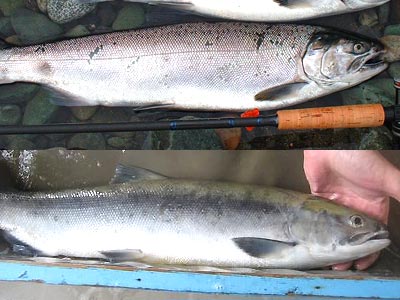
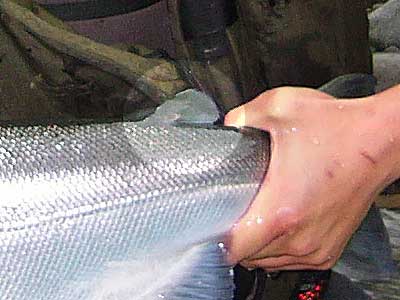
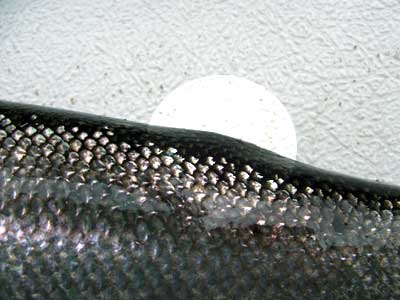
A coho salmon have black spots across its back and top portion of its tail. The edge of its mouth is black, while its gum is white. A sockeye salmon has no spots on its back and tail. Both the edge of its mouth and gum are white. If you catch and are about to kill an adipose fin clipped salmon in the Chilliwack system please be sure that it is not a sockeye salmon. All sockeye salmon in the Chilliwack River (both wild and hatchery) are required to be released. Adipose fin clipped sockeye salmon will be more common in Chilliwack over the next few years as hatchery returns increase. Cultus Lake sockeye salmon travel into Cultus Lake via Sweltzer Creek, which is located just upstream from the Vedder River Crossing. Although most of these sockeye salmon are found downstream from Sweltzer Creek mouth, some fish do travel past the creek mouth before turning back down to the entrance. What is an adipose fin? The adipose fin is located between the dorsal fin and tail of a salmon. Hatchery raised salmon often have their adipose fin clipped at their juvenile stage as a method to mark them. A returning hatchery fish would not have an adipose fin and there is a healed scar at where fin used to be. Wild salmon
Hatchery salmon
|
|||||||||||||||||||
|